
Does Alibaba Ship to Kenya? Avoid Costly Gaps 2026
Does Alibaba ship to Kenya? Yes. Suppliers on Alibaba.com export to Kenyan buyers, but the shipment is arranged by the supplier or by a forwarder you appoint, and clearing it through KRA is still the job of the importer, meaning the buyer or the buyer’s freight forwarder. This Pamoja Imports guide explains who moves an order, what each shipping term leaves you paying, what a supplier’s Kenya quote usually leaves out, and what to ask before you pay.
- Does Alibaba Ship to Kenya, and Who Actually Delivers the Order?
- What Are the Three Ways an Alibaba Order Reaches Kenya?
- What Do Alibaba Shipping Terms Mean for a Kenyan Buyer?
- What Does an Alibaba Supplier’s Kenya Quote Leave Out?
- Does Trade Assurance Cover Shipping and Customs in Kenya?
- Is a DDP Quote to Kenya Safe to Accept?
- Which Alibaba Goods Need Extra Paperwork Before Shipping to Kenya?
- What Should You Ask the Supplier Before Paying for Shipping?
- When Is a Forwarding Agent Better Than the Supplier’s Kenya Quote?
- How Do You Ship Your Alibaba Order to Kenya With Pamoja Imports?
- Frequently Asked Questions: Does Alibaba Ship to Kenya
Does Alibaba Ship to Kenya, and Who Actually Delivers the Order?
Yes, Alibaba suppliers do ship to Kenya. The goods leave China by whichever route you and the supplier agree, which in our experience is air freight, sea freight or an express courier, and the supplier or a forwarder books that movement. Alibaba.com itself is a marketplace that connects you to the supplier, so the real question behind “does Alibaba ship to Kenya” is not whether a parcel can reach Nairobi. It is who pays for each step between the factory and your door.
The same logic answers “is Alibaba in Kenya”. Alibaba.com is not a Kenyan store you collect from. It connects you to suppliers in China, so every Alibaba Kenya order is a normal commercial import, with the same duty, tax and clearance obligations as goods bought any other way. KRA’s own guidance is explicit that VAT on imported goods is paid by the importer, and the importer in an Alibaba order is the buyer or the buyer’s freight forwarder, not the supplier.
That gap between “the supplier will ship it” and “the goods are cleared and in your hands” is where most first-time Alibaba buyers lose money. One of the pages we reviewed for this guide lists six courier companies but gives no shipping costs, duty rates or delivery times, and does not say who is responsible at each stage. The rest of this guide fills that in.
If you are still choosing between marketplaces rather than working out delivery, start with our Alibaba vs 1688 Kenya importer guide. If you are about to order a test unit, our Alibaba sample Kenya guide covers that stage. This page is about the shipment itself.
What Are the Three Ways an Alibaba Order Reaches Kenya?
Alibaba shipping to Kenya works in one of three ways. The supplier arranges everything and quotes you a delivered price, you hire your own forwarder to collect from the supplier, or an agent coordinates with the supplier on your behalf. Each route changes who books the freight, who deals with KRA, and who carries the risk if something goes wrong.
| Route | Who books freight | Who clears in Kenya | Main risk |
|---|---|---|---|
| 1. Supplier arranges delivery (CIF or DDP quote) | The supplier | The supplier under DDP; you under CIF | Quote may not match what KRA actually assesses |
| 2. You hire a forwarder (EXW or FOB) | You, through your forwarder | You, through a clearing agent | Two companies to coordinate, and gaps between them |
| 3. An agent coordinates with the supplier | The agent | The agent’s clearing process | Depends entirely on who the agent is and how they quote |
Route 1 feels simplest because there is one invoice. It is also the route where the price is hardest to compare, because the supplier decides what to include. Route 2 gives you control and the most visible cost lines, but it needs you to know how to brief a forwarder and a clearing agent. Route 3 hands the coordination to someone else, which only helps if they publish what their price includes. Our sourcing agent vs freight forwarder Kenya guide explains how to tell a freight-only quote from a complete one.
Why the sea or air choice still matters
Whichever route you pick, you still choose between air and sea, and the right choice depends on weight, volume and how fast you need stock. Light, valuable goods usually suit air. Bulky, low-value goods usually suit sea. Our sea freight vs air freight China Kenya guide includes a break-even calculator, and our shipping calculator works out the cost for your own weight and dimensions.
What Do Alibaba Shipping Terms Mean for a Kenyan Buyer?
Alibaba shipping terms, called Incoterms, decide who pays for freight, who carries the risk in transit and who handles customs. For a Kenyan buyer, the main ones are EXW, FOB, CIF and DDP, and the difference between them can change your final cost by far more than the price per unit.
| Term | What the supplier covers | What you pay in Kenya terms |
|---|---|---|
| EXW (Ex Works) | Goods ready at the supplier’s premises | Loading, export clearance, freight, import duty, taxes and clearance. Alibaba’s own guidance says the buyer assumes all risks and costs from that point |
| FOB (Free on Board) | Delivery to the ship, with risk passing to you at that point | Freight after loading, insurance, import duty and customs clearance |
| CIF (Cost, Insurance, Freight) | Transport to the destination port and a minimum level of insurance | Import duty and customs clearance |
| DDP (Delivered Duty Paid) | Shipping, customs, import duties and taxes | Nothing directly, although the cost is built into the price |
Source: Alibaba.com, commonly used Incoterms.
One point that catches Kenyan buyers is that a CIF quote does not make your shipment cheaper to clear. KRA taxes the CIF value, so the freight and insurance inside a supplier’s CIF quote become part of your tax base. If the supplier’s freight is higher than you could book yourself, you pay tax on the difference as well. We show this on a real shipment in our FOB vs CIF Kenya guide. If a supplier offers you a choice, ask for FOB and book the freight separately so you can compare it.
Also note the word “port”. A supplier who quotes FOB should name the Chinese port, such as Guangzhou or Shenzhen. A supplier who quotes CIF or DDP should name the Kenyan destination, such as Mombasa or JKIA. A quote for Alibaba shipping to Kenya that names no port leaves too much unsaid.
What Does an Alibaba Supplier’s Kenya Quote Leave Out?
A supplier’s Kenya quote usually covers goods and freight, and leaves out most of what happens after the cargo lands. The three costs that matter most are import duty, 16% VAT and customs clearance, and a quote that lists none of them is a freight price, not a landed price.
- Import duty. Charged on the customs value of your goods, with the rate depending on the HS code. Our Kenya import duty from China guide and HS codes Kenya guide show the bands.
- VAT at 16%. Paid by the importer on imported goods, as KRA states on its VAT page.
- Import Declaration Fee and Railway Development Levy. Two further charges on the CIF value. We explain them in our IDF in shipping Kenya guide and Railway Development Levy Kenya guide.
- A clearing agent. KRA’s guidance says an importer has to enlist a clearing agent to process the import documentation electronically and clear the goods. That agent charges a fee that no overseas supplier includes unless they quote DDP.
- A Certificate of Conformity for regulated goods. Covered in the paperwork section below.
- Port and storage charges. If clearance is slow, charges build up daily. See our demurrage vs storage charges Kenya guide.
- Last-mile delivery. From the port, airport or warehouse to your shop or store.
Add these to a CIF or FOB quote and the final cost is often well above the number the supplier first gave you. Our Kenya customs clearance guide walks through the clearance steps in order, and our cash flow guide shows why the duty payment has to be ready before the goods are released.

Pamoja Imports: One rate that already includes the Kenya side
Our all-in rates of 65,000 ksh per CBM by sea and 1,700 ksh per kg by air include import duty, VAT, IDF, RDL and customs clearance, so there is no separate bill from KRA or a clearing agent to plan for. If you already have a supplier in China, send us their WhatsApp or WeChat details and we coordinate with them directly.
Does Trade Assurance Cover Shipping and Customs in Kenya?
Trade Assurance covers two things according to Alibaba: a ship date that differs from what was agreed, and product quality that differs from what was agreed. Alibaba’s buyer page does not list customs duties, import taxes or Kenyan clearance among the situations it covers, so you should not assume it protects the Kenya side of an order. If you are asking whether Alibaba ships to Kenya with customs protection included, Trade Assurance does not provide it.
On its Trade Assurance page, Alibaba says it will offer assistance toward a satisfactory outcome when product quality or ship date varies from the agreed order, and that you may request a refund if you are not satisfied with quality 30 days after delivery. That is a dispute process about what the supplier sent and when. It is not a service that pays your duty or fixes a clearance problem in Mombasa.
Check Alibaba’s own terms for which orders qualify before relying on it, and keep every agreement about shipping and documents in the order chat. Our guide to paying Chinese suppliers covers payment methods and the fraud signs to watch for.
Is a DDP Quote to Kenya Safe to Accept?
A DDP quote can be safe, but only if the supplier declares the true value of your goods and the price gap between DDP and the equivalent non-DDP quote is believable. Alibaba’s own seller guidance warns that when the price difference between DAP and DDP is tiny, that is a red flag that usually points to false customs declarations.
That warning comes from Alibaba’s DDP guide for sellers, which also notes that shipments can be held for inspections and documentation reviews, with storage fees accumulating, even when duties are prepaid. The same guide says sellers are legally responsible for accurate customs declarations.
In Kenya, the practical risk is under-invoicing. A DDP supplier who wants to keep the delivered price low may propose declaring a lower value than you paid. The liability for that does not stay with the supplier, as we explain in our China suppliers under invoicing Kenya guide. If a DDP quote looks far cheaper than the sum of freight, duty, VAT and clearance would be, ask how the value is declared before you pay. So if a supplier confirms that Alibaba ships to Kenya DDP at a surprisingly low price, question the price first.
Which Alibaba Goods Need Extra Paperwork Before Shipping to Kenya?
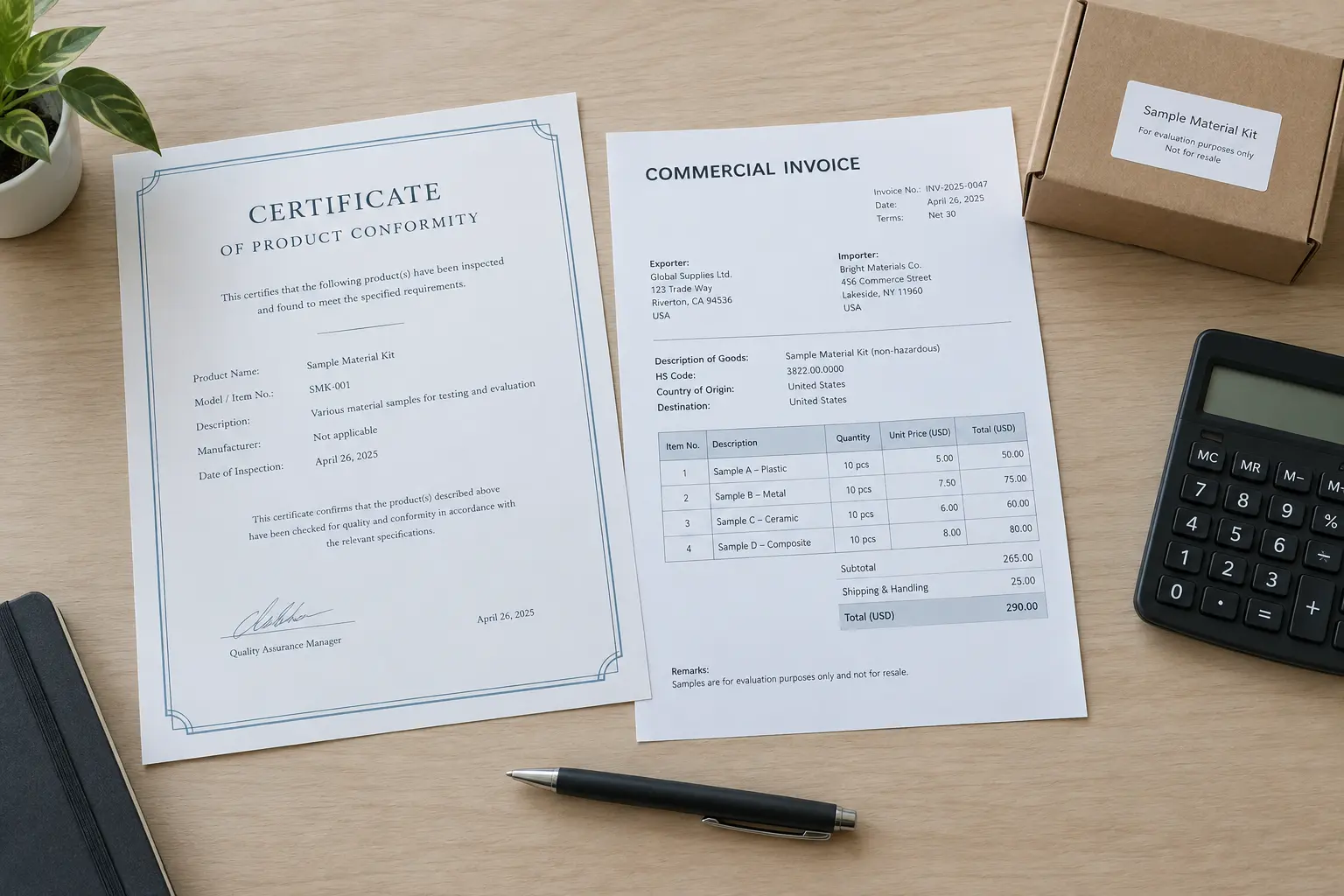
Goods that fall under Kenya’s PVoC programme need a Certificate of Conformity before they ship, and a supplier who ships without one can leave you with a destination inspection at the port. Many everyday product categories are covered, including electronics, household goods, cosmetics and construction materials.
Under the KEBS PVoC Manual, consignments that arrive without a required Certificate of Conformity must be presented to KEBS for destination inspection or testing before release from the port of entry (section 3.1). The same manual says consignments issued with a Non-Conformity Report are not allowed entry into Kenya (section 7). For China, the manual lists eight contractors for the China zone, so the supplier’s certificate has to come through one of them.
In our experience, most Alibaba suppliers are used to export paperwork such as the commercial invoice and packing list, but a Kenyan Certificate of Conformity is a Kenya-specific requirement that many do not arrange unless you ask. Our Kenya import regulations 2026 guide explains what changed this year, and our electronics import guide covers the extra Communications Authority requirements for phones and similar devices.
For origin documents, the position changed recently. Our Certificate of Origin Kenya guide explains the repeal of the mandatory requirement and the export declaration that replaced it, and why Alibaba suppliers are often better placed to provide export documents than sellers on domestic platforms.
What Should You Ask the Supplier Before Paying for Shipping?
Ask the supplier six things in writing before you pay: the exact Incoterm and named port, who books and pays the freight, who clears the goods in Kenya, the HS code and declared value, whether a Certificate of Conformity is required, and who pays if the cargo is held. A supplier who answers these clearly is easier to work with than one who replies only with a price.
Questions to send the supplier before you pay
- Which Incoterm is this quote, and which named port does it refer to?
- Who books the freight, and can I see the freight cost on its own line?
- Who clears the goods in Kenya, and is that included in the price?
- What HS code and declared value will appear on the commercial invoice?
- Does this product need a Kenyan Certificate of Conformity, and who arranges it?
- If the cargo is held at the port, who pays the storage and demurrage?
Keep the answers in the order chat, not on a phone call, so you can show them to a forwarder or clearing agent later. If the supplier refuses to name the declared value or the HS code, treat that the way you would treat a refusal to send a sample: as information about how the rest of the order will go. Our 10 mistakes importing from China to Kenya guide lists the other errors that tend to follow.
When Is a Forwarding Agent Better Than the Supplier’s Kenya Quote?
If you are asking whether the supplier’s quote or an agent is the safer way to handle Alibaba shipping to Kenya, the answer depends on how much the quote includes. A forwarding agent is better when the supplier’s quote leaves the Kenya side vague, when your goods need a Certificate of Conformity, or when you are shipping from more than one supplier and want a single landed price. In those cases the supplier’s delivered quote is the hardest number to check, and a published all-in rate is the easiest. That is why it is worth comparing agents before you decide how your Alibaba order will ship to Kenya.
Pamoja Imports works on the second model: one published all-in rate that covers the Kenya side. We source from Pinduoduo and 1688 rather than Alibaba, but if you have already agreed an order with a supplier in China, from any platform, we can ship it for you. The next section shows exactly how that works. Our ship from China to Kenya guide explains what the rate includes and excludes.
If you are choosing between agents, our guide to finding the best shipping agent from China to Kenya lists the red flags to check first. And if you are earlier in the process and still need a supplier, our how to find Chinese suppliers guide covers vetting.
How Do You Ship Your Alibaba Order to Kenya With Pamoja Imports?
You tell your supplier that you have a freight forwarder, give them our contact details, and we take over the coordination from there. You do not need to deal with KRA or a clearing agent. The steps below show how Alibaba shipping to Kenya works with us, from your first message to the supplier to the moment you track your goods.
Tell the supplier you have a freight forwarder
Message the supplier and say you will use your own freight forwarder for the shipment. Give them our contact details and ask them to speak to us directly about the packing and pickup. Sharing our WhatsApp number is enough to start.
We coordinate with the supplier and send you a quote
We contact the supplier ourselves, collect the package information such as the number of cartons, weight and dimensions, and work out your shipping quote from that. Because the quote is based on the real package details, you see the freight figure before you commit.
Pay the shipping deposit and we release the details to the supplier
When you pay the shipping deposit, we release all the relevant shipping details to the supplier, including where and how to send the goods. From that point the supplier has everything they need and you can step back. For a buyer who wants the Kenya side handled, this is the easiest way to make sure an Alibaba order ships to Kenya without surprises.
We take care of the rest and you track your order
We handle the movement from China to Kenya, including the customs clearance, which is covered by our all-in rate. When the package arrives at our warehouse in Kenya, we let you know. You can follow your order at any time on our order tracking page, using your order reference and the phone number you gave us.
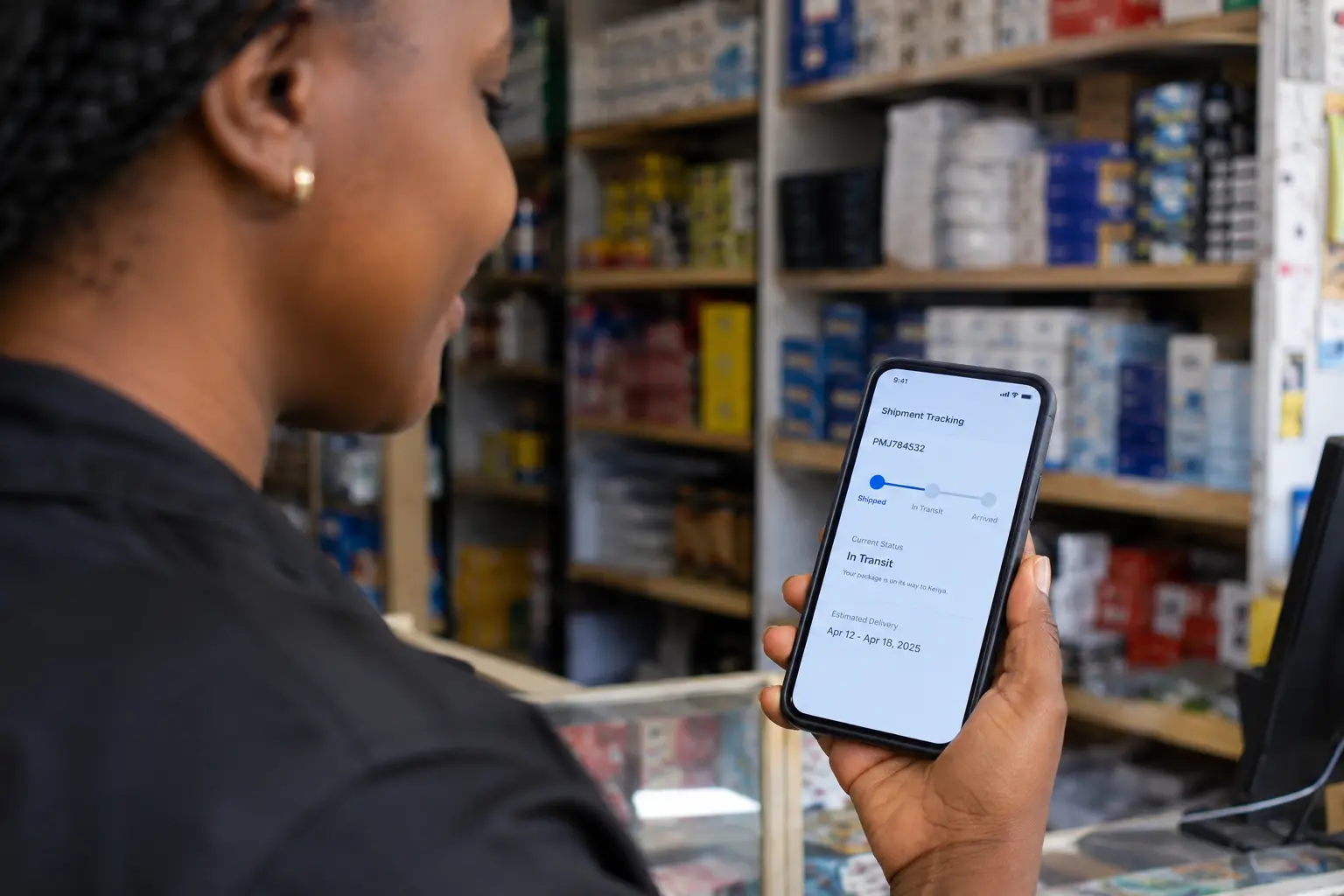
To see how much your shipment would cost before you contact the supplier, try our shipping calculator and switch on the option for customers who already have a supplier in China. It uses the same all-in rates described above.
Pamoja Imports: All-in shipping from your supplier to our Kenya warehouse
Whether you found your supplier yourself or need one sourced, we handle the China-to-Kenya movement for one published price. Our team in Chengdu coordinates with the supplier, consolidates the goods and sends them to Kenya, and the customs side is part of the process.
- Sea freight at 65,000 ksh per CBM and air freight at 1,700 ksh per kg, with duty, VAT, IDF, RDL and clearance included
- A shipping quote based on your real package information, before you pay the shipping deposit
- Order tracking on our website, so you can follow your goods from China to our Kenya warehouse
Frequently Asked Questions: Does Alibaba Ship to Kenya
For more answers to common questions about importing from China to Kenya, visit our Kenya import FAQ page.
Yes. Suppliers on Alibaba.com export to Kenyan buyers by air, sea or express courier. The supplier or a forwarder you appoint arranges the shipment, and you remain responsible for clearing the goods through KRA as the importer.
Alibaba.com is a marketplace connecting buyers to suppliers in China, not a Kenyan store. Goods ship from China, so an Alibaba order is a normal commercial import with the same duty, VAT and clearance obligations as any other.
The importer pays, unless the supplier quotes DDP, in which case the cost is built into the price. Under FOB, CIF and EXW terms, import duty and customs clearance fall to the buyer. See our Kenya import duty from China guide for rates by category.
Alibaba describes Trade Assurance as covering ship date and product quality that differ from what was agreed. Its buyer page does not list customs duties or Kenyan clearance among the covered situations, so do not assume those costs are protected.
KRA’s guidance says an importer has to enlist a clearing agent to process the import documentation electronically and clear the goods. If you use an all-in service such as Pamoja Imports, clearance is part of the rate. If you order DIY, you need to appoint one yourself unless the supplier quotes DDP.
Many product categories do. Under the KEBS PVoC Manual, consignments without a required certificate are presented to KEBS for destination inspection before release from the port. Ask the supplier whether your product needs one and who arranges it before you pay.
Tell your supplier you have a freight forwarder and give them our contact details. We coordinate with the supplier, quote you based on the package information, and release the shipping details to the supplier once you pay the shipping deposit. We then handle the rest, and you can track your order on our order tracking page.
No. The quote covers the shipment up to our warehouse in Kenya. Last-mile delivery is not included because everyone’s location is different, so you agree that fee directly with our driver once your package has arrived at the warehouse.
Already have a supplier? Get one price for the Kenya side
Send us your supplier’s WhatsApp or WeChat details and we will coordinate the shipment, with duty, VAT, IDF, RDL and clearance included in one all-in rate. If you are still working out whether Alibaba ships to Kenya at a cost you can plan for, we can make the Kenya side simple.
Need Sourcing? I Have a Supplier
Jonatan Sirak sirak.se
Founder of Pamoja Imports, a Kenya-China import agency with an operations team based in Chengdu, China. Based in China since 2018, he studied Mandarin and built direct factory relationships in Chengdu, and now helps Kenyan entrepreneurs source and import products profitably. He splits his time between Nairobi and Chengdu.