
Electric Bike Kenya: 3 Costly Import Surprises 2026
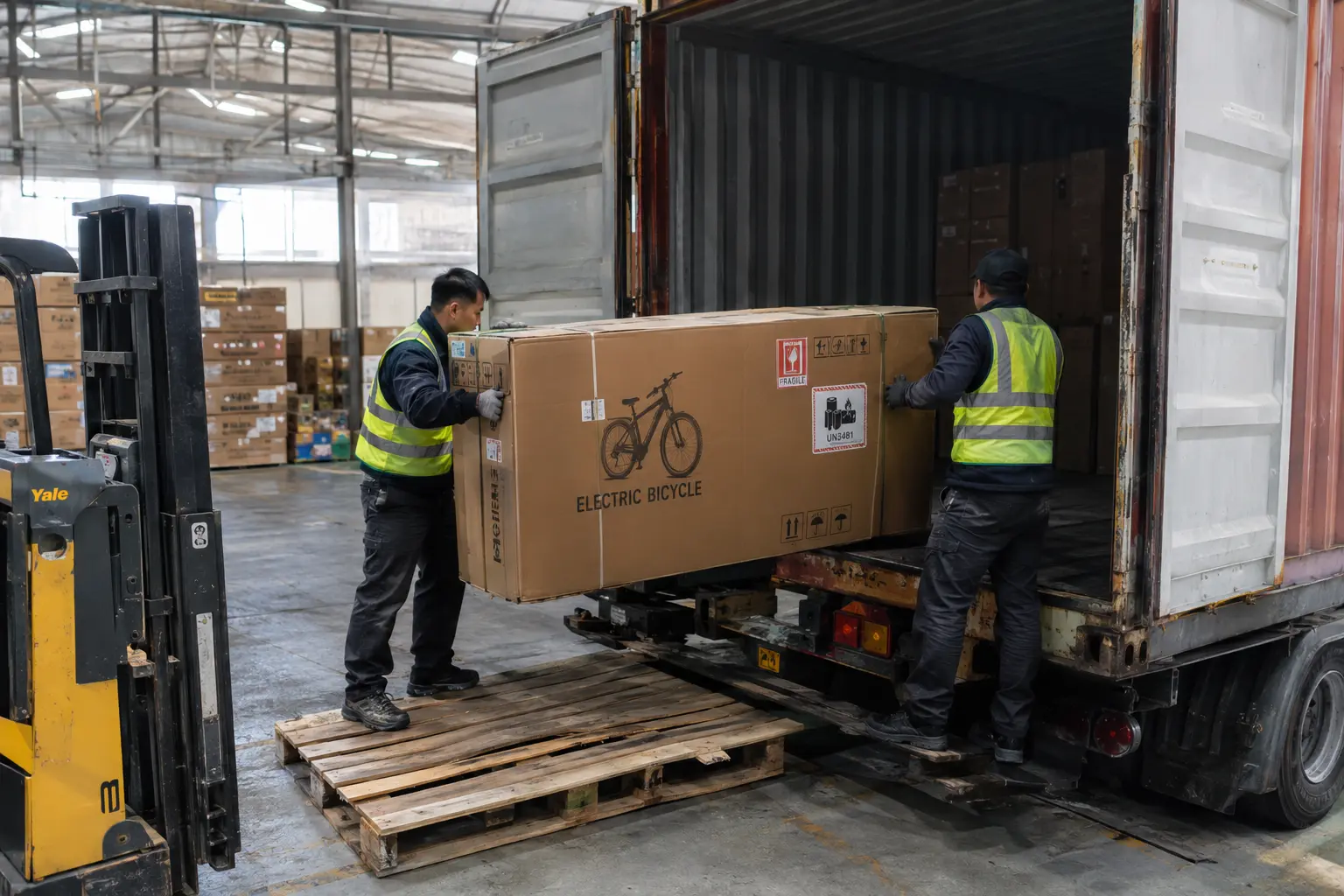
Shipping and clearance alone for an electric bike Kenya import typically runs 13,000 to 26,000 ksh, based on actual electric bike shipments Pamoja Imports has handled (0.2 to 0.4 CBM at our all-in per-CBM rate); this excludes the bike’s unit price, which varies widely by model and spec.
The detail almost no retailer or import guide mentions is that Kenya Revenue Authority classifies electric bikes under the same tariff heading as electric motorcycles, not bicycles, which brings a 25% duty, 16% VAT, and a flat per-unit excise duty that most first-time importers never budget for. Pamoja Imports has sourced and shipped several electric bikes for Kenyan clients and breaks down exactly what that means for your landed cost below.
- What Counts as an Electric Bike for Kenya Customs?
- What Import Duty Applies to an Electric Bike in Kenya?
- Do Electric Bikes Need NTSA Registration in Kenya?
- Should You Ship an Electric Bike by Air or Sea Freight?
- What Does a Full Landed Cost Example Look Like?
- How Do You Import an Electric Bike from China to Kenya?
- Frequently Asked Questions
What Counts as an Electric Bike for Kenya Customs?
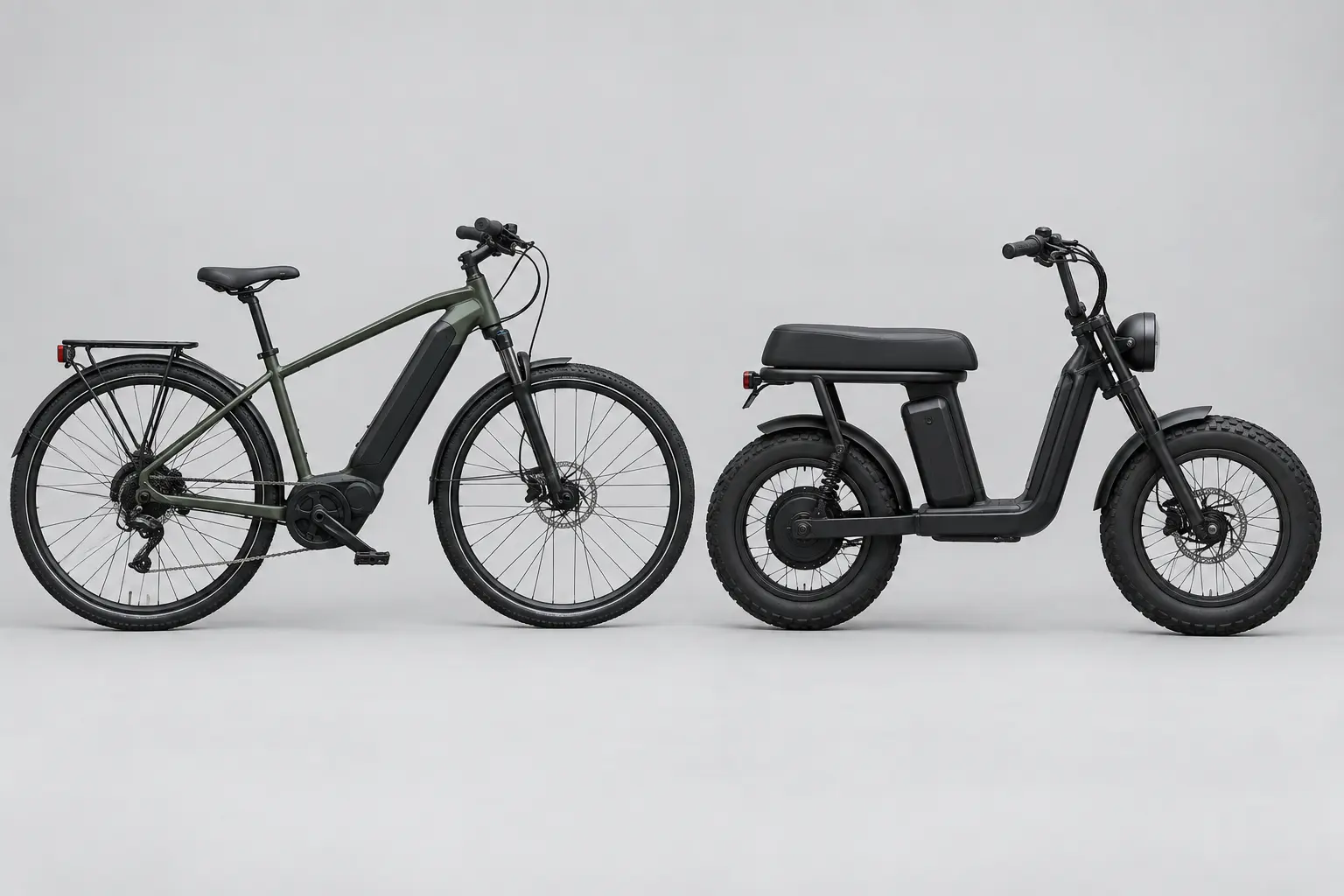
Kenya customs counts anything with a motor installed as an electric motorcycle, not a bicycle, whether that motor is pedal-assist or throttle-only. “Electric bike” covers a wide range of products in the market, but customs does not treat them all the same way once a motor is present. At the lower end is a pedal-assist bicycle with a small motor (typically 250W to 500W) that only adds power while you pedal. At the higher end is a throttle-controlled electric bike or electric motorcycle that rides without pedaling at all, closer in function to a moped.
Retailers selling in Nairobi, like Jumia and Ubuy Kenya, list both types under the same “electric bike” search term, which makes it easy to assume they are treated identically at the border. They are not, and the difference matters before you place an order.
This guide focuses on importing a pedal-assist or throttle-controlled electric bicycle as a product. Pamoja Imports also sources and ships electric motorcycles under the same all-in rate and classification rules described below; what we don’t handle for either category is NTSA registration or road-use compliance.
Search phrases like electric bike Kenya, electric bicycle Kenya, and e-bike Kenya mostly return retailers selling stock they have already imported, such as Jumia’s Nyuki 2.0 or various Himoto models, alongside plain electric bike price Kenya comparison listings. None of them explain how to import electric bike from China to Kenya yourself, or what it actually costs once customs gets involved, which is the gap this guide fills. Retail listings also blur the pedal-assist versus throttle distinction, pricing both under one category even though, as the next section shows, the tax treatment does not care which one you buy.
What Import Duty Applies to an Electric Bike in Kenya?
An electric bike is taxed at 25% import duty, 16% VAT, and a flat $81 excise duty per unit under HS code 8711.60.00, the same tariff line as electric motorcycles. Most guides to importing bikes into Kenya assume an electric bicycle instead qualifies for the same low duty treatment as an ordinary pedal bicycle under HS code 8712. A 2025 Kenya Tax Appeals Tribunal ruling shows that assumption is wrong for anything with a motor installed.
In Ebee Mobility Kenya Limited v Commissioner of Customs and Border Control (Tax Appeal E193 of 2024, Kenya Law), Ebee Mobility, the company behind Nairobi’s eBee electric bike rental network, imported electric bike units without their batteries and declared them under HS code 8714.91.00, the tariff line for bicycle parts, which carries a preferential rate meant to encourage local assembly.
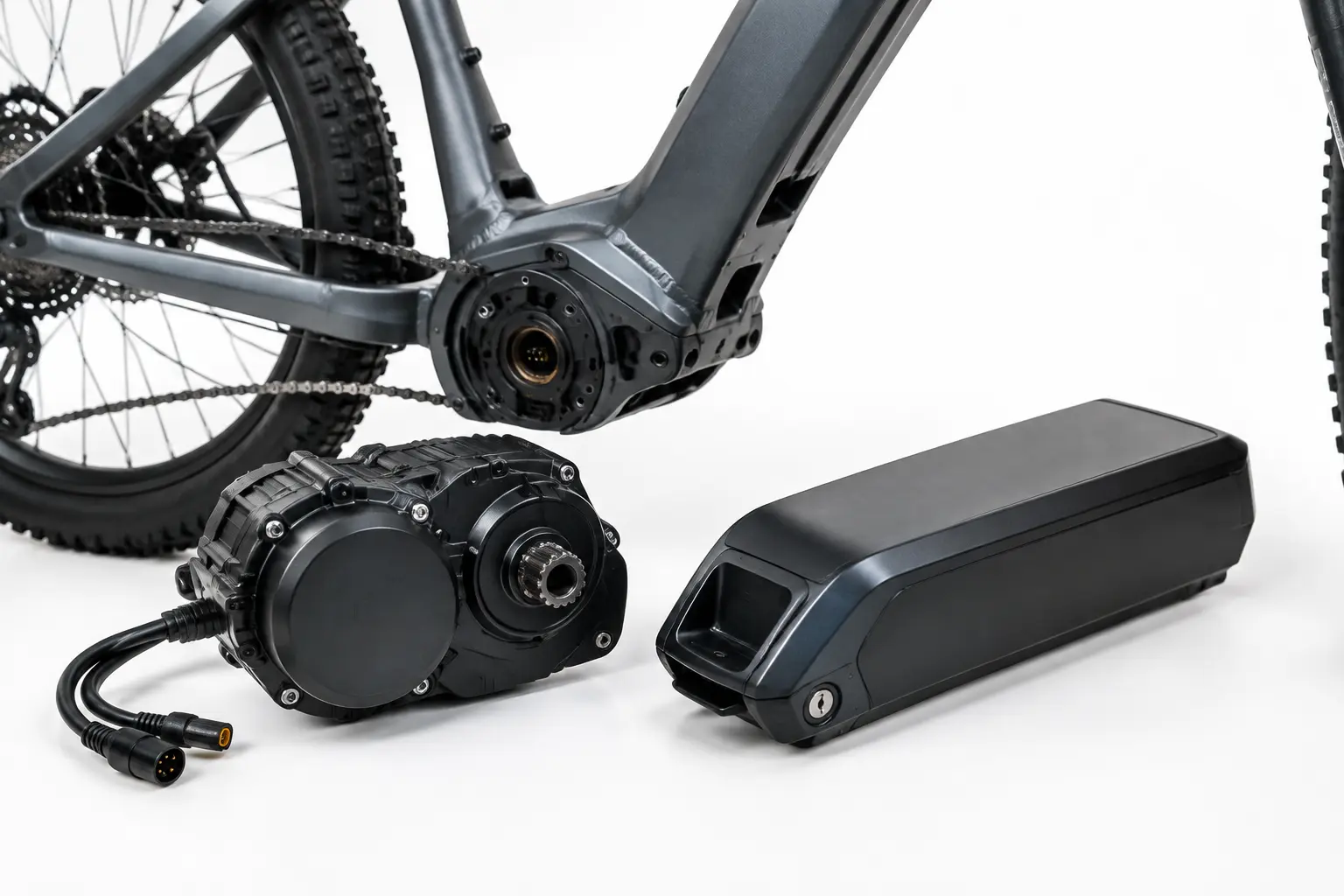
Kenya Revenue Authority disagreed and reclassified the shipments under HS code 8711.60.00, the tariff line covering electric motorcycles, arguing the units were complete bikes missing only a battery. The Tribunal sided with KRA, ruling that the motor, not the battery, is what defines an electric bike for customs purposes.
The reclassification changed the tax bill significantly. Under KRA’s classification, the shipments attracted:
- 25% import duty on the CIF value
- 16% VAT on the CIF value plus duty
- A flat excise duty of $81 (roughly 10,500 ksh at current exchange rates) per unit, regardless of the bike’s price
KRA initially demanded $53,302 (about 6.9 million ksh) in back taxes from Ebee Mobility, later reduced to $20,857 (about 2.7 million ksh) after a review request, according to the tribunal ruling. The Tribunal upheld KRA’s right to reclassify the shipments.
This is the only public ruling on electric bike classification in Kenya, and it applies specifically to Ebee’s shipments, which were imported without batteries and argued as parts. It is not a blanket statement that every electric bicycle is legally an electric motorcycle in every circumstance. What it does establish clearly is KRA’s position: a unit with a motor installed, battery or not, is assessed as an electric motorcycle for duty purposes, not a bicycle. Anyone importing an electric bike into Kenya should plan for this classification, not the lower bicycle rate.
For how Kenya’s general duty structure works outside this specific case, see our guide to Kenya import duty from China, and for how HS code misclassification causes costly mistakes across product categories, see our HS codes Kenya guide.
On top of duty, VAT, and excise, every shipment also carries the standard IDF (2.5% of CIF) and RDL (2% of CIF) that apply to all imports regardless of product category.
The flat excise duty is the part that catches most first-time importers off guard. Percentage-based charges like duty and VAT scale with the item’s value, so a cheaper bike means a smaller tax bill. The $81 excise does not scale. It is charged per unit regardless of whether the bike cost 20,000 ksh or 200,000 ksh, which means it hits a budget electric bike proportionally much harder than a premium one. Anyone comparing electric bike price Kenya listings against the cost of importing their own unit needs to factor this in before assuming a cheaper supplier price automatically means a cheaper landed cost.
Pamoja Imports: One All-In Price, Whatever the Classification
Every electric bike Kenya shipment we handle moves at the same all-in rate per CBM, whether the item clears as a bicycle part or an electric motorcycle. You are not the one who absorbs a reclassification surprise after the shipment has already left China.
Do Electric Bikes Need NTSA Registration in Kenya?
We could not find an official NTSA rule or Kenya Gazette notice that answers this, so we cannot confirm it either way. A common claim is a 250W and 25 km/h cutoff, below which a bike counts as a bicycle and above which it may fall under NTSA’s motorcycle rules, but that figure mirrors a European Union pedelec standard, and we could not confirm it is codified anywhere in Kenyan law or NTSA guidance.
Pamoja Imports sources and ships the physical product. We do not handle NTSA registration, licensing, or any road-use compliance step, and this guide should not be read as legal advice on that question.
Should You Ship an Electric Bike by Air or Sea Freight?
Sea freight is the more practical and cost-effective choice for almost every electric bike shipment. An e-bike Kenya shipment ships with a lithium-ion battery installed, and batteries installed in equipment are subject to IATA’s dangerous goods rules for air cargo. This does not mean an electric bike cannot fly. It means the shipment needs correct battery documentation and packaging to be accepted, which most casual DIY shippers are not set up to arrange, and airlines can refuse a shipment that is not properly declared.
In practice, sea freight is the more common and more cost-effective route for electric bikes, both because of the battery handling requirement and because a boxed electric bike (roughly 0.25 to 0.35 CBM) sits at a weight-to-volume ratio where sea freight’s per-CBM pricing beats air freight’s per-kg pricing once you account for the bike’s actual weight, typically 20 to 28 kg boxed.
Air freight is usually reserved for lighter, higher-value-density goods where speed matters more than cost, and a boxed electric bike is neither light nor especially urgent for most buyers. For a full breakdown of when air freight is worth the premium and when it isn’t, see our sea freight vs air freight guide.
If you already have a supplier lined up and only need the shipping and clearance handled, Pamoja Imports offers a shipping-only service at the same all-in rate, so you are not required to go through full sourcing to get the correct HS code declaration and battery documentation sorted.
What Does a Full Landed Cost Example Look Like?
For a mid-range electric bike Kenya import shipped by sea, a DIY import lands at roughly 83,590 ksh before a clearing agent’s own fee, while Pamoja Imports’ all-in rate brings that down to about 62,790 ksh. The worked example below uses a single mid-range electric bicycle Kenya import (250W to 500W pedal-assist, roughly 0.30 CBM boxed, supplier price 43,290 ksh, the actual price on a real electric mountain bike order we’ve handled).
For the DIY freight-only figure, we checked two independent sources for current LCL sea freight rates from China to Kenya. Sino-Shipping quotes $180 per CBM as of September 2026. Dantful quotes $75 to $110 per CBM, but only for shipments over 15 CBM. A single 0.30 CBM item does not qualify for that bulk rate, so we have used a representative freight-only figure of roughly $145 per CBM as a mid-point, though a real quote for a shipment this small could land anywhere in this range or above it once a forwarder’s minimum LCL charge is applied. Treat this as illustrative, not a quote.
| Cost item | DIY import | Pamoja Imports (all-in) |
|---|---|---|
| Product cost (supplier price) | 43,290 ksh | 43,290 ksh |
| Freight (0.30 CBM, sea) | ~5,600 ksh (freight-only market rate) | Included in all-in rate |
| Import duty (25% of CIF) | ~12,220 ksh | Included |
| VAT (16% of CIF + duty) | ~9,780 ksh | Included |
| IDF (2.5% of CIF) | ~1,220 ksh | Included |
| RDL (2% of CIF) | ~980 ksh | Included |
| Excise duty (flat, per unit) | ~10,500 ksh ($81) | Included |
| Clearing agent fee | Extra, varies by agent | Included |
| Pamoja all-in rate (65,000 ksh/CBM × 0.30) | N/A | 19,500 ksh |
| Estimated total landed cost | ~83,590 ksh, plus a clearing agent’s own fee | ~62,790 ksh |
The gap comes almost entirely from two things a DIY importer has to absorb separately: the flat $81 excise duty that most people budget for as “just a bicycle,” and a clearing agent’s own fee on top of the government charges, since Pamoja Imports’ all-in rate has already priced in KRA clearance. The DIY total above also does not include the time cost of finding a clearing agent who correctly declares the shipment under 8711.60.00 rather than the lower bicycle rate; misdeclaring it does not remove the liability, it just delays when KRA catches it.
For comparison, a similar-spec electric bike retails for roughly 78,000 to 90,000 ksh new on Kenyan marketplaces like Ubuy Kenya. Pamoja Imports’ all-in total in the table above (~62,790 ksh) lands meaningfully below that range. A DIY import (~83,590 ksh before a clearing agent’s own fee) does not: once that fee is added, it can land at or above retail, which is exactly the excise-duty and clearing-fee gap this section has been walking through. Use our profit calculator to model your own margin if you plan to resell rather than use the bike yourself.
How Do You Import an Electric Bike from China to Kenya?
An electric bike Kenya import from China comes down to six steps: choose the spec, source from a domestic Chinese platform, confirm battery documentation, ship by sea, declare the correct HS code, and handle export paperwork. Each is covered below.
- Decide on spec before you source. Motor wattage, battery capacity, and whether it is pedal-assist or throttle all affect price and, per the ruling above, do not change the duty treatment once a motor is installed.
- Source from 1688 or Pinduoduo, not Alibaba. Pamoja Imports sources factory-direct on domestic Chinese platforms, which typically prices electric bikes lower than what is available to buyers limited to internationally-accessible platforms like Alibaba, Made-in-China, or DHgate.
- Confirm the battery has UN38.3 test documentation. This is standard paperwork for lithium battery shipments and your supplier or agent should be able to produce it before booking freight.
- Ship by sea unless you have a specific reason for speed. As covered above, sea freight is usually the more practical and cost-effective mode for a boxed electric bike.
- Declare the correct HS code at clearance. Electric bikes clear under HS 8711.60.00, not the bicycle heading, regardless of what the supplier’s invoice calls the product.
- Handle export documentation. Kenya’s export document requirements changed in September 2026; see our certificate of origin Kenya guide for what is required now.
Pamoja Imports: Sourcing and Shipping, Not Registration
We source electric bikes factory-direct from Pinduoduo and 1688 through our Chengdu team, ship by sea at our all-in rate of 65,000 ksh per CBM, and clear customs correctly regardless of how the unit gets classified. We do not handle NTSA registration or road-use compliance; that step is yours to confirm separately.
- One all-in price whether customs assesses duty as a bicycle part or an electric motorcycle
- Factory-direct sourcing on Pinduoduo and 1688, not marked-up Alibaba listings
- Battery documentation and correct HS code declaration handled by our team
Frequently Asked Questions: Electric Bike Kenya Imports
For more answers to common questions about importing from China to Kenya, visit our Kenya import FAQ page.
Based on the 2025 Ebee Mobility tribunal ruling, KRA classifies electric bikes under HS 8711.60.00, the electric motorcycle tariff line, which carries 25% import duty, 16% VAT, and a flat $81 excise duty per unit, in addition to the standard 2.5% IDF and 2% RDL. See our Kenya import duty guide for how these charges stack.
For duty purposes, KRA treats it as an electric motorcycle if it has a motor installed, regardless of whether it is pedal-assist or throttle-only, and regardless of whether the battery is included in the shipment. This was confirmed in the Ebee Mobility tax appeal.
We could not find an official NTSA rule or published threshold confirming this either way. Some retailers cite a 250W and 25 km/h cutoff, but this figure is not confirmed in Kenyan law. Confirm directly with NTSA before assuming your bike is or isn’t exempt.
Yes. Pamoja Imports sources and ships both electric bicycles and electric motorcycles as products, under the same all-in rate. What we don’t handle for either one is NTSA registration or any other road-use compliance step.
A similar-spec electric bike retails for roughly 78,000 to 90,000 ksh new in Kenya. Sourcing and shipping through Pamoja Imports’ all-in rate typically lands meaningfully below that. A DIY import, once you add the correct excise duty and a clearing agent’s own fee, often lands close to or above retail, plus it carries the time cost of finding a clearing agent and confirming correct declaration.
Sea freight is usually the more practical choice. Electric bikes contain lithium batteries, which are subject to dangerous goods documentation rules on air cargo, and a boxed electric bike’s weight-to-volume ratio generally favors sea freight pricing. See our sea freight vs air freight comparison for the full breakdown.
Functionally, an electric bicycle typically has pedals and a smaller motor (250W to 500W) meant to assist pedaling, while an electric motorcycle rides on throttle alone with no pedals and a larger motor. For KRA customs purposes, this functional difference does not matter: both are assessed under HS 8711.60.00 once a motor is installed. The distinction matters more for NTSA registration, where the rules are far less clearly published.
Ready to Import Your Electric Bike?
We source factory-direct from Pinduoduo and 1688, handle correct customs declaration, and ship your electric bike Kenya order at one all-in rate, whatever the classification.
Need Sourcing? I Have a Supplier
Jonatan Sirak sirak.se
Founder of Pamoja Imports, a Kenya-China import agency with an operations team based in Chengdu, China. Based in China since 2018, he studied Mandarin and built direct factory relationships in Chengdu, and now helps Kenyan entrepreneurs source and import products profitably. He splits his time between Nairobi and Chengdu.