

Cash Flow Importing from China to Kenya: Avoid the Costly 2026 Trap

Cash flow importing from China to Kenya is usually the real reason import businesses stall, not profit. Your goods can take 30 to 70 days just to become sellable, and a further stretch before a customer actually pays you and that cash comes back, and Kenya Revenue Authority requires duty, VAT, IDF, and RDL paid in full before your goods are released, whether you have sold anything yet or not. Pamoja Imports sees this trip up first-time and growing importers alike, and it has nothing to do with how good the product is.
Why Profit Does Not Pay Your Next Supplier Invoice
Most first-time importers judge their business by one number: is it profitable? It is a reasonable question, and the wrong one to ask when you are trying to figure out why you cannot place your next order.
Profit is what is left after you subtract costs from sales, calculated on paper, whenever you choose to calculate it. Cash flow is whether the money is actually sitting in your bank account on the day you need to spend it. A business can be profitable on every shipment it has ever brought in and still be unable to pay a supplier deposit due this week, because the cash from last month’s sales has not fully cleared yet, two customers are still 30 days from paying their invoices, and rent and staff salaries are due regardless.
This is not a hypothetical. It is the single most common reason a growing import business hits a wall that has nothing to do with demand for the product. The business is working. The timing is not. This is exactly why cash flow importing from China to Kenya deserves its own planning separate from your profit and loss statement.
Importing makes this worse than almost any other kind of business, because you pay out money long before you generate any revenue from it. Every shipment you place today is a bet that your cash position will hold up for months while that money is somewhere between a factory in China and a customer’s hands in Kenya.

The Real Cash Cycle When You Import from China to Kenya
To plan around this, you need your landed cost china kenya breakdown mapped against a real calendar, not just a total figure. Here is a realistic example using a mid-size shipment: 300 units of phone accessories (cases, chargers, and cables), air freight, based on a typical freight-only market rate of roughly 711 ksh per kg. This is a generic freight rate, not Pamoja’s all-in rate, since the point here is showing what a DIY importer using a standard freight forwarder actually pays at each stage, with duty and KRA charges calculated separately below.
Supplier deposit paid
A typical Chinese supplier requires 30% upfront before starting production. On a 300,000 ksh order, that is 90,000 ksh gone from your account before a single unit exists.
90,000 ksh outProduction complete, balance due
The remaining 70% balance, 210,000 ksh, is typically due before the supplier releases goods for shipment. Total paid so far: 300,000 ksh, and your goods have not left the factory yet.
210,000 ksh outAir freight in transit
At 60 kg for this shipment, air freight at a typical freight-only rate runs roughly 42,700 ksh. Air transit from China to Kenya typically takes 5 to 8 days, so cargo lands in Nairobi around Day 29.
~42,700 ksh due around arrivalThe KRA payment gate
Duty, VAT, IDF, and RDL must be paid before customs releases your cargo, plus a separate clearing agent fee since DIY importers cannot self-clear. On this shipment, that comes to roughly 133,000 ksh combined. See the full breakdown in the next section.
~133,000 ksh due before releaseGoods delivered, stock on shelf
Only now can you actually sell. By this point you have paid out roughly 475,666 ksh across supplier, freight, KRA charges, and your clearing agent, and collected zero. The same shipment through Pamoja’s all-in rate would have cost roughly 402,000 ksh total, since duty, VAT, IDF, RDL, and clearance are already folded into the quoted freight price instead of stacking as separate DIY costs.
0 ksh collected so farSales and collections
If you sell steadily and collect payment promptly, most of this cash returns by around Day 75. If any customers buy on credit terms, expect that timeline to stretch further.
Cash begins returningIn this example, your money is tied up for roughly 75 days before it fully returns, and that assumes nothing goes wrong: no production delay, no customs hold, no slow-paying customer. Every shipment you place stacks on top of the last one still working its way through this cycle, which is exactly why growth without cash planning creates pressure instead of relieving it. A business placing one order every month is running three or four of these cycles simultaneously, each one demanding its own cash at a different stage.

The KRA Payment Gate Nobody Warns You About
Here is the part most cash flow advice, including generic guides aimed at importers everywhere, skips entirely: the KRA duty payment before clearance is not negotiable, and you cannot work around it. Duty, VAT, IDF, and RDL are calculated on your CIF value, the cost of your goods plus freight, and Kenya Revenue Authority will not release your cargo until all four are paid in full. Not partially. Not on credit. In full, before you touch a single unit.
Using the air freight example above, with a CIF value of 342,669 ksh (300,000 ksh product cost plus 42,669 ksh freight):
| Charge | Rate | Amount |
|---|---|---|
| Import duty | 10% of CIF (accessories rate; varies by HS code, e.g. phones themselves are 35%) | 34,267 ksh |
| VAT | 16% of CIF plus duty | 60,310 ksh |
| IDF | 2.5% of CIF | 8,567 ksh |
| RDL | 2% of CIF | 6,853 ksh |
| Total due at clearance | 109,997 ksh |
That is only the statutory KRA charges. As a DIY importer, you also need a KRA-licensed clearing agent, since you cannot self-clear commercial goods at Mombasa or JKIA. Per Pamoja’s own Kenya Customs Clearance guide, an independent air freight clearance (agent fee, airline cargo handling, and Nairobi delivery) typically runs 13,000 to 33,000 ksh, roughly 23,000 ksh at the midpoint. This is a separate cost, paid to a different party than KRA, and it is due around the same time as the tax bill above.
Notice what happens on the calendar: your freight bill (42,669 ksh), the KRA payment (109,997 ksh), and your clearing agent’s fee (roughly 23,000 ksh) all come due within a day or two of each other, right when your cargo lands. That is roughly 176,000 ksh you need available almost simultaneously, on top of the 300,000 ksh you already paid your supplier weeks earlier. A DIY importer who budgeted for “product plus shipping” and treated customs and clearance as a rounding error gets caught here every time.
This example uses 10%, the EAC Common External Tariff band for accessories, not a flat guess. Applying a flat 25% to all electronics is one of the most common HS code mistakes: laptops sit at 0%, accessories at 10%, TVs at 25%, and phones themselves at 35% plus excise. Always confirm your product’s actual rate, and rebuild your landed cost china kenya figure around it, before committing to an order size, using our HS codes Kenya guide or KRA’s published tariff schedule. Skipping this kra duty payment before clearance reserve is the single most common planning mistake we see among first-time DIY importers.
Pamoja Imports: no separate KRA payment gate to plan around
If reserving a separate lump sum for duty, VAT, IDF, and RDL on top of your freight bill is the part giving you pause, our all-in rate folds all of it into one quoted number before you ship. On the shipment used in this example, that works out to roughly 74,000 ksh less than the DIY air freight route, once you include the clearing agent fee a DIY importer has to pay separately.
Air Freight vs Sea Freight: The Cash Flow Trade-Off
Most air freight vs sea freight Kenya comparisons focus purely on cost per kg. For cash flow, the more important question is how long your money stays locked up, because that determines how many cycles you can run per year with the same capital.
Take the same order, 300 units, roughly 0.35 CBM if shipped by sea instead of air (an estimate based on typical packing density for small electronics accessories, since your actual carton dimensions will vary), using a typical freight-only market rate of roughly 12,930 ksh per CBM:
| Air Freight | Sea Freight | |
|---|---|---|
| Freight cost | ~42,669 ksh | ~4,526 ksh |
| CIF value | ~342,669 ksh | ~304,526 ksh |
| KRA payment gate | ~109,997 ksh | ~97,754 ksh |
| Clearing agent (independent, port of entry) | ~23,000 ksh | ~37,500 ksh |
| Transit time | 5 to 8 days | 36 to 47 days (LCL, consolidated) |
| Total cash tied up | ~475,666 ksh | ~439,780 ksh |
| Days until stock is sellable | ~33 | ~70 |
Even excluding onward delivery from Mombasa to Nairobi, sea’s clearing burden is still real: an independent Mombasa clearance (agent fee and port handling only) typically runs 20,000 to 55,000 ksh, against 13,000 to 33,000 ksh for an independent JKIA air clearance. That narrows sea’s total cost advantage from what freight and duty alone suggest, but does not erase it.
On this shipment, sea still lands roughly 36,000 ksh cheaper than air once clearing is included, down from the far larger gap a “freight cost per kg” comparison would show. If you also need the goods trucked to Nairobi rather than picked up at Mombasa, add that leg back in separately to the DIY figures, since it is not included in either DIY total here.
Here is the same comparison against Pamoja’s all-in rate, which already includes duty, VAT, IDF, RDL, and clearance, plus Mombasa-to-Nairobi delivery on the sea side:
| Air Freight | Sea Freight | |
|---|---|---|
| DIY total (freight, duty, clearing agent) | 475,666 ksh | 439,780 ksh |
| Pamoja all-in total | 402,000 ksh | 322,750 ksh |
| You save with Pamoja | 73,666 ksh | 117,030 ksh |
The sea savings look larger partly because Pamoja’s sea rate includes delivery to Nairobi and the DIY sea total above does not, so add that inland leg back into the DIY figure if it applies to you before treating the two as directly comparable dollar for dollar.
There is no universal right answer here, but the gap is narrower than a freight-only comparison suggests. A business with strong existing cash reserves can still take sea’s roughly 36,000 ksh cost advantage in exchange for tying up capital for a month longer. A business running close to the edge on working capital may find that gap small enough that air’s dramatically faster cash return is worth the premium anyway.
Larger orders change this calculation further, since sea clearing costs do not scale up as fast as freight cost once you are filling a full container rather than a small LCL shipment. Every air freight vs sea freight kenya decision should be run through this full cash-cycle lens, including clearing costs, not just the per-kg or per-CBM freight rate. Compare both scenarios for your specific product and order size using our sea freight vs air freight comparison before committing.
What Happens When Clearance-Day Cash Is Not Ready
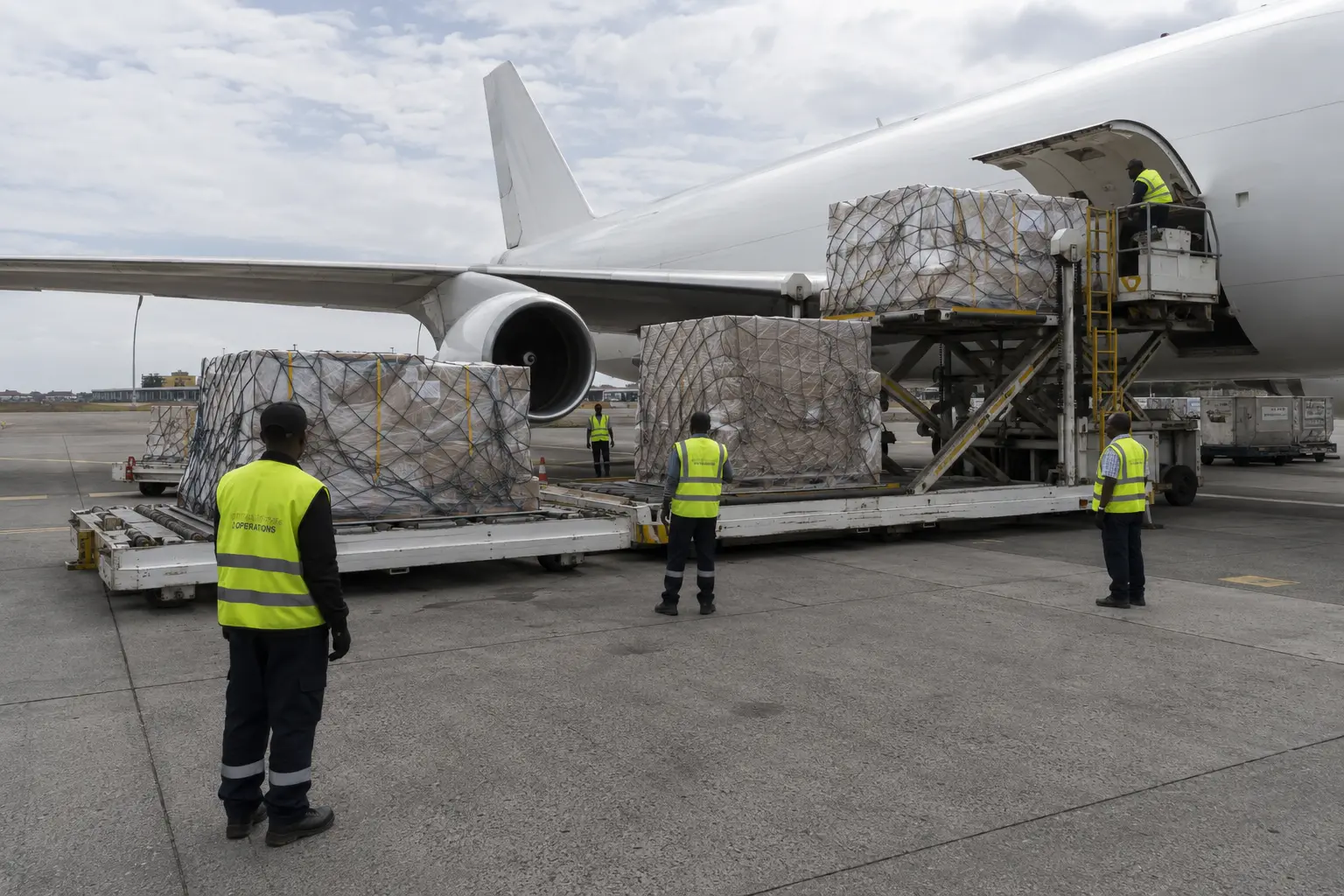
If the roughly 176,000 ksh needed at clearance in the air freight example, KRA charges and clearing agent fee combined, is not sitting ready when cargo lands, your goods do not get released. They sit at the port or airport, and demurrage and storage charges start accumulating daily until you can pay.
Cash readiness is not the only thing that can trigger this. From August 3, 2026, sea shipments also need a valid Advance Cargo Declaration reference code, and a missing one creates the identical port-side hold and daily storage charges described above, even when your cash is fully ready.
This is where a cash flow gap stops being an inconvenience and starts becoming a direct cost. Every day your cargo sits waiting for you to raise funds is a day of storage charges added on top of what you already owed, shrinking the margin on that specific shipment.
A stalled kenya import cash cycle at the port is the most expensive place for this to go wrong, because the meter keeps running whether you are ready or not. Businesses that plan cash flow around “I will figure out clearance when it lands” are the ones who end up paying the most for the exact same shipment other importers clear on time.
How to Protect Your Cash Flow as a DIY Importer
None of this means importing from China to Kenya is a bad business model. It means cash flow importing from China to Kenya needs to be planned with the same seriousness as sourcing and product selection. A few practical adjustments make a real difference:
- Size your first few orders below your comfortable cash ceiling, not at it. Leave headroom for the KRA payment gate landing at the same time as your freight bill.
- Negotiate staged supplier payments where possible. A 30/70 split is common, but some suppliers will accept smaller deposits with the balance closer to shipment, which delays your second large outlay.
- Do not let sample-order enthusiasm turn into an oversized bulk order. A sample selling well tells you the product works. It does not tell you whether your cash position can absorb a shipment three times the size before those samples finish selling.
- Weigh air freight’s faster cash return against its higher rate when your working capital is the binding constraint, not just when your customer needs the product urgently.
- Reserve your KRA payment estimate as untouchable cash the moment you place a supplier order, not the week your cargo is due to land.
- Stagger orders across time instead of scaling all at once. Two smaller shipments spaced a month apart put far less simultaneous pressure on your cash position than doubling one order size. This matters even more for a seasonal order, since ordering early enough to use sea freight instead of a rushed air shipment protects both your cash position and your margin, as our seasonal import ideas Kenya guide breaks down.
Use our profit calculator to model the full landed cost of a specific order before you commit, and our shipping calculator to compare air and sea freight costs for your exact weight or volume.
None of these adjustments require more capital. They require mapping your own Kenya import cash cycle with its own numbers, its own timeline, and its own reserve, separate from product selection and supplier negotiation. Importers who do this consistently are rarely the ones with the biggest bank balance. They are the ones who never let a healthy, profitable business get stuck waiting on money that has not come back yet.
Pamoja Imports: one predictable payment instead of three separate cash crunches
We quote air and sea freight as a single all-in rate that already includes duty, VAT, IDF, RDL, and customs clearance, so you are not caught reserving three separate cash pools for freight, KRA, and clearance fees landing at the same time. Freight is paid on arrival at our Nairobi or Mombasa warehouse partner, not upfront, which removes one of the cash pressure points from the cycle above. This applies whether you need us to source your product or already have a supplier and just need the freight and clearance leg handled.
- One all-in rate covers freight, duty, VAT, IDF, RDL, and clearance
- Freight paid on arrival, not before your goods have even shipped
- Our Chengdu-based team tracks your order so you know when payment will actually be due
- On this example shipment: roughly 74,000 ksh cheaper than DIY air freight, and roughly 117,000 ksh cheaper than DIY sea freight, once you include clearing agent costs a DIY importer pays separately
Frequently Asked Questions: Cash Flow Importing from China to Kenya
For more answers to common questions about importing from China to Kenya, visit our Kenya import FAQ page.
Because profit and cash are not the same thing. An import business can be profitable on paper while still being unable to pay its next supplier deposit, because money paid out today is tied up for weeks or months before it comes back in as a sale. Capital tells you whether the business works. Cash flow tells you whether you can survive until it pays off.
For a typical air freight shipment, expect 30 to 45 days from paying the supplier deposit to having sellable stock in Kenya, and longer before you collect payment from customers. For consolidated LCL sea freight, the transit alone adds roughly 30 to 40 extra days on top of that. The exact length depends on production time, freight mode, and how quickly customs clearance goes. See our sea freight vs air freight comparison for a full breakdown.
Yes. Import duty, VAT, IDF, and RDL must be paid in full before Kenya Revenue Authority releases your cargo, regardless of whether you have sold a single unit yet. This is a separate cash requirement from what you already paid your supplier and your freight company, and it often lands at the same time as the freight bill.
Freight cost alone overstates sea’s advantage, since it ignores clearing costs. Independent sea clearance at Mombasa still costs meaningfully more than independent air clearance at JKIA, which narrows sea’s total cost edge but does not erase it. Sea freight is usually still cheaper overall once clearing is included, but the gap is smaller than a freight-only comparison shows, so weigh that smaller savings against a month of extra cash tied up. Run your own air freight vs sea freight kenya comparison, including clearing costs, for your specific product before deciding.
If you cannot pay duty, VAT, and clearance charges in full when your cargo arrives, it will not be released, and demurrage and storage charges begin accumulating daily until you can pay. This turns a cash flow gap into a growing cost that eats directly into your margin on that shipment.
Stop Letting Cash Flow Decide Your Order Size
We handle sourcing, freight, and customs clearance as one predictable all-in rate, so you can plan your cash position instead of guessing at it.
Need Sourcing? I Have a Supplier
Jonatan Sirak sirak.se
Founder of Pamoja Imports, a Kenya-China import agency with an operations team based in Chengdu, China. With several years of hands-on experience facilitating shipments across electronics, solar equipment, construction materials, and consumer goods, he helps Kenyan entrepreneurs source and import products profitably. He splits his time between Nairobi and Chengdu.