
Kenya Customs Clearance: Powerful China Imports Guide 2026
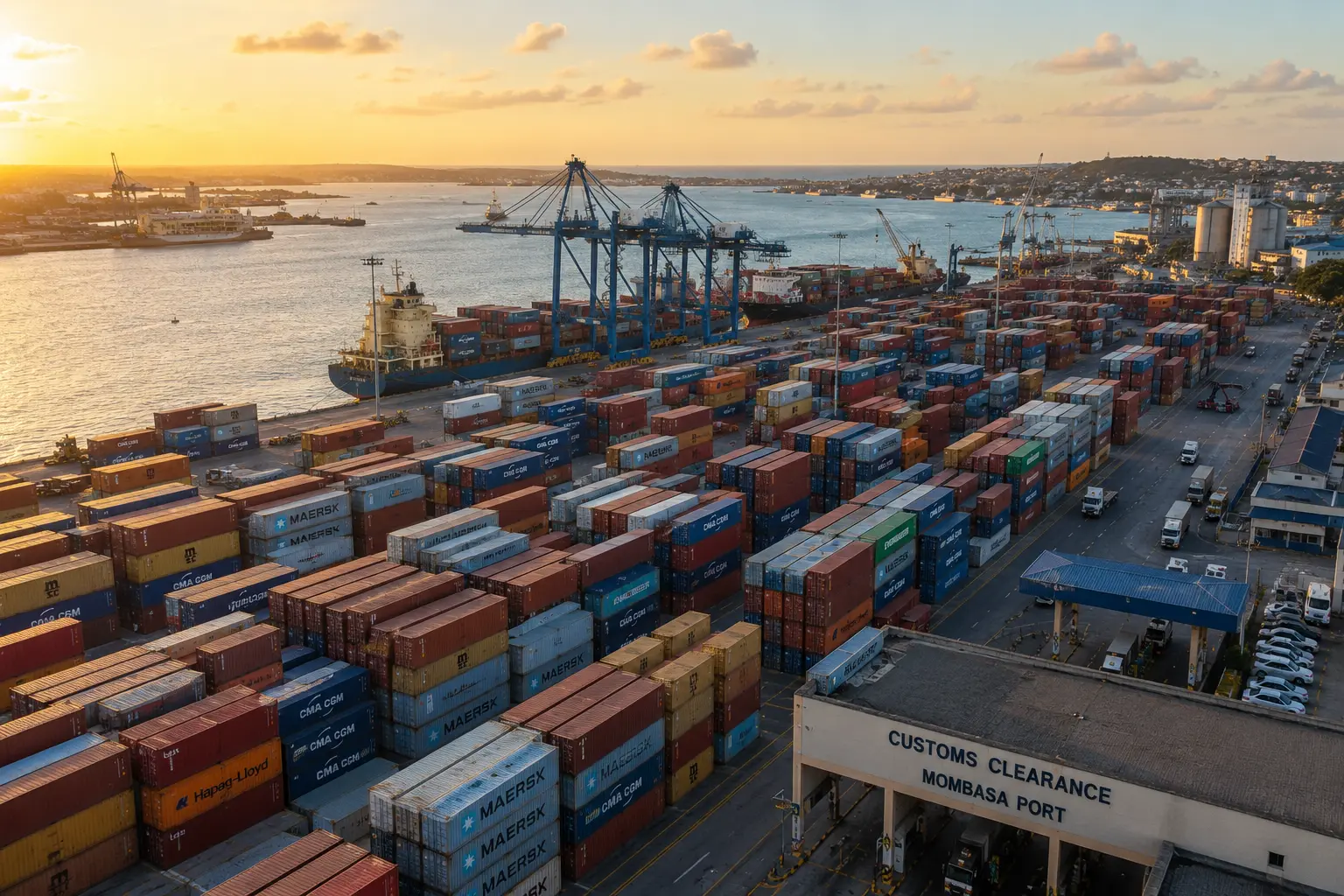
Kenya customs clearance for China imports is handled through KRA’s ICMS system by a licensed clearing agent. The process covers document lodging, duty assessment, payment, and physical inspection if required. At Mombasa, clearance takes 3 to 7 business days under normal conditions. At JKIA, 1 to 3 days. From May 2026, all sea freight shipments now face mandatory radioactive screening that adds 1 to 2 days. This Pamoja Imports guide covers every step of the clearance process, what it costs, how to avoid demurrage, and why most Kenya importers never deal with KRA directly.
- How Does Kenya Customs Clearance Work?
- What Documents Are Required for Kenya Customs Clearance?
- How Does Mombasa Port Sea Freight Clearance Work Step by Step?
- How Does JKIA Air Freight Clearance Work Step by Step?
- How Much Should You Budget for Kenya Customs Clearance Costs?
- What Is Demurrage and How Can You Avoid It?
- What Changed in 2026 for Mombasa Port Clearance?
- How Does Pamoja Imports Handle Clearance for Clients?
- Frequently Asked Questions
Customs clearance is the step most Kenya importers find most opaque. You have paid for your goods, arranged freight, and now your shipment is sitting at Mombasa Port or JKIA and you need it released. What happens between arrival and delivery, who does what, and what can go wrong? Getting the HS code wrong and using a non-transparent agent are two of the 10 most common mistakes Kenya importers make from China that relate directly to clearance.
This complete guide to customs clearance Kenya China imports answers all of it with current 2026 information, including the new mandatory radioactive screening that came into effect at Mombasa in May 2026. For everything that happens before your goods arrive at the port, see our complete guide to importing from China to Kenya. For a comparison of sea vs air freight costs and timelines, see our sea freight vs air freight guide. If you already have a supplier in China and need someone to coordinate the shipping and handle clearance end to end, see how our shipping-only service works.
How Does Kenya Customs Clearance Work?
The KRA customs clearance process runs through KRA’s Integrated Customs Management System (ICMS), where a licensed clearing agent lodges your declaration, KRA assesses duty, and your goods are released once payment clears. Every shipment entering Kenya must go through this, whether it arrives by sea at Mombasa, by air at JKIA, or by road at a border crossing, with no exception for small orders or personal importers.
Clearance is processed through KRA’s Integrated Customs Management System (ICMS). This digital platform handles import declarations, duty calculations, payment processing, cargo tracking, and release authorisation. Your clearing agent lodges everything here on your behalf.
Who can clear your goods
You cannot self-clear commercial goods at Mombasa Port without a KRA-licensed clearing and forwarding agent. This is a legal requirement, not just a convenience. A licensed agent is registered with KRA, has direct access to ICMS, and takes legal responsibility for the accuracy of your customs declaration. Attempting to self-clear leads to delays, penalties, and in some cases seizure of goods.
For independent importers using Alibaba or sourcing agents, choosing the right clearing agent is one of the most important logistics decisions you make. Our guide to finding the best shipping agent from China to Kenya covers what to look for and the right questions to ask.
What KRA actually does
KRA’s role in the clearance process is to verify that your declaration matches the actual goods, assess the correct duties and taxes, collect payment, and authorise release. In most cases they rely on the documentation your agent submits. In some cases they order a physical inspection of the container or consignment. A red channel inspection can add 2 to 5 days to clearance and additional handling costs.
What Documents Are Required for Kenya Customs Clearance?
The core import clearance Kenya documents are the IDF, commercial invoice, packing list, bill of lading or airway bill, PVoC certificate for regulated goods, and your KRA PIN. Incomplete or incorrect documentation is the single biggest cause of clearance delays and demurrage charges, and every document must be accurate and consistent with each other, since a discrepancy between the commercial invoice and packing list will trigger a KRA query and potentially a physical inspection.
| Document | Source | Required For | Notes |
|---|---|---|---|
| Import Declaration Form (IDF) | KRA iTax portal | All imports | Must be filed and paid before goods arrive. Penalty of 2% CIF for late filing. |
| Commercial Invoice | Your Chinese supplier | All imports | Must show FOB value, product description, quantity, and payment terms. Must match packing list exactly. |
| Packing List | Your Chinese supplier | All imports | Itemises contents, weights, and dimensions of each package. |
| Bill of Lading (sea) or Airway Bill (air) | Shipping line or airline | All imports | Proof of shipment and ownership. Required to release goods from port. |
| PVoC Certificate of Conformity | KEBS-accredited body in China | Regulated goods | Required before goods leave China. See our compliance guide for which products require it. |
| KRA PIN | KRA iTax portal | All imports | Your tax identification number. Required to file the IDF. |
| KEBS Import Standardisation Mark (ISM) | KEBS | Products sold in Kenya | Mandatory for products subject to Kenya Standards. Applied for before import. |
How Does Mombasa Port Sea Freight Clearance Work Step by Step?
Mombasa customs clearance moves through six stages from vessel arrival to Nairobi delivery, typically taking 3 to 7 business days under normal conditions. Sea freight from China arrives at East Africa’s largest port, and here is exactly what happens from vessel arrival to when your goods leave the port and head to Nairobi.
Vessel arrives and cargo is offloaded
The shipping line notifies your clearing agent of the vessel’s estimated arrival. Once the vessel docks and is offloaded, Kenya Ports Authority (KPA) stacks your container in the port yard or transfers it to a Container Freight Station (CFS) for LCL shipments. The free period begins immediately. At Mombasa, free periods are typically 3 to 7 days depending on the shipping line before demurrage starts accruing.
Day 0Radioactive screening (new May 2026)
From May 1, 2026, all containers at Mombasa Port undergo mandatory radioactive material screening under a directive from the Kenya Nuclear Regulatory Authority (KNRA). This is a new step that adds 1 to 2 business days to the clearance timeline. All sea freight importers should factor this into their delivery planning. The screening is compulsory and cannot be expedited.
Day 1–2Clearing agent lodges entry in ICMS
Your licensed clearing agent submits your import declaration in KRA’s ICMS system with all supporting documents attached. The entry includes the HS code classification, declared CIF value, and duty calculation. KRA reviews the submission and either accepts it for assessment or raises a query. Most straightforward shipments are accepted within 24 hours of lodging.
Day 1–2Duty assessment and payment
KRA calculates the duties owed: import duty, VAT at 16%, IDF at 2.5% (reduced from 3.5% under the Finance Act 2023), and RDL at 2% (increased from 1.5% under the Tax Laws Amendment Act 2024), verified against PwC Kenya Tax Summaries. Your clearing agent confirms the assessment and you pay via KRA’s banking partners, and payment must be made before release.
This is the step where undervalued goods on the commercial invoice causes the most problems: KRA uses reference value databases and will reassess if they believe the declared CIF is below market value. Note this is often the supplier’s proposal, not yours, and the liability sits entirely with the importer of record.
For a full breakdown of how duties are calculated, see our Kenya import duty guide. For a detailed breakdown of RDL specifically, see our Railway Development Levy Kenya guide. And to understand how the incoterm you agreed with your supplier affects the CIF value KRA assesses, see our FOB vs CIF Kenya guide.
Day 2–3Physical inspection (if selected)
KRA assigns each shipment to a clearance channel. Green channel means release without inspection. Yellow channel means document review. Red channel means physical inspection of the container contents. Red channel inspections add 2 to 5 days and incur additional handling charges. Most shipments with accurate documentation clear on green or yellow. The probability of red channel increases if your HS code is misclassified or your declared value is below KRA’s reference price for that product category. For a full breakdown of how HS codes work and the four misclassification mistakes that trigger red channel, see our HS codes Kenya guide.
Day 2–5 if inspectedRelease and transport to Nairobi
Once duties are paid and KRA issues the release, your clearing agent collects the container release order from the shipping line. The container is trucked from Mombasa to Nairobi, typically overnight, arriving the following morning. LCL shipments at a CFS are deconsolidated and your cargo is separated and loaded onto a truck or courier vehicle for Nairobi delivery.
Day 4–7 totalHow Does JKIA Air Freight Clearance Work Step by Step?
JKIA air freight clearance moves through three stages and typically finishes in 1 to 3 business days, faster than Mombasa since goods do not need to travel from the coast. Air freight arrives at Jomo Kenyatta International Airport in Nairobi, and Kenya customs clearance here follows a similar process to Mombasa but faster.
Flight arrives, cargo transferred to KQ Cargo
Air freight is held at the Kenya Airways Cargo terminal at JKIA or the relevant airline cargo facility. Your clearing agent receives the Airway Bill number from you and uses it to locate and claim your cargo in the system.
Day 0Entry lodged in ICMS and duties assessed
Your clearing agent lodges the import declaration in ICMS with supporting documents. KRA reviews and assesses duties. Air freight clearance at JKIA moves faster than Mombasa in most cases, with straightforward shipments assessed within the same day of lodging.
Day 1Payment and release
Duties are paid via KRA’s banking system. KRA issues release authority and your agent collects the goods from the cargo terminal. For small air freight shipments, same-day or next-day collection after payment is common. Your goods are then delivered directly to your Nairobi address or warehouse.
Day 1–3 total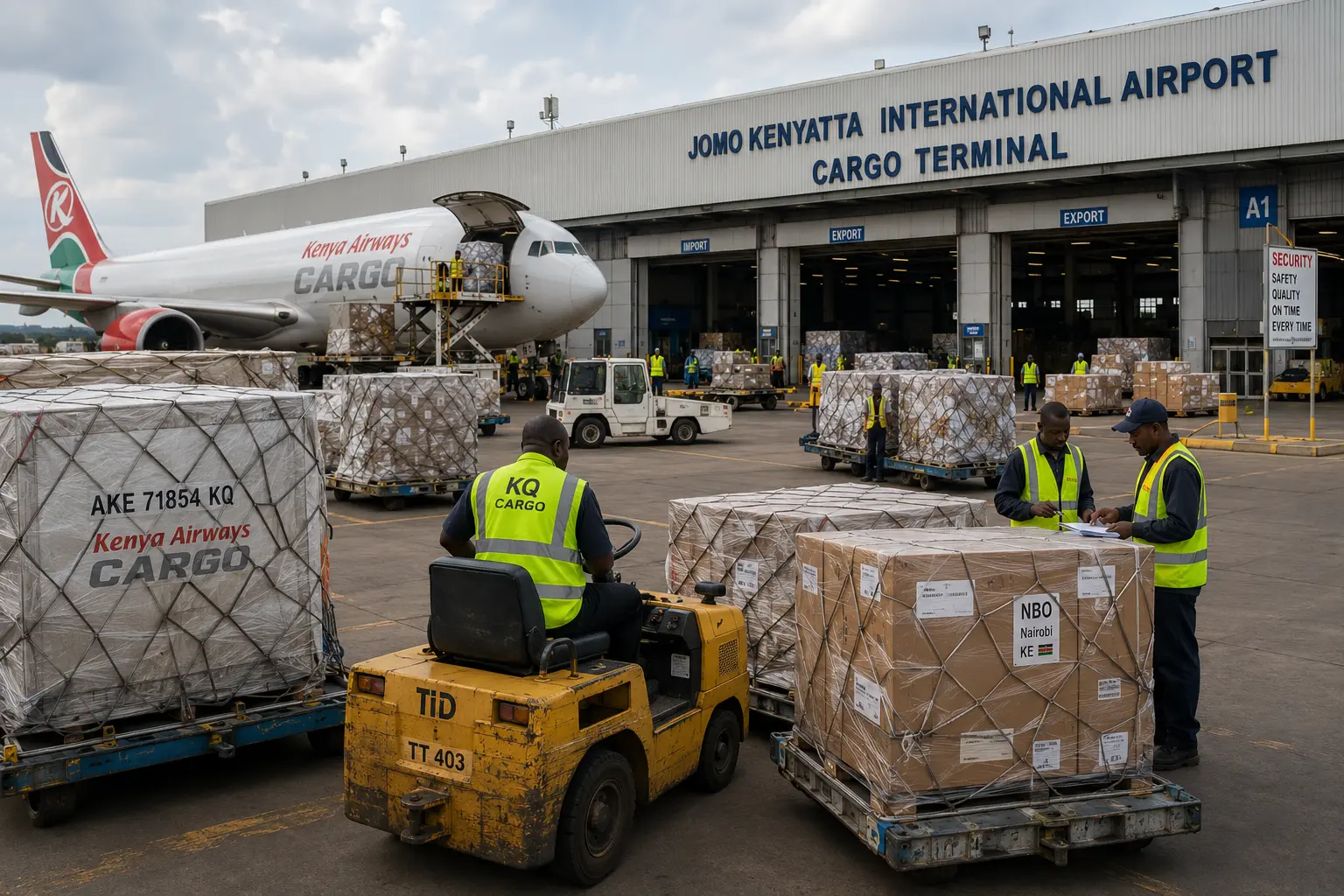
How Much Should You Budget for Kenya Customs Clearance Costs?
Independent importers should budget roughly 45,000 to 100,000 ksh in Mombasa clearance and transport fees (up to 125,000 ksh if selected for red channel inspection), or 13,000 to 33,000 ksh at JKIA, on top of duties and taxes calculated separately on your CIF value. With Pamoja Imports, Kenya customs clearance costs like these are already included in the all-in rate. Here is what the costs look like for independent importers going it alone.
Typical clearance costs
- Clearing agent fee: 15,000–40,000 ksh
- KPA handling: 5,000–15,000 ksh
- Container examination (if red): 10,000–25,000 ksh
- Transport Mombasa to Nairobi: 25,000–45,000 ksh
- Duties and taxes: separate, based on CIF value
Typical clearance costs
- Clearing agent fee: 8,000–20,000 ksh
- Airline cargo handling: 3,000–8,000 ksh
- Nairobi local delivery: 2,000–5,000 ksh
- Duties and taxes: separate, based on CIF value
These figures are for the logistics and agent fees only, not the duties and taxes themselves. For the full duty breakdown by product category, see our Kenya import duty guide. For how to structure your supplier payment to retain leverage until goods are confirmed ready, see our guide to paying Chinese suppliers. To calculate your total landed cost including duties and freight, use our shipping calculator.
What Is Demurrage and How Can You Avoid It?
Demurrage is a daily fee the shipping line charges when your container stays at the port beyond the free period, separate from the storage charge KPA bills on the same delay. It is one of the most avoidable costs in the import process, yet it catches many first-time importers off guard. In 2026, demurrage at Mombasa runs from about 1,677 to 12,900 ksh per container per day, and it is usually a cash flow failure as much as a logistics one, since it happens when the duty and clearance payment was not ready the moment cargo arrived.
For the full breakdown, including the difference between demurrage, storage, and detention, a worked ksh cost example for a delayed container, and every cause with how to prevent it, see our complete guide to demurrage and storage charges in Kenya. See our guide on cash flow when importing from China to Kenya for how to plan around that payment gate before it costs you.
What Changed in 2026 for Mombasa Port Clearance?
The screening is compulsory and applies to all cargo regardless of product type. It cannot be expedited or bypassed. The practical impact for Kenya importers from China: your sea freight delivery timeline is now 1 to 2 days longer than it was before May 2026. Plan your stock levels and customer commitments accordingly.
Industry groups have flagged concerns about the impact on port efficiency and demurrage costs, particularly given that Mombasa Port was already dealing with congestion from increased import volumes. The KNRA directive is intended to enhance national security and compliance with international safety standards. For importers, the main action is awareness: build the extra days into your Kenya customs clearance planning and inform your clearing agent that pre-clearance documentation should be lodged even earlier to compensate.
How Does Pamoja Imports Handle Clearance for Clients?
Pamoja Imports handles clearance entirely as part of the all-in rate, so your import clearance Kenya documents like the IDF are filed by our team before your goods leave China and you never deal with KRA directly. Most Kenyan importers who use Pamoja Imports never interact with KRA at all, since customs clearance is handled entirely by our team from the moment goods leave China to the moment they are delivered in Nairobi.
Here is what that looks like in practice: once your goods are ready for shipment, our Chengdu team coordinates the freight booking and prepares all export documentation. Our Kenya-based team handles the IDF filing, ICMS entry lodging, duty payment, and port release. You receive your goods in Nairobi with a full duty receipt and shipping documentation. No clearing agent fees to budget for separately. No surprises at the port.
For first-time importers especially, removing the clearance complexity is significant. If you are still planning your first import, our guide to starting an import business in Kenya covers the full process from product selection to delivery. The process of managing a clearing agent, monitoring KRA queries, paying duties through the ICMS banking system, and coordinating Mombasa-to-Nairobi transport adds real administrative burden to an already complex first import. With Pamoja Imports, that entire layer is handled under a single all-in rate.
Pamoja Imports clears your goods so you never deal with KRA directly.
Customs clearance, duty payment, port handling, and Nairobi delivery are all included in our all-in rate. Sea freight is 65,000 ksh/CBM all-in. Air freight is 1,700 ksh/kg all-in. No separate clearing agent fee. No surprise port charges.
- IDF filing handled by our team before goods leave China
- ICMS entry lodged in advance to minimise clearance time
- All duties, VAT, IDF, and RDL included in the quoted rate
- Mombasa-to-Nairobi transport included for sea freight
- Full duty receipt and documentation provided on delivery
Frequently Asked Questions
For more answers to common questions about Kenya customs clearance and importing from China to Kenya, visit our Kenya import FAQ page.
Air freight clearance at JKIA typically takes 1 to 3 business days if documents are correct and submitted before the flight arrives. Sea freight clearance at Mombasa typically takes 3 to 7 business days under normal conditions. From May 2026, the new mandatory radioactive screening at Mombasa Port adds 1 to 2 days to sea freight clearance times. With Pamoja Imports, clearance is handled by our team and is included in the all-in rate.
The core documents required are: Import Declaration Form (IDF), Commercial Invoice, Packing List, Bill of Lading (sea) or Airway Bill (air), PVoC Certificate of Conformity for regulated goods, and your KRA PIN. Additional documents may be required depending on the product category, including KEBS certification, KEPHIS permits for agricultural products, and PPB registration for health products.
Technically yes for air freight in some cases, but in practice almost all commercial importers use a licensed clearing agent. Self-clearance at Mombasa Port is not permitted without KRA licensing. Errors in HS classification or document preparation lead to delays and penalties that cost far more than the clearing agent fee. For commercial imports, a licensed clearing agent is the standard and recommended approach.
Demurrage is a daily fee charged when your cargo stays at the port beyond the free period, typically 3 to 7 days at Mombasa. In 2026, charges range from about 1,677 ksh to 12,900 ksh per container per day. The best way to avoid it is to have all documents ready before your goods arrive, file your IDF before the vessel docks, and use a clearing agent who lodges entries in KRA’s ICMS system in advance. With Pamoja Imports, our team manages this and clearance is included in your all-in rate.
From May 1, 2026, all containers and shipments passing through Mombasa Port must undergo mandatory radioactive material screening under a directive from the Kenya Nuclear Regulatory Authority (KNRA). The screening adds 1 to 2 business days to clearance timelines at Mombasa. All importers using sea freight should factor this into their delivery timeline planning.
If KRA inspects and finds a discrepancy between the declared goods and what was shipped, you may face re-assessment of duties, a penalty, or seizure of the goods. The most common causes are undervalued goods on the commercial invoice, incorrect HS code classification, or missing PVoC certification. Having a licensed clearing agent and accurate documentation eliminates most of these risks.
Never deal with KRA or Mombasa Port directly
With Pamoja Imports, customs clearance is handled by our team from China to your door in Nairobi. All-in rate, no surprise charges, full documentation on delivery.
Chat with us on WhatsApp
Jonatan Sirak sirak.se
Founder of Pamoja Imports, a Kenya-China import agency with an operations team based in Chengdu, China. With several years of hands-on experience facilitating shipments across electronics, solar equipment, construction materials, and consumer goods, he helps Kenyan entrepreneurs source and import products profitably. He splits his time between Nairobi and Chengdu.