
How to Pay Chinese Suppliers: Avoid Costly Scams 2026

How to pay Chinese suppliers safely depends on where you place the order. On Alibaba.com, pay through the platform so Trade Assurance can apply; for any other supplier, use a T/T bank transfer with 30% upfront and 70% before shipment. Never pay 100% upfront to a new supplier, and never use Western Union or a personal WeChat Pay or Alipay account for a first transaction. M-Pesa cannot send a wire to a Chinese supplier, but Pamoja Imports can purchase on your behalf for a purchasing fee of 10% of the product cost (minimum 2,500 ksh), and you pay us in ksh via M-Pesa.
- What Are the Ways to Pay Chinese Suppliers from Kenya?
- How Does a T/T Bank Transfer Work?
- How Does Alibaba Trade Assurance Work?
- How Do You Send Money to China from Kenya?
- How to Pay Chinese Suppliers: Which Payment Methods Should You Avoid?
- How Do You Spot Payment Fraud?
- Can Pamoja Imports Pay Chinese Suppliers for You?
- Frequently Asked Questions
Sending money to a supplier in China for the first time is one of the most nerve-wracking parts of importing. You have found a product, negotiated a price, and now you need to wire a significant amount of money to someone you have never met, in a country where recourse is difficult if things go wrong. Getting the payment method right is not just about cost: it is about limiting risk. Paying 100% upfront to an unverified supplier is one of the 10 most common mistakes Kenya importers make from China, and this guide shows how to pay Chinese suppliers from Kenya while limiting that risk.
Knowing how to pay Chinese suppliers safely is one of the most important skills for a Kenya importer. This guide covers the specifics: which methods work, what it costs to send money to China from Kenya, and how to structure your payment terms to protect yourself at every stage of the order. If you are still at the supplier selection stage, see our guide on how to find reliable Chinese suppliers before you commit to anyone. For the full import process from start to finish, see our complete guide to importing from China to Kenya.
What Are the Ways to Pay Chinese Suppliers from Kenya?
Kenya importers can pay Chinese suppliers by T/T bank transfer, through Alibaba Trade Assurance on orders placed on Alibaba.com, or by having Pamoja purchase on your behalf. The table below compares each method by safety, best use and cost.
| Method | Safety | Best For | Platform | Kenya Cost |
|---|---|---|---|---|
| Alibaba Trade Assurance | High | Orders placed on Alibaba.com | Alibaba only | Depends on payment method |
| T/T 30/70 split | Good | Verified suppliers, any platform | Any | Bank fee plus exchange rate margin |
| Pamoja purchases for you, paid via M-Pesa | n/a | Buyers who cannot or would rather not wire money | Any | Purchasing fee of 10% of the product cost, minimum 2,500 ksh |
| Wise transfer | Good | Comparing against bank rates | Any | Check the live quote |
| PayPal | Moderate | Samples and small test payments | Supplier must accept it | 4% currency conversion fee |
| 100% T/T upfront | Risky | Established, verified suppliers only | Any | Bank fee plus exchange rate margin |
| Western Union | Avoid | Never for commercial orders | N/A | Personal remittance fees apply |
| WeChat Pay / Alipay direct | Avoid | Never for first transactions | N/A | No platform behind the payment |
How Does a T/T Bank Transfer Work When Paying Chinese Suppliers?
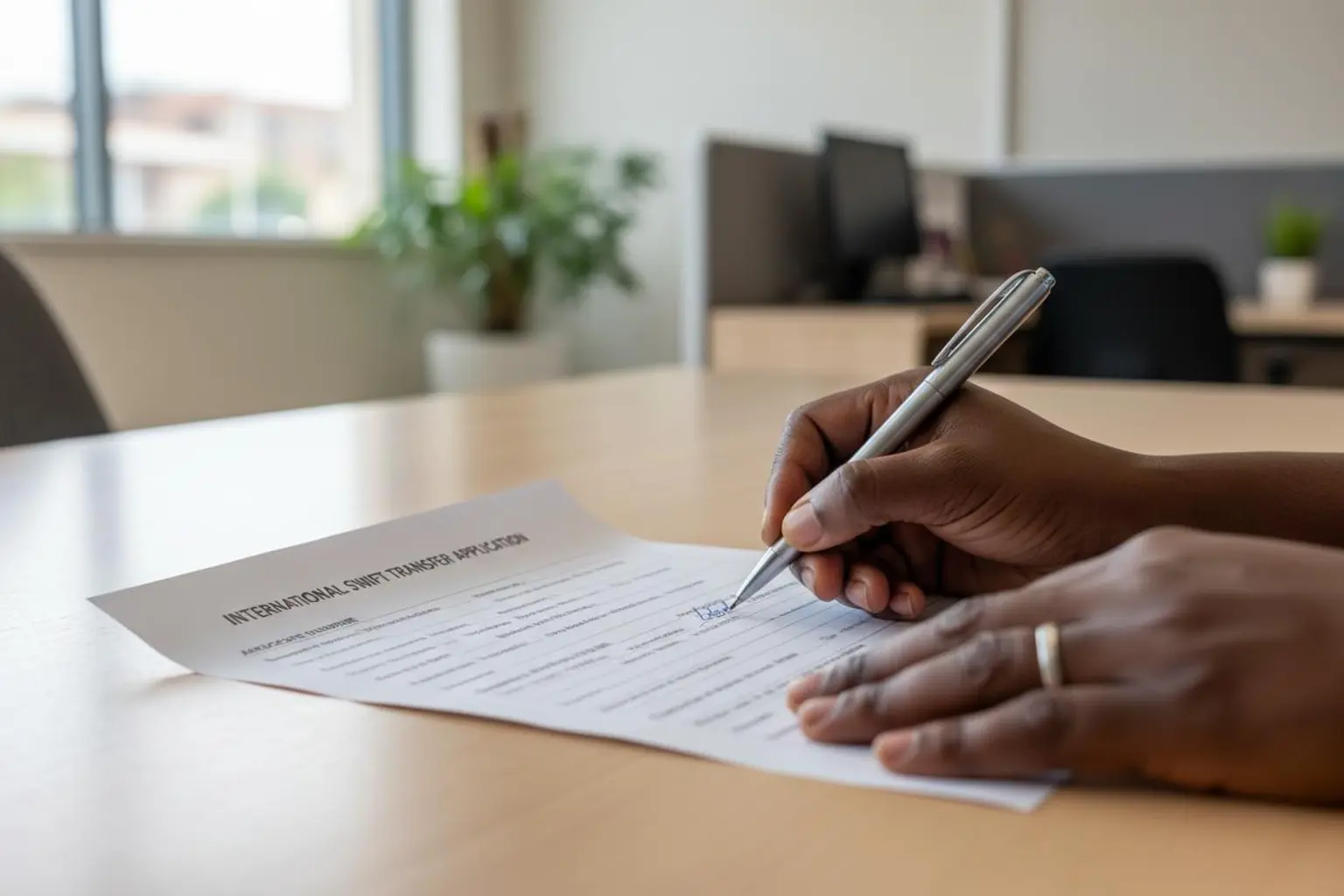
T/T (Telegraphic Transfer) is an international bank wire sent over the SWIFT network from your Kenyan bank to your supplier’s bank in China. A common structure is 30% upfront to start production and 70% before shipment, so you keep leverage until the goods are ready.
Suppliers that sell outside a platform’s own checkout commonly ask for a T/T bank transfer China-side, and the proforma invoice should list the bank details you need.
How T/T works step by step
- You agree on price, quantity, and payment terms with the supplier in writing.
- The supplier sends you a proforma invoice with their bank details: bank name, account number, SWIFT/BIC code, and account holder name. Confirm this invoice states the actual agreed price. Some suppliers propose a lower figure to help with your duty bill, which shifts the entire risk onto you, not them.
- You go to your Kenyan bank’s international transfers department (or use internet banking if available) and initiate the wire in USD.
- Your bank converts ksh to USD at their rate and sends the wire via SWIFT. Global Sources says a wire typically takes 3-5 working days to clear, so ask your bank for its own estimate.
- The supplier confirms receipt and begins production.
- Before shipment, you pay the remaining balance using the same process.
Standard payment terms: 30/70
A common T/T structure is a 30% deposit upfront to start production, and 70% balance before shipment once the goods are ready and you have confirmed quality. Global Sources (updated December 2023) describes the same 30/70 split. It is not a fixed standard, though: Quality Inspection Group warns buyers not to accept it at face value, and says a lower deposit, or paying the balance after a passed quality inspection, can often be negotiated. Once you have paid in full, you lose leverage.
The risk with T/T
A T/T transfer has no platform behind it. Once the money leaves your bank, recourse is limited if the supplier does not deliver. This is why the 30/70 split matters: you never pay the full amount before the goods are confirmed ready. For a first order with a new supplier, combine T/T with a pre-shipment inspection, order on Alibaba.com with Trade Assurance, or have us purchase on your behalf for a purchasing fee of 10% of the product cost (minimum 2,500 ksh).
How Does Alibaba Trade Assurance Work?
The Alibaba Trade Assurance Kenya importers can use is Alibaba.com’s service for orders where the product quality or ship date differs from what you and the supplier agreed in the online order, according to Alibaba’s Trade Assurance page. The same page says protection is “only enforced when you pay online via Alibaba.com”, so both the order and the payment need to go through the platform.
If you are deciding where to source, our guide to choosing a sourcing platform covers which platform suits your stage of importing.
What Trade Assurance covers
According to Alibaba, when an order’s quality or ship date differs from the agreed terms, Alibaba helps reach an outcome that can include a refund.
- Quality or ship date: If either differs from what was agreed in the online order, you can raise it with Alibaba.
- Refund requests: Alibaba says buyers can request a refund within 30 days after delivery.
- Cost: Alibaba says there is no extra fee for buyers.
The critical rule: everything on the platform
Because protection depends on paying through Alibaba.com, a supplier who asks you to pay by bank transfer directly to their account is taking your order outside the platform. Be very suspicious of any supplier who pushes you away from Alibaba’s checkout mid-order.
Trade Assurance limitations
Trade Assurance is not a guarantee of success. Coverage depends on the order, so read the Trade Assurance terms shown on your order before you pay. Disputes can take time to resolve, and the outcome depends on what you agreed in the order. The more specific and detailed your order contract on the platform, the stronger your position in a dispute. Always document agreed specifications in writing before you pay anything. For what a supplier’s delivery quote does and does not include once the goods reach Kenya, see our guide on does Alibaba ship to Kenya.
Check whether Trade Assurance applies to your sample order before you pay. See our Alibaba sample Kenya guide for the full cost and process before you order one.
How Do You Send Money to China from Kenya?
To send money to China from Kenya, you use a SWIFT wire from a Kenyan bank, or a transfer service that supports your route. Bank fees and exchange rates both affect the real cost, so compare them before you send.
Using your Kenyan bank
Banks in Kenya that offer international transfers can send a SWIFT wire to a supplier’s bank in China. The process:
- Visit the international transfers desk or use internet banking if enabled for your account.
- Provide the supplier’s bank details: beneficiary name, bank name, bank address, account number, and SWIFT/BIC code. Your supplier’s proforma invoice should have all of these.
- Specify the amount in USD. Your bank converts from ksh at their rate.
- Pay the transfer fee. Fees differ by bank, so check your bank’s current tariff: NCBA’s published tariff guide lists outward transfer fees of 1,950 ksh online or mobile and 2,400 ksh manual, plus correspondent bank charges of USD 15 to 30. The version we reviewed carries the code NCBA TARIFF/06/24 and no effective date.
- Keep your SWIFT confirmation number. This is your proof of payment.
The main downside of bank wires is the exchange rate. The Central Bank of Kenya says its published rate is market determined and that commercial banks and forex bureaus set their own rates, so compare your bank’s rate with the published rate and a live quote before you send. As an illustration, if the rate is 2% worse than mid-market, a 200,000 ksh payment costs 4,000 ksh extra.
Using Wise to compare rates
Wise’s Kenya page says customers in Kenya can send money internationally. Before relying on it for a supplier payment, check in the Wise app that your route and currency are supported, and compare its live fee and rate with your bank’s. Some suppliers will only accept payment to a bank account in China.
Can you use M-Pesa to pay Chinese suppliers?
No. M-Pesa cannot send a wire to a Chinese supplier, so a direct supplier payment goes through your Kenyan bank or a transfer service. What we can do is purchase on your behalf: you pay us in ksh via M-Pesa, we pay the supplier in China, and we charge a purchasing fee of 10% of the product cost, with a minimum of 2,500 ksh.
How to Pay Chinese Suppliers: Which Payment Methods Should You Avoid?
Avoid Western Union, personal WeChat Pay or Alipay accounts, and 100% upfront payment to a new supplier for commercial orders. Each leaves you with little recourse if the goods do not arrive.
Western Union is designed for personal remittances, not commercial transactions. There is no platform behind the payment, and once the money is collected it is hard to recover. Any supplier insisting on Western Union for a commercial order is a red flag.
Paying a supplier via their personal WeChat Pay or personal Alipay account on a first transaction leaves you with little recourse if goods are not delivered. For business orders, pay a company bank account whose name matches the supplier’s business licence. This does not mean the supplier is fraudulent, because many Chinese SMEs operate partly through personal accounts, but it leaves you with no platform behind the payment as a first-time buyer.
Paying 100% upfront removes all your leverage before production even starts. Legitimate suppliers with strong track records sometimes request this for standard catalogue products, but for a new buyer placing a first order, it is an unnecessary risk. Always negotiate at minimum a 30/70 split, and never pay 100% upfront to a supplier you have not worked with before.
PayPal is fine for ordering samples or paying for very small test quantities. PayPal’s Kenya fee page lists a 4% currency conversion fee above the base exchange rate, which adds up on larger orders, and not every supplier accepts PayPal. Use it for samples. Use T/T or Trade Assurance for everything else.
How Do You Spot Payment Fraud When Paying Chinese Suppliers?
Payment fraud is a real risk when you pay a supplier directly, and the most common tactics are changed bank details, false claims of platform coverage and requests to pay outside the platform. Our Chengdu team has seen it happen to buyers working without an agent.
Bank account substitution fraud
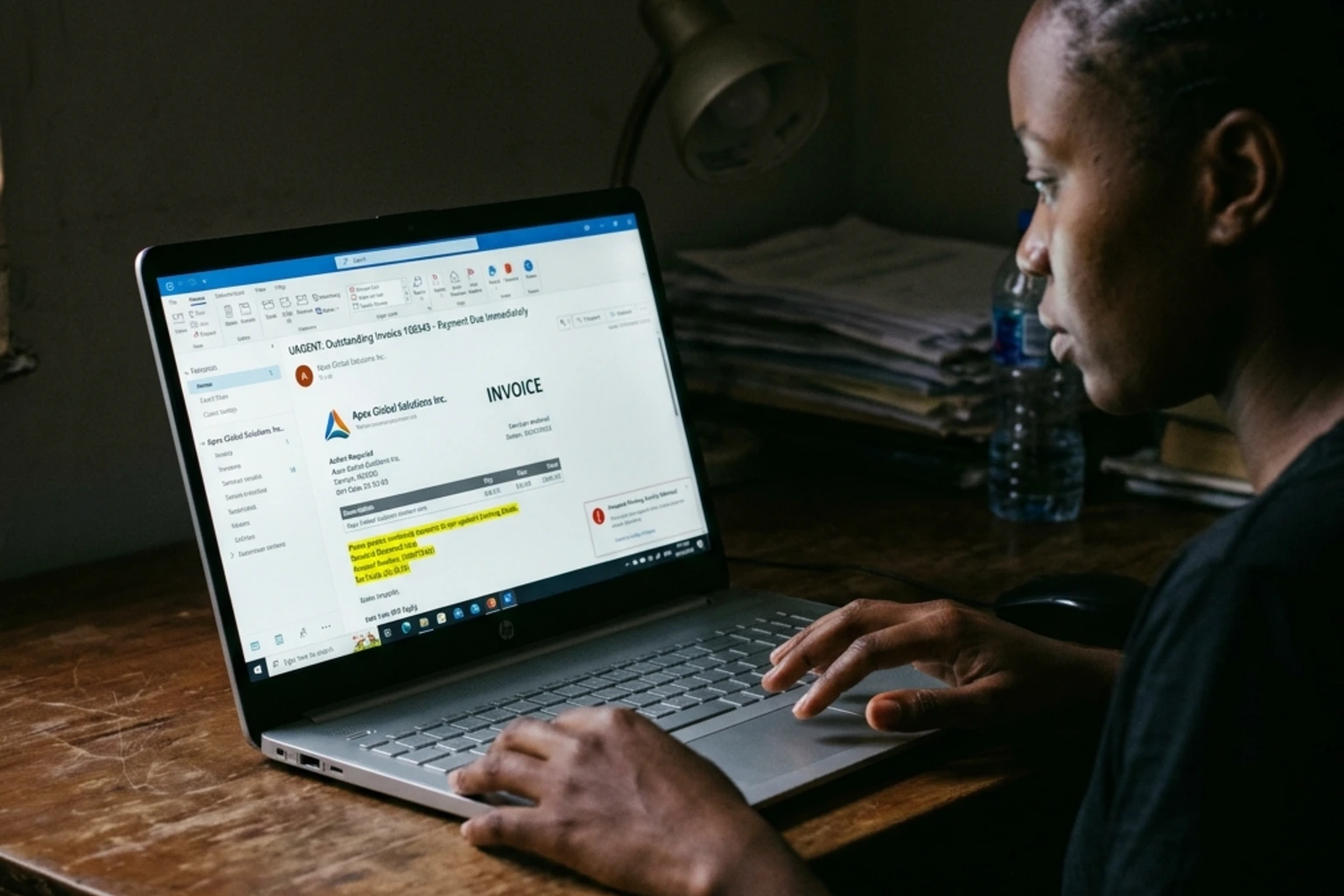
This is one of the better-known scams in international trade. A third party intercepts your email communication with a supplier and monitors your conversation. When payment is due, they send you a fraudulent invoice with changed bank details: the supplier’s name at the top, but a different account number. You wire the money, it goes to a fraud account, and the real supplier never receives it.
How to protect against it: always verify any change in bank details by calling the supplier directly on a phone number you already have, not a number provided in the email with the changed details. If details change unexpectedly, treat it as a red flag until you have spoken directly to the supplier by video or phone. The FBI’s Internet Crime Complaint Center advises using a secondary channel to verify requests for changes in account information.
False Trade Assurance claims
A supplier may claim Trade Assurance applies when your payment is not going through Alibaba’s checkout. Confirm that Trade Assurance is shown on your specific order and that you pay through Alibaba.com before you send any money.
The “pay outside Alibaba” scam
You place an order through Alibaba and pay the deposit through Alibaba’s checkout. When the balance is due, the supplier tells you they cannot accept Alibaba’s checkout for the final payment for various reasons, such as tax purposes, platform fees or account issues. They ask you to pay the balance directly to their bank account. That puts the payment outside Alibaba’s checkout, where Trade Assurance does not apply. Never pay outside Alibaba if that is how you started the transaction.
Can Pamoja Imports Pay Chinese Suppliers for You?
Yes, if you cannot pay the supplier yourself: we purchase on your behalf for a purchasing fee of 10% of the product cost, with a minimum of 2,500 ksh, and you pay us in ksh via M-Pesa. If you already have a supplier and only need shipping, you pay that supplier directly using one of the methods above and we handle the freight.
M-Pesa cannot send a wire to a Chinese supplier, so when we purchase for you, you pay us in ksh and we pay the supplier in China. You never need to send an international wire yourself.
Here is what our payment model looks like in practice: you send us the product you want to source. We vet suppliers, negotiate price, and send you a clear quote in ksh covering goods, freight, import duty, VAT, IDF, RDL, and customs clearance, with no hidden charges.
For a full breakdown of what the Kenya customs clearance process involves, see our Kenya Customs Clearance for China Imports: Step-by-Step Guide 2026. Once you approve the quote, you pay us via M-Pesa, and we place the order, pay the supplier and arrange shipment. If you want the goods checked before they leave China, we can arrange a pre-shipment inspection for a fee. For more on how we handle freight, see our sea vs air freight guide.
How the payment schedule works when we purchase for you
If we buy on your behalf, the product cost, the purchasing fee and the shipping deposit are paid upfront together, before we place the purchase. The shipping deposit is 7.5% of your freight cost (minimum 2,500 ksh), reduced to 5% for shipments above 80,000 ksh, and it is charged on top of your shipping cost. You pay the shipping cost when your goods arrive at our Kenya warehouse, and the last mile delivery fee when the driver delivers, agreed directly with the driver based on your location.
Pamoja Imports: Pay in ksh. We handle the China side.
You never need to wire money to China. You pay us via M-Pesa in ksh, and we purchase on your behalf, pay the supplier and arrange shipment.
- Pay in ksh via M-Pesa: no international wires needed
- Purchasing fee of 10% of the product cost, minimum 2,500 ksh
- Our team negotiates with suppliers in Mandarin
- Pre-shipment inspection is available for a fee
- All-in shipping rate covers freight, import duty, VAT, IDF, RDL, and clearance. See our Kenya import duty guide for the full breakdown
- Sourcing is free for your first 3 products. From the 4th product a 2,000 ksh deposit applies per order, rising to 5,000 ksh from the 11th, deducted from your final order value
If you are planning your first import and want to understand the full process from product selection to delivery, our guide to starting an import business in Kenya covers every stage, including how to calculate your full landed cost before you commit to an order.
Frequently Asked Questions
For more answers to common questions about importing from China to Kenya, visit our Kenya import FAQ page.
On Alibaba.com, pay through the platform so Trade Assurance can apply to your order. For suppliers outside Alibaba, a T/T bank transfer with a 30% deposit and 70% before shipment is a common structure, and you should never pay 100% upfront to a new supplier. If you would rather not send an international wire, we can purchase on your behalf for a purchasing fee of 10% of the product cost, with a minimum of 2,500 ksh, and you pay us in ksh via M-Pesa.
No. M-Pesa cannot send a wire to a Chinese supplier, so a direct supplier payment goes through a Kenyan bank, or a transfer service that supports your route, as a SWIFT wire to the supplier’s bank account. What we can do is purchase on your behalf: you pay us in ksh via M-Pesa, we pay the supplier in China, and we charge a purchasing fee of 10%, with a minimum of 2,500 ksh.
A common T/T bank transfer China suppliers ask for on small to medium orders is a 30% deposit upfront before production and a 70% balance before shipment, once you have confirmed the goods are ready. This is common but not a fixed standard: Quality Inspection Group’s guide to payment terms says buyers can often negotiate a lower deposit or pay the balance after a passed quality inspection. Paying 100% upfront is high risk and should be avoided with new or unverified suppliers.
PayPal works for samples and very small payments but is not recommended for regular import orders. PayPal’s Kenya fee page lists a 4% currency conversion fee above the base exchange rate, and not every supplier accepts PayPal. Use PayPal for samples only.
Alibaba Trade Assurance Kenya buyers can use applies only when the order is paid online through Alibaba.com, according to Alibaba’s Trade Assurance page. Check the Trade Assurance terms shown on your own order before you pay.
Stop immediately and do not transfer anything. This is one of the most common payment fraud tactics: a third party intercepts communication and changes the bank details on an invoice. Verify the new account details by calling the supplier directly on a phone number you already have, not one provided in the email with the changed details. If you cannot verify, do not pay.
Fees differ by bank. NCBA’s published tariff guide (version code NCBA TARIFF/06/24, no effective date shown) lists outward transfer fees of 1,950 ksh online or mobile and 2,400 ksh manual plus correspondent bank charges of USD 15 to 30, and banks convert ksh to USD at their own exchange rate. The Central Bank of Kenya says commercial banks and forex bureaus set their own rates, so compare your bank’s rate with a transfer service’s live quote before sending, especially on large orders.
The Simplest Way to Pay Chinese Suppliers from Kenya
Pay us in ksh via M-Pesa. We handle your supplier payment in China and ship everything all-in to Nairobi. No SWIFT codes. No hidden fees.
Chat with us on WhatsApp
Jonatan Sirak sirak.se
Founder of Pamoja Imports, a Kenya-China import agency with an operations team based in Chengdu, China. Based in China since 2018, he studied Mandarin and built direct factory relationships in Chengdu, and now helps Kenyan entrepreneurs source and import products profitably. He splits his time between Nairobi and Chengdu.