
10 Mistakes Importing from China to Kenya – 2026 Guide

The most expensive mistakes importing from China to Kenya are not about finding the wrong product. They are about calculating costs incorrectly, skipping steps that exist for good reason, and using platforms and agents that cost more than they save. This Pamoja Imports guide covers the 10 mistakes that consistently cost Kenya importers money, with a clear fix for each one.
Most guides about importing from China to Kenya focus on the process: find a supplier, calculate the duty, arrange freight, clear customs. What they rarely cover is where it actually goes wrong. And it goes wrong in very predictable ways.
The mistakes importing from China to Kenya that cost people the most money are rarely exotic. They are structural errors that come from not knowing what you do not know. The good news is that every mistake on this list is avoidable, and most of them are fixable before you place your first order. If you are still in the research stage, our complete guide to importing from China to Kenya covers the full process step by step.
Why Kenya Importers Keep Making the Same Mistakes
The China-Kenya import corridor is one of the busiest trade lanes in East Africa. Kenya imported USD 4.31 billion worth of goods from China in 2024, according to UN COMTRADE data. But the information available to most Kenyan entrepreneurs starting out is generic, outdated, or written for a completely different market.
The result: people walk into their first import with cost assumptions that do not match reality, supplier relationships that have not been verified, and freight quotes that look cheap but are not all-in. The losses are real. A 200,000 ksh shipment can turn into a 320,000 ksh landed cost if the duty calculation was wrong. A 100% upfront payment to a new supplier can disappear entirely. A wrong freight choice can cost more in shipping than the goods are worth.
This guide addresses all of it. We have organized the mistakes from most financially damaging to most commonly overlooked, with a specific fix for each one.
The 10 Biggest Mistakes Importing from China to Kenya
This is the single most expensive mistake when importing from China to Kenya. You find a product on 1688 for 200 ksh per unit, multiply by 500 units, and assume a straightforward margin. The problem: by the time import duty (0 to 35% depending on product), VAT at 16%, IDF at 2.5%, RDL at 2%, and freight are added, the landed cost per unit can be two to three times the Chinese supplier price.
A 100,000 ksh goods order for general merchandise at 25% duty, shipped via air freight at 15kg, lands in Nairobi costing roughly 170,000 to 190,000 ksh all-in. If you planned for 120,000 ksh, that gap is coming out of your margin or your pocket at the port. Our Kenya import duty guide breaks down the exact formula with real ksh examples for every charge.
Ordering 300 units of a product you have never physically inspected is one of the fastest ways to lose money on an import. Product photos lie. Video calls show you what the supplier chooses to show. A supplier who sends clean samples to established buyers often fills bulk orders with lower-grade product, wrong specifications, or different colourways than agreed.
The sample costs 5,000 to 15,000 ksh in air freight for most items. A bad bulk order costs 5 to 50 times that, and there is very little legal recourse from Kenya if the goods arrive wrong. Skipping the sample is not saving money. It is gambling with your entire investment.
Alibaba is China’s export-facing platform. Prices are built for foreign buyers and structured to absorb trading company margins, English-language support costs, and Alibaba’s own commission. 1688 is China’s domestic wholesale platform used by local businesses buying directly from factories. The same product regularly costs 20 to 50% less on 1688 or Pinduoduo than on Alibaba. The gap is largest on fast-moving consumer categories where Pinduoduo competes aggressively on price.
Most Kenyan importers do not know these platforms exist, or cannot use them because the interfaces are entirely in Mandarin with no international payment options. So they pay Alibaba prices and assume they are getting factory pricing. They are not.
Wire transfer fraud in the China-Kenya trade corridor follows a predictable pattern. The supplier looks legitimate, shares product photos or even samples, requests full payment, and then either disappears or ships completely different goods. By the time you realize what has happened, your money is gone. There is no international payment protection and no practical legal recourse from Kenya.
This is not a rare edge case. It is common enough that it should be treated as the default risk when working with any new supplier for the first time.

Certain product categories require Pre-Export Verification of Conformity from KEBS before your goods can legally enter Kenya. If your shipment arrives at Mombasa port or JKIA without the required PVoC certificate, it is held at port or destroyed. This cannot be fixed retrospectively. The compliance cost and delay of getting it wrong far exceeds the cost of getting it right before you place the order.
Categories that typically require PVoC include electronics, cosmetics and personal care products, clothing and textiles, construction materials, and electrical equipment. Note that the PVoC contract for general goods expired in February 2026 and KEBS is in the process of procuring new inspection agents. Requirements are in transition. Confirm current status before ordering anything in a regulated category.
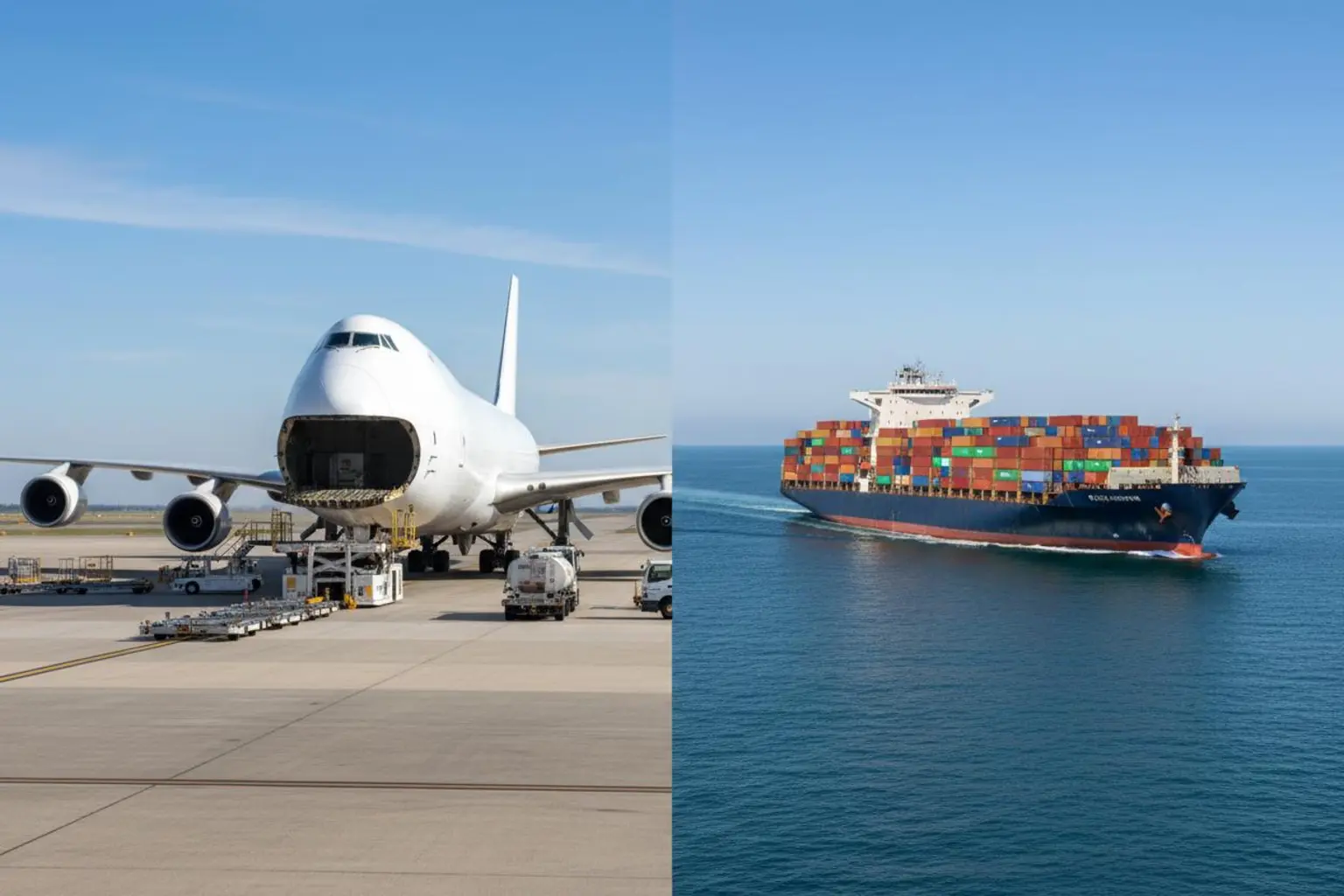
Air freight at 1,700 ksh/kg all-in is the right choice for high-value, lightweight goods. It is the wrong choice for anything heavy and cheap. A 20kg shipment of kitchen goods worth 15,000 ksh costs 34,000 ksh to air freight. The freight alone is more than double the product value. Sea freight at 65,000 ksh/CBM all-in would cost 6,500 ksh for the same 0.1 CBM shipment. That is a difference of 27,500 ksh on a single order, enough to eliminate any profit.
The mistake happens because air freight feels safer and more familiar for first-time importers. Sea freight feels intimidating. But for bulky or heavy goods, the cost difference is too large to ignore.
Your HS code determines your import duty rate. Get it wrong in either direction and you lose money. Underpay duty because of an incorrect classification and KRA can reassess your shipment, charging the correct duty plus penalties and interest. Overpay and you simply leave money on the table with no refund mechanism. Some products sit on the boundary between two HS codes with very different rates. A solar charge controller, depending on its specification, could be classified at 0% or 10%. That difference on a 200,000 ksh shipment is 20,000 ksh.
Many first-time importers choose clothing (25 to 35% duty plus PVoC compliance), mobile phones (35% duty plus excise duty), or ceramic tiles (35% duty) without running the full duty numbers first. High-duty products have thinner landed margins, stricter compliance requirements, and less room to absorb the small mistakes that are inevitable on a first order.
A 200,000 ksh clothing shipment attracts roughly 85,000 to 100,000 ksh in taxes and duties before freight is added. That is not a beginner calculation. There are excellent low-duty products in the Kenyan market: solar equipment at 0%, phone accessories at 10%, agricultural tools at 0 to 10%. Starting there gives you room to learn the process profitably. If you do want to import clothing, see our full guide on importing clothing from China to Kenya which covers duty rates, sizing, quality control, and landed cost calculations.
Committing to a full sea freight order before you have sold a single unit is a cash flow trap. You tie up capital in a product that might move slowly, arrive in specifications that the market does not want, or face unexpected competition from a cheaper source you did not know about when you ordered. The sea freight savings versus air freight on that first order are real, but they are nothing compared to sitting on 500 units of unsellable stock for six months.
The right sequence is: small air freight first order, validate demand, then scale with sea freight. This is not caution for its own sake. It is the fastest path to a profitable second order.
A low headline freight rate means nothing if it excludes customs clearance, KRA duty, IDF, RDL, or port handling fees. A freight-only quote of 42,000 ksh/CBM sounds cheap until the clearance invoice arrives for 28,000 ksh. That is already 70,000 ksh before import duty, VAT at 16%, IDF at 2.5%, and RDL at 2% are even calculated. On a 200,000 ksh goods shipment those taxes add another 50,000 to 80,000 ksh. The real all-in cost easily reaches 120,000 ksh or more. Pamoja’s 65,000 ksh/CBM rate includes every one of those charges. One number, nothing added at port.
Non-transparent pricing is not always dishonest. Sometimes it is simply how different cost components are billed separately in the industry. But for a Kenya importer trying to calculate landed cost before placing an order, it makes accurate planning impossible.
Mistake Severity: Quick Reference Table
Use this table to prioritize which mistakes importing from China to Kenya are most urgent to address before you place your next order.
| # | Mistake | Severity | Guide |
|---|---|---|---|
| 1 | Calculating from supplier price, not landed cost | High | Duty Guide |
| 2 | Skipping the sample order | High | Quality Control |
| 3 | Sourcing from Alibaba instead of 1688 or Pinduoduo | High | Platform Guide |
| 4 | Paying 100% upfront to unverified supplier | High | Payment Guide |
| 5 | Ignoring KEBS PVoC compliance | High | Compliance Guide |
| 6 | Air freight for bulky, low-value goods | Medium | Freight Guide |
| 7 | Wrong HS code | Medium | Duty Guide |
| 8 | High-duty product as first import | Medium | Product Guide |
| 9 | Large quantities before validating demand | High | Business Guide |
| 10 | Non-transparent shipping agent pricing | High | Agent Guide |
How Pamoja Imports Helps You Avoid These Mistakes
Pamoja Imports: Most of these mistakes are eliminated by design, not by luck.
Seven of the ten mistakes on this list either cannot happen with Pamoja or are directly addressed as part of how we work. We source from Pinduoduo and 1688 first, so you never pay Alibaba prices. We vet suppliers before you pay anything. We handle all compliance checks before your order ships. Our rate is all-in: freight, import duty, VAT, IDF, RDL, and customs clearance, one number, no surprises at port.
- Landed cost calculated before every order, not discovered at the port
- Sourcing from Pinduoduo and 1688 as standard, not Alibaba
- Supplier verification by our team in Chengdu before any payment
- Pre-shipment inspection available on request
- Compliance and PVoC requirements confirmed before ordering
- All-in freight rate: 65,000 ksh/CBM sea, 1,700 ksh/kg air, everything included
- Start from 30,000 ksh so you can test before scaling
For a worked example of these mistakes in a specific product category, see our guide to importing motorcycle spare parts from China to Kenya.
Frequently Asked Questions
The most common and most expensive mistake is calculating profit from the Chinese supplier price instead of the full landed cost in Nairobi. Import duty (0 to 35% depending on product), VAT at 16%, IDF at 2.5%, RDL at 2%, and freight can add 40 to 80% on top of the supplier price. Importers who skip this calculation often discover at the port that their expected profit has disappeared. Use our profit calculator before placing any order.
Never pay 100% upfront to a supplier you have not worked with before. Standard safe payment practice is 30% deposit with the balance paid against the bill of lading copy or after a pre-shipment inspection. Order a sample before any bulk order. Verify the supplier’s business license on China’s National Enterprise Credit Information System. Use a sourcing agent with on-the-ground presence in China who can physically vet the factory before you commit to anything.
If you underpay duty because of a wrong HS code, KRA can reassess your shipment and charge the correct duty plus penalties and interest. If you overpay, you simply lose money you did not need to spend. Some products sit on the boundary between two codes with very different duty rates. Always verify your exact HS code on kra.go.ke before calculating any landed cost. When unsure, confirm with a licensed clearing agent before placing the order.
Mobile phones attract 35% import duty plus excise duty, making margins very tight for beginners. Clothing and textiles attract 25 to 35% duty and require KEBS PVoC certification. Ceramic tiles attract 35% duty and face established competition. First-time importers should start with 0% or 10% duty products such as solar equipment, phone accessories, or agricultural tools, where there is more margin to absorb early learning. See our most profitable items guide for a full ranked breakdown.
Air freight at 1,700 ksh/kg all-in is cost-effective for high-value, lightweight goods. Sea freight at 65,000 ksh/CBM all-in is cheaper for anything bulky or heavy. As a general rule: if your goods weigh more than 10kg and cost less than roughly 2,000 ksh per kg at the supplier level, sea freight almost always gives a better landed cost. Use the Pamoja shipping calculator to compare both options for your specific shipment, or see our sea vs air freight guide for the full break-even analysis.
Technically yes, but Kenya customs requires import declarations to be processed through the KRA ICMS system, and for most commercial shipments this requires a licensed clearing agent. Going without one means handling complex documentation yourself, knowing the correct HS codes, and navigating KRA’s systems. Most importers use a licensed clearing agent or an all-in import service like Pamoja Imports, where freight, customs clearance, duty, and delivery are handled under one transparent rate with no separate invoices.
Ready to Import Without the Mistakes?
Tell us what you want to import. We will source it, verify the supplier, confirm compliance, and give you a full all-in landed cost before you commit to anything.
Submit a Source Request
Jonatan Sirak sirak.se
Founder of Pamoja Imports, a Kenya-China import agency with an operations team based in Chengdu, China. With several years of hands-on experience facilitating shipments across electronics, solar equipment, construction materials, and consumer goods, he helps Kenyan entrepreneurs source and import products profitably. He splits his time between Nairobi and Chengdu.