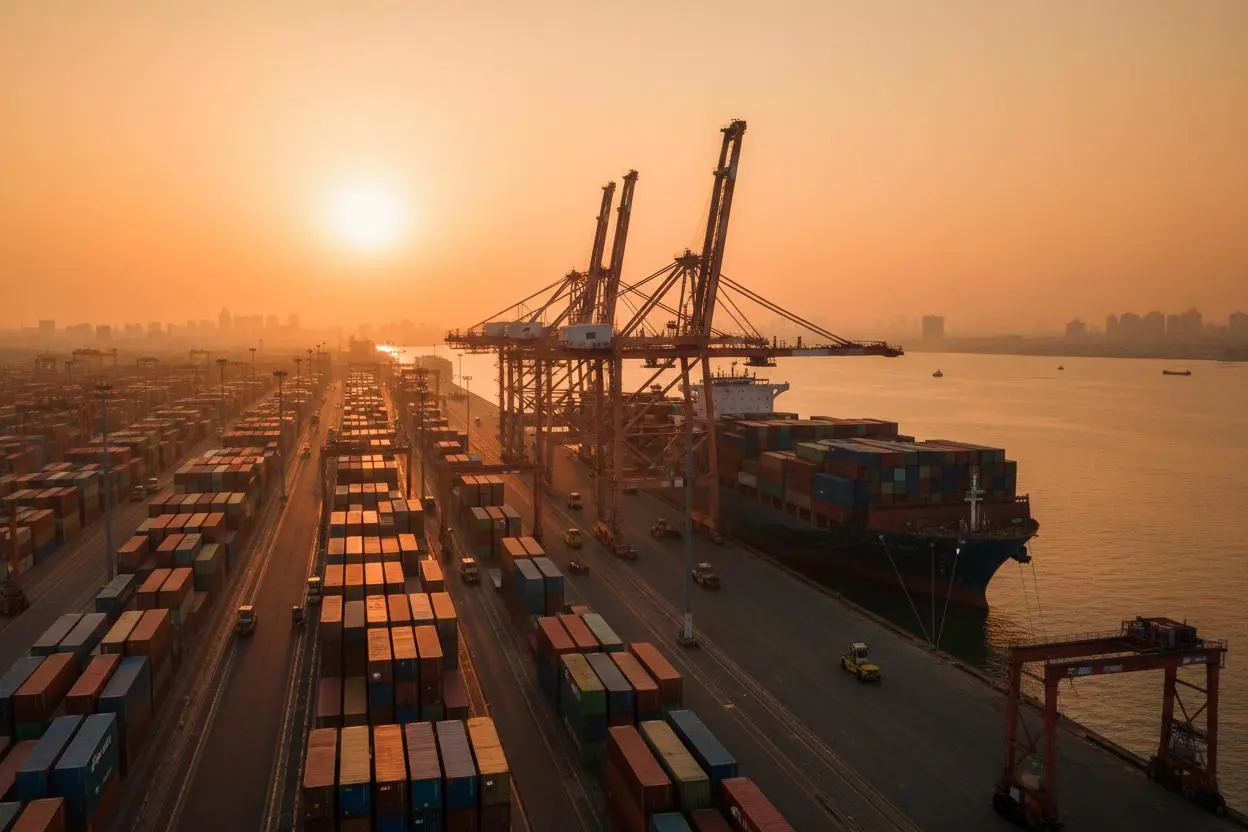

Railway Development Levy Kenya: The Proven 2026 Guide
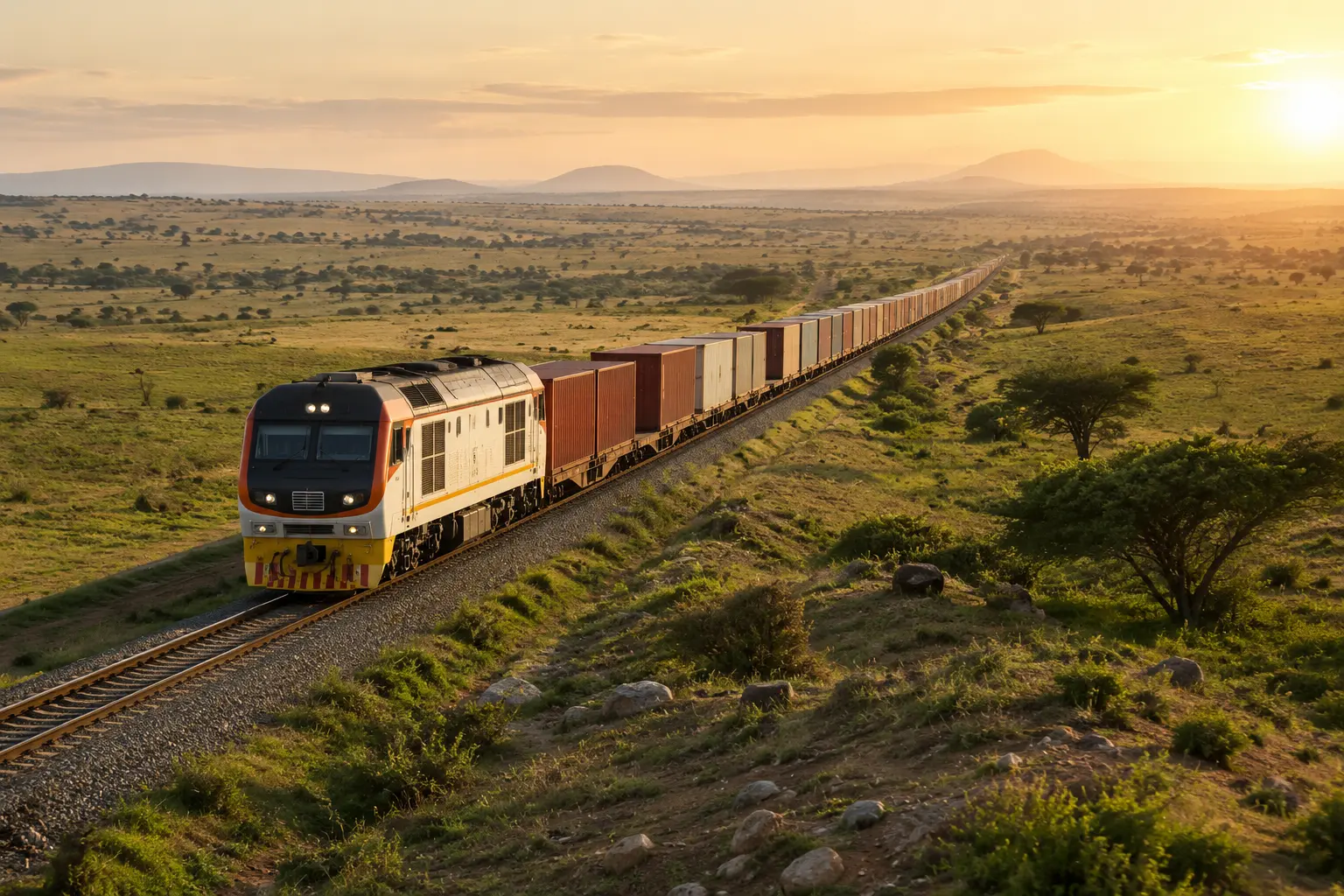
The Railway Development Levy Kenya (RDL) is a 2% levy on the CIF value of all commercial imports, paid to KRA before your goods can be cleared. It applies to every shipment regardless of product type, origin, or whether you are shipping by sea or air. The current 2% rate was set under the Tax Laws Amendment Act 2024.
RDL is separate from the Import Declaration Fee (IDF), which is 2.5% of CIF. Together, the two levies add 4.5% to your import cost before duty and VAT are applied. This guide explains what RDL is, why it exists, how to calculate it, and what it means for your landed cost from China.
The Railway Development Levy Kenya appears as a line item on every Kenya customs bill, but most importers only encounter it for the first time when their goods are already at the port. By then, there is no way around it. Understanding what the railway development levy Kenya is, how it is calculated, and how it interacts with your other import costs is something that needs to happen before you place your first order, not after your goods have shipped.
What the Railway Development Levy Kenya Is
The Railway Development Levy is a government levy administered by the Kenya Revenue Authority. It is charged on virtually all goods imported into Kenya and is calculated as a percentage of the CIF value of your shipment. CIF stands for Cost, Insurance, and Freight: the combined value of your goods plus the cost of international freight to bring them to Kenya.
The purpose of the levy is to fund the development and maintenance of Kenya’s railway infrastructure, including the Standard Gauge Railway (SGR) that connects Mombasa to Nairobi and beyond. The SGR project was financed largely through loans, and the RDL is one of the mechanisms used to service that debt and fund ongoing rail investment.
From the perspective of a Kenya importer, the Railway Development Levy Kenya functions as an unavoidable import tax. It does not matter whether your goods will ever touch a railway. It does not matter whether you are importing by sea, air, or road. If you are bringing commercial goods into Kenya, RDL applies.

How the RDL Rate Has Changed
The Railway Development Levy was first introduced in Kenya in 2014 under the Kenya Railways Act, initially at 1.5% of CIF value. The rate remained at 1.5% for several years before being reviewed as part of broader tax reform.
| Period | RDL Rate | Legal Basis |
|---|---|---|
| 2014 to 2024 | 1.5% of CIF | Kenya Railways Act |
| December 2024 onwards | 2% of CIF | Tax Laws Amendment Act 2024 |
The increase from 1.5% to 2% came into effect in December 2024 under the Tax Laws Amendment Act 2024. This is the rate that applies to all imports in 2026 and the rate you must use in any landed cost calculation.
For importers who have been in business since before December 2024, this change will have affected your landed cost on every shipment since then. If you have not updated your pricing to reflect the new railway development levy Kenya rate of 2%, your margins on imported products will be slightly lower than your calculations suggest. A 0.5 percentage point increase sounds small, but on a 500,000 ksh CIF shipment it represents an additional 2,500 ksh per order.
How to Calculate the Railway Development Levy on Your Shipment
The calculation is straightforward once you know your CIF value. Multiply CIF by 2%.
The tricky part is knowing your CIF value correctly. CIF is not just what you paid your supplier. It is your product cost (FOB price) plus the cost of international freight to bring the goods to Kenya. The incoterm you agree with your supplier directly determines that freight figure, a supplier-inflated CIF quote raises your RDL, duty, VAT, and IDF all at once. See our FOB vs CIF Kenya guide for a full breakdown. Use our Kenya import duty calculator to see your full landed cost including RDL before placing your order.
Example: Sea freight shipment
You order goods from a supplier in China at an FOB value of 180,000 ksh. Sea freight to Nairobi costs 65,000 ksh per CBM and your shipment is 1 CBM, so freight is 65,000 ksh. Your CIF value is 180,000 + 65,000 = 245,000 ksh.
RDL = 245,000 x 2% = 4,900 ksh
Example: Air freight shipment
You order goods at an FOB value of 120,000 ksh. Air freight at 1,700 ksh/kg and your shipment is 20 kg, so freight is 34,000 ksh. Your CIF value is 120,000 + 34,000 = 154,000 ksh.
RDL = 154,000 x 2% = 3,080 ksh
How RDL Affects Your Full Landed Cost
RDL does not just add 2% to your CIF value in isolation. It interacts with VAT in a way that makes its real cost slightly higher than it appears.
Kenya’s VAT at 16% is calculated on a base that includes CIF value, import duty, IDF, and RDL. This means every ksh of RDL also generates additional VAT. The effect is small on individual line items but meaningful on larger shipments.
Here is how a full landed cost calculation works for a product with 25% import duty, using the sea freight example above (CIF 245,000 ksh):
| Charge | Rate | Amount (ksh) |
|---|---|---|
| CIF value | Base | 245,000 |
| Import duty | 25% of CIF | 61,250 |
| IDF | 2.5% of CIF | 6,125 |
| RDL | 2% of CIF | 4,900 |
| VAT base | CIF + duty + IDF + RDL | 317,275 |
| VAT | 16% of VAT base | 50,764 |
| Total landed cost | 368,039 |
The 4,900 ksh RDL directly added to your cost. But because it is included in the VAT base, it also added 784 ksh in VAT (4,900 x 16%). The true cost of the RDL in this example is 5,684 ksh, not 4,900 ksh. The same compounding effect applies to IDF. This is why understanding each component separately matters before you price your products.
For a full guide to every charge in the Kenya import cost stack including duty rates by product category, see our Kenya import duty from China guide.

RDL vs IDF: Key Differences
RDL and IDF are frequently confused because they are both applied to CIF value and paid at the same time through the same system. They are distinct charges with different purposes and different rates. The railway development levy Kenya funds infrastructure; IDF covers administrative processing.
| Feature | RDL | IDF |
|---|---|---|
| Full name | Railway Development Levy | Import Declaration Fee |
| Rate (2026) | 2% of CIF | 2.5% of CIF |
| Purpose | Fund railway infrastructure | Cover import declaration processing |
| Legal basis | Tax Laws Amendment Act 2024 | Finance Act 2023 |
| Applies to | All commercial imports | All commercial imports |
| Part of VAT base | Yes | Yes |
Together RDL and IDF add 4.5% to your CIF value. For a detailed breakdown of IDF specifically, including how it is calculated and its rate history, see our IDF in shipping Kenya guide.
One practical point worth noting: because both RDL and IDF are calculated on CIF rather than on the product cost alone, a higher freight cost directly increases both levies. A shipment with expensive international freight will pay more in RDL and IDF than one with cheaper freight, even if the product cost is identical. This is one of the reasons why freight cost is not just a logistics decision but a tax decision for Kenya importers. Reducing your CIF value by negotiating better freight rates lowers your RDL, IDF, and VAT bill simultaneously.
Which Imports Are Exempt from RDL
The railway development levy Kenya applies to the vast majority of commercial imports into Kenya. There are limited exemptions, primarily for goods imported under specific government schemes or for particular economic purposes.
Categories that may be exempt or subject to reduced rates include:
- Raw materials imported by registered local manufacturers for use in production (not resale)
- Certain agricultural inputs including fertilisers and seeds, where specifically gazetted
- Goods imported under special economic zone (SEZ) or export processing zone (EPZ) frameworks
- Goods imported by the government or government-approved agencies under certain schemes
For standard commercial imports from China, including electronics, clothing, construction materials, solar equipment, and consumer goods, RDL is not avoidable. Exemption claims require specific documentation and prior approval from KRA. Do not assume an exemption applies to your goods without confirmation from a licensed clearing agent.
When and How RDL Is Paid
RDL is not a fee you pay separately or in advance. The railway development levy Kenya is calculated and collected as part of the customs clearance process through KRA’s iCMS platform.
When your clearing agent lodges your import declaration, iCMS calculates all applicable taxes and levies automatically: import duty, IDF, RDL, and VAT. Your agent receives a single payment reference and pays the full amount before KRA releases your goods. There is no separate RDL invoice or form. It appears as a line item in the customs entry alongside the other charges.
For importers shipping through a freight agent or forwarder, RDL will typically appear on the cost statement you receive from them either as a separate line or bundled under “customs charges.” If it is bundled and your agent cannot break it out, that is a transparency problem worth raising. You should always be able to see exactly what you have been charged for.
This is one of the most common complaints we hear from importers who have previously used non-transparent agents: they received a single “customs” figure with no breakdown, paid it, and had no way to verify whether the amounts were correct. A legitimate clearing agent will always be able to produce an itemised statement showing duty, IDF, RDL, and VAT as separate line items. If yours cannot, ask why.
For a step-by-step explanation of how the full customs clearance process works at Mombasa and JKIA, see our Kenya customs clearance guide.
If you’re shipping by sea, there’s also a new document to plan for earlier in the process. Our Advance Cargo Declaration Kenya guide covers the August 3, 2026 requirement, which has to be sorted in China before loading, well ahead of the RDL and IDF stage described here.
How Pamoja Imports Handles RDL
Pamoja Imports: RDL is already in your rate
When you ship with us, RDL is included in the rate you see from the start. Our all-in rates cover import duty, VAT at 16%, IDF at 2.5%, RDL at 2%, and full customs clearance handled by our logistics partner. There is no separate RDL invoice. No charges waiting for you at the port.
- Sea freight: 65,000 ksh/CBM all-in
- Air freight: 1,700 ksh/kg all-in (phones 3,500 ksh/kg)
- RDL, IDF, duty, VAT, and clearance all included
- We calculate your full landed cost before you commit to an order
Most importers using separate freight forwarders receive RDL as a surprise line item on a port-side invoice they were not expecting. Transparent all-in pricing removes that risk completely.
Submit a Source Request View Our RatesFrequently Asked Questions About Railway Development Levy Kenya
For more questions about importing from China to Kenya, visit our Kenya import FAQ page.
The Railway Development Levy (RDL) is a government levy of 2% of the CIF value of imported goods, paid to KRA before your shipment is cleared. It was set at the current 2% rate under the Tax Laws Amendment Act 2024 and applies to virtually all commercial imports into Kenya regardless of product type or shipping method.
Multiply your CIF value by 2%. CIF is your product cost plus the cost of international freight to Kenya. For example, if your CIF value is 200,000 ksh, your RDL is 4,000 ksh. The RDL then forms part of the base on which VAT is calculated, so the effective cost is slightly higher than the 2% figure alone.
No. Both are levies paid at import and calculated on CIF value, but they are separate charges. IDF (Import Declaration Fee) is 2.5% and covers the processing of your import declaration. RDL (Railway Development Levy) is 2% and funds Kenya’s railway infrastructure. Together they add 4.5% to your CIF value before duty and VAT are applied. For a full comparison, see our IDF in shipping Kenya guide.
Not for standard commercial imports. RDL applies to all goods imported into Kenya for commercial purposes. Limited exemptions exist for specific categories such as raw materials for registered manufacturers, certain agricultural inputs, and goods imported under special economic zone frameworks. For standard imports from China, RDL is unavoidable and must be factored into your cost from the start.
Yes. RDL applies to all commercial imports regardless of whether they arrive by sea, air, or road. The 2% levy is calculated on the CIF value in all cases. For air freight, your CIF value includes the air freight cost, which is typically higher per kg than sea freight, so the RDL amount will be correspondingly higher on an air shipment.
Yes. Pamoja Imports all-in rates of 1,700 ksh per kg for air freight and 65,000 ksh per CBM for sea freight include import duty, VAT, IDF at 2.5%, RDL at 2%, and full customs clearance. There are no separate RDL invoices or surprise charges at the port.
Know Your Full Cost Before You Order
We calculate your complete landed cost including RDL, IDF, duty, VAT, and freight before you commit to a single ksh. Submit a source request and our team will get back to you within 24 hours.
Submit a Source Request
Jonatan Sirak sirak.se
Founder of Pamoja Imports, a Kenya-China import agency with an operations team based in Chengdu, China. With several years of hands-on experience facilitating shipments across electronics, solar equipment, construction materials, and consumer goods, he helps Kenyan entrepreneurs source and import products profitably. He splits his time between Nairobi and Chengdu.