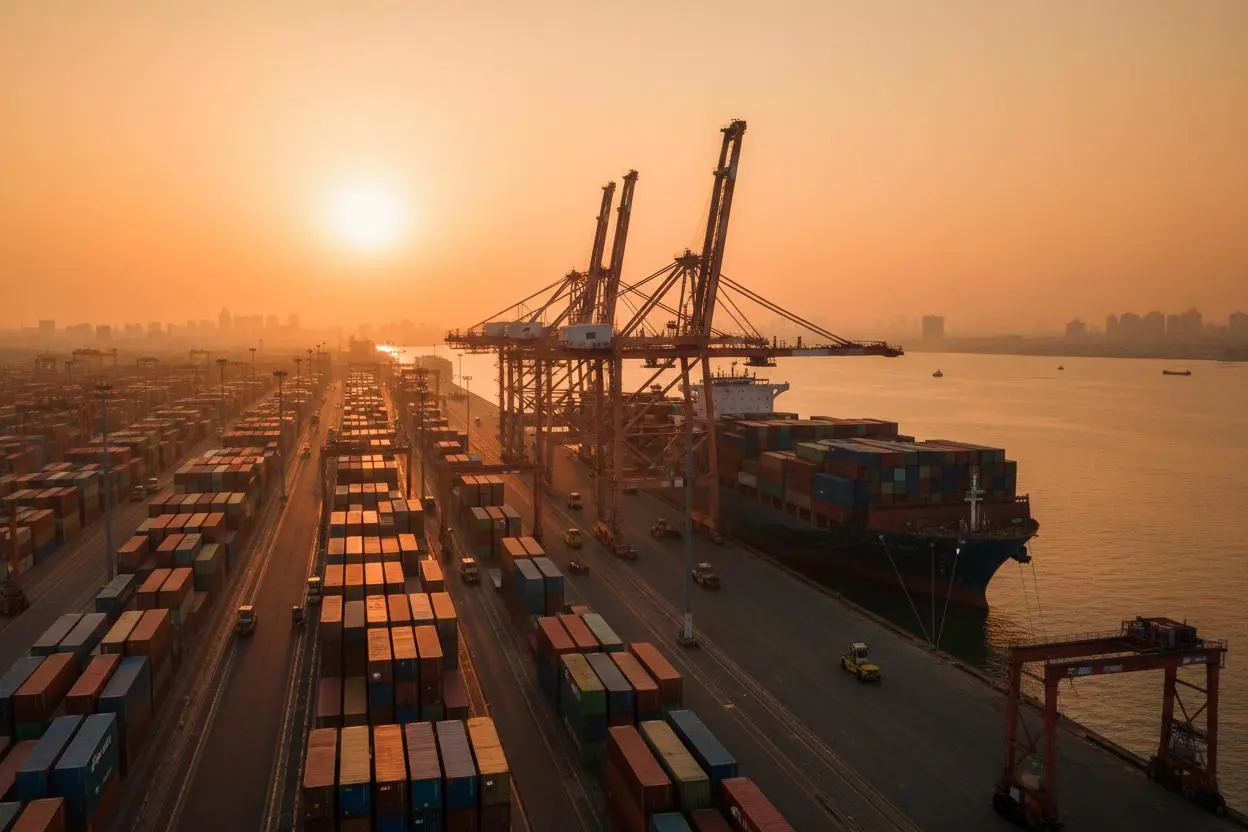

IDF in Shipping Kenya: The Real Cost Breakdown 2026

IDF in shipping Kenya stands for Import Declaration Fee. It is a levy of 2.5% of the CIF value of your goods, paid to KRA before your shipment can be cleared. The IDF is not optional and not negotiable. Without it, your goods sit at the port.
Kenya importers see “IDF in shipping Kenya” appear on quotes, customs documents, and cost breakdowns. Many do not know what it means until their goods are already on the water. This guide explains what the IDF in shipping Kenya actually is, how to calculate exactly what you will owe, and what happens if you do not sort it before your goods arrive.
What IDF in Shipping Kenya Actually Means
IDF stands for Import Declaration Fee. It is a government levy administered by the Kenya Revenue Authority, and it applies to every commercial import into Kenya regardless of product type, origin, or shipping method. Air freight, sea freight, road imports: IDF in shipping Kenya applies to all of them.
The IDF is not a customs duty in the traditional sense. It is a processing fee for the import declaration itself, the document that formally notifies KRA of your shipment and triggers the assessment of duties and taxes. Think of it as an administrative charge for the right to import goods into Kenya.
The current IDF rate is 2.5% of the CIF value of your goods. CIF stands for Cost, Insurance, and Freight: the total of your product cost plus the cost of international freight to bring the goods to Kenya. The incoterm you agree with your supplier, FOB or CIF, directly affects that freight figure and therefore your IDF. See our FOB vs CIF Kenya guide for a full explanation. This rate was reduced from 3.5% under the Finance Act 2023 and remains at 2.5% in 2026.
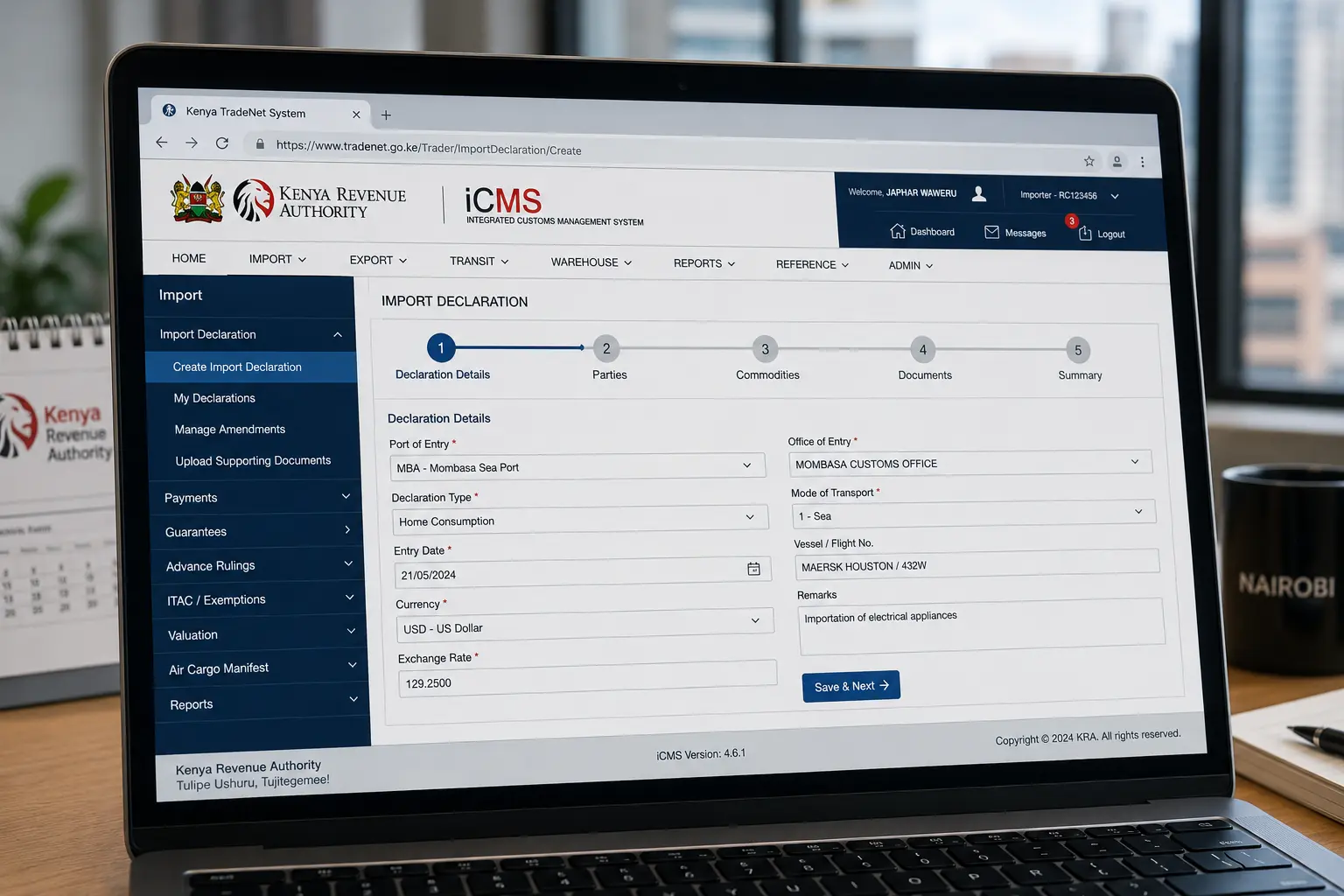
The IDF must be filed electronically through the KRA iCMS portal before your goods arrive at the port or airport. Your clearing agent handles this on your behalf. Once filed, KRA issues an IDF number that must accompany your goods through customs clearance. Without it, clearance cannot start.
How to Calculate IDF in Shipping Kenya
The formula is straightforward. IDF is 2.5% of your CIF value.
CIF value = product cost + international freight
Here is a worked example using real ksh figures for a typical Kenya import from China by air freight:
| Item | Amount (ksh) |
|---|---|
| Product cost (goods from China) | 200,000 ksh |
| International freight (air, 20 kg at 1,700 ksh/kg) | 34,000 ksh |
| CIF value | 234,000 ksh |
| IDF (2.5% of CIF) | 5,850 ksh |
| RDL (2% of CIF) | 4,680 ksh |
| Import duty (rate varies by product) | varies |
| VAT (16% of CIF + duty + IDF + RDL) | varies |
And here is a sea freight example for a larger bulk order:
| Item | Amount (ksh) |
|---|---|
| Product cost (goods from China) | 500,000 ksh |
| International sea freight (0.5 CBM at 65,000 ksh/CBM) | 32,500 ksh |
| CIF value | 532,500 ksh |
| IDF (2.5% of CIF) | 13,313 ksh |
| RDL (2% of CIF) | 10,650 ksh |
| Import duty (rate varies by product) | varies |
| VAT (16% of CIF + duty + IDF + RDL) | varies |
One thing most importers miss: IDF feeds into your VAT base. Kenya’s VAT at 16% is calculated on the CIF value plus import duty plus IDF plus RDL. That means the IDF does not just cost you 2.5% directly. It also increases the amount VAT is charged on. For a 25% duty product on the air freight example above, the full VAT base would be 234,000 ksh (CIF) + 58,500 ksh (25% duty) + 5,850 ksh (IDF) + 4,680 ksh (RDL) = 303,030 ksh, and VAT at 16% on that is 48,485 ksh. The IDF and RDL alone added over 1,700 ksh to the VAT bill.
For a full landed cost breakdown with all taxes stacked across product categories, see our Kenya import duty from China guide. To run your own numbers, use the Pamoja Imports shipping calculator.
IDF vs RDL: What Is the Difference
These two levies appear together on every import invoice and are often confused with each other. Both are calculated on the CIF value and paid through the same KRA system before clearance, but they serve different purposes and were introduced at different times.
| Levy | Rate (2026) | Purpose |
|---|---|---|
| IDF (Import Declaration Fee) | 2.5% of CIF | Processing fee for the import declaration filed with KRA |
| RDL (Railway Development Levy) | 2% of CIF | Infrastructure levy to fund Kenya’s railway network |
Together, IDF and RDL add 4.5% to your CIF value before import duty and VAT are applied. Neither is avoidable on standard commercial imports. For a full breakdown of the Railway Development Levy specifically, see our Railway Development Levy Kenya guide. For more detail on all the components of Kenya’s import tax stack, see our Kenya import regulations 2026 guide.
How the IDF Rate Has Changed: 2019 to 2026
The IDF in shipping Kenya rate has moved three times in the past seven years. Most of the outdated figures circulating online trace back to one of the earlier rates, which is why you will see different numbers quoted across different sources.
| Period | IDF Rate | Change |
|---|---|---|
| Pre-2019 | 1.5% to 2% | Original rates under Miscellaneous Fees and Levies Act 2016 |
| November 2019 to June 2023 | 3.5% | Finance Act 2019 increased the rate sharply |
| July 2023 to present | 2.5% | Finance Act 2023 reduced the rate; current rate in 2026 |
The 2023 reduction also removed preferential lower rates that previously applied to raw materials imported by registered manufacturers and inputs for affordable housing schemes. From July 2023 onwards, the standard rate of 2.5% applies uniformly to all commercial imports into Kenya.
Which Goods Are Exempt from IDF in Kenya
A small number of import categories are exempt from IDF in shipping Kenya under the Miscellaneous Fees and Levies Act and subsequent Finance Acts. The honest answer for most Kenya SME importers sourcing general goods from China is that none of these exemptions will apply to your shipment. But they are worth knowing so you are not misled by a quote that excludes IDF when it should not.
IDF exemptions confirmed as of January 2026 include:
- Household and personal effects that qualify for duty exemption under the Fifth Schedule to the EAC Customs Management Act. This applies to returning residents and diplomats, not commercial importers.
- KDF and National Police Service equipment imported for official use. Introduced under Finance Act 2020.
- Mosquito repellent manufacturing inputs, including raw materials and machinery, upon recommendation by the Cabinet Secretary for Health. Introduced under Finance Act 2025.
- Filming and photography equipment imported temporarily under a security bond, on the condition that it is re-exported within 12 months.
- Certain aircraft and spacecraft parts under specific HS code headings. The Finance Bill 2026, passed by the National Assembly on June 18 and currently awaiting presidential assent, narrows this exemption to specific tariff codes only.
One category worth watching: the Finance Bill 2026 proposed exempting imported mobile phones from IDF and RDL as part of a broader restructuring of phone taxation. However, the bill was significantly amended during parliamentary committee review, and the final status of the phone IDF exemption in the signed Act is not yet confirmed as of this writing. If you are importing phones from China, check the final Finance Act 2026 text once it receives presidential assent before updating your landed cost calculations. For the current all-in cost breakdown on phones, see our guide to importing phones from China to Kenya.

What Happens If You Skip IDF
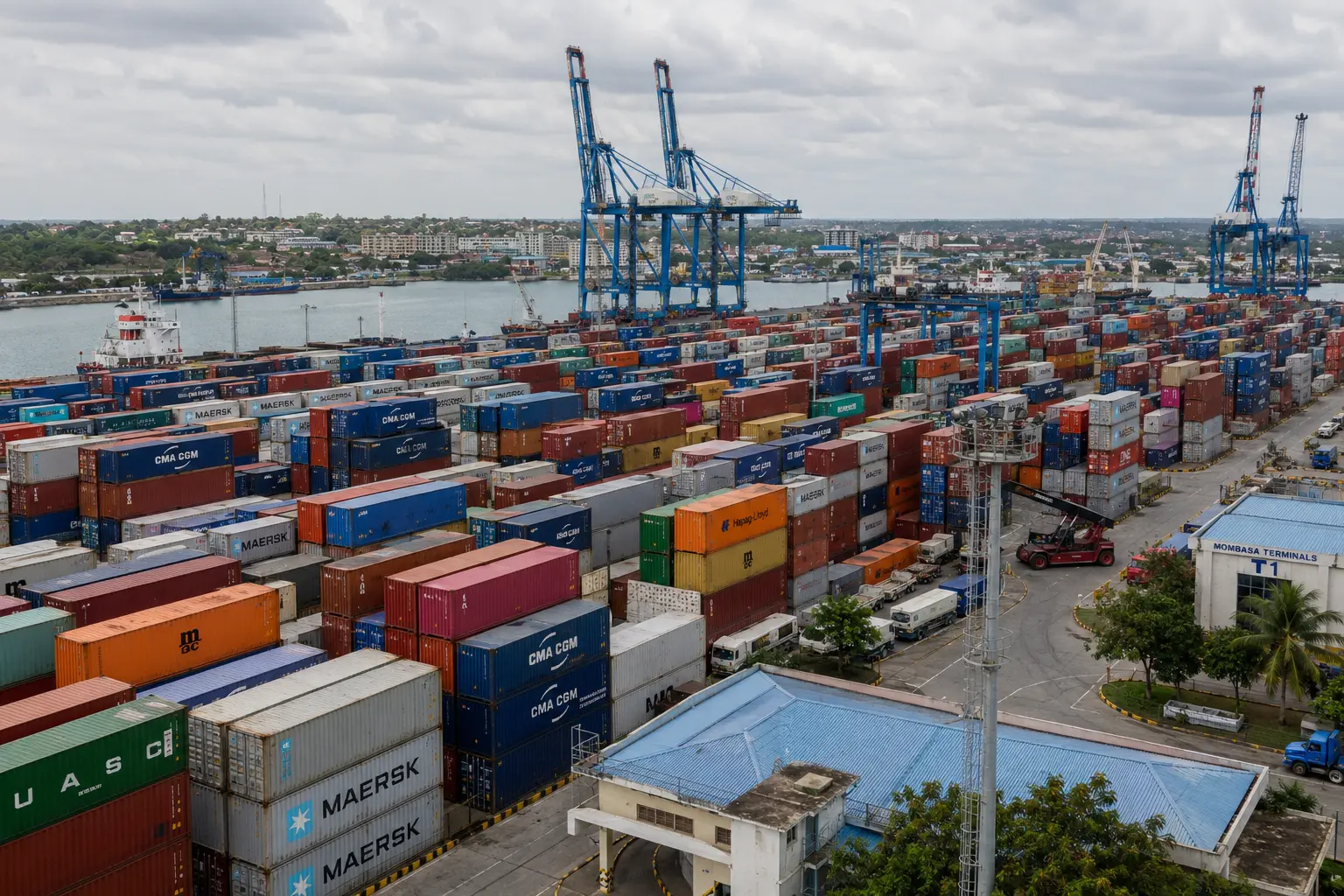
You cannot skip it. Clearance physically cannot begin without an approved IDF number in the KRA system. If your goods arrive at Mombasa Port or JKIA without an IDF already filed, here is what happens:
- Goods are held at the port or airport under customs control
- Demurrage and storage fees start accruing from the day of arrival
- Your clearing agent must file the IDF retroactively before any release can happen
- At Mombasa, demurrage on containers can reach several thousand ksh per day
- Goods not cleared within the statutory period can be auctioned by KRA
The timing requirement catches first-time importers off guard. Many assume the IDF is something sorted at the port on arrival, similar to paying a fee at a counter. It is not. The IDF must be filed electronically through the KRA iCMS system before your goods reach Kenya, using your pro-forma invoice from the supplier. The IDF number is then referenced on your customs entry, and KRA cross-checks it against the shipment details when your goods arrive.
The practical implication is that you need your supplier’s invoice before the goods ship. If you are sourcing through Pamoja Imports, our Chengdu team coordinates directly with your supplier to obtain the documentation needed to file the IDF in advance. If you are managing your own supplier relationship, make sure you request a pro-forma invoice and shipment confirmation as soon as the goods are packed, not after they have already left the warehouse.
At Mombasa Port, the demurrage clock starts ticking on the day the vessel berths. For a 20-foot container, demurrage fees typically start after a free period of three to five days and can compound quickly. Importers who have been caught without an IDF filed have lost more in demurrage than the IDF itself would have cost them. It is one of the most avoidable expenses in the entire import process. For the full breakdown of demurrage vs storage vs detention and a worked cost example, see our demurrage and storage charges guide.
If the roughly 530,000 ksh needed at clearance in the air freight example is not sitting ready when cargo lands, your goods do not get released. They sit at the port or airport, and demurrage and storage charges start accumulating daily until you can pay. IDF is only one of four charges due before release, alongside duty, VAT, and RDL, all landing at the same time as your freight bill. See our guide on cash flow when importing from China to Kenya for how to reserve for that gate in advance.
How Pamoja Imports Handles IDF For You
Pamoja Imports: IDF Is Already in Your Rate
When you ship with us, the rate you see is the rate you pay. Our all-in shipping rates include import duty, VAT, IDF at 2.5%, RDL at 2%, and full customs clearance handled by our logistics partner. There is no separate IDF invoice arriving after your goods clear. No port-side surprises.
- Air freight: 1,700 ksh/kg all-in (7 to 14 days)
- Sea freight: 65,000 ksh/CBM all-in (30 to 35 days)
- IDF, RDL, duty, VAT, and customs clearance included
- Minimum order: 30,000 ksh in product value (excluding shipping)
Most Kenya importers who use separate freight forwarders receive their IDF in shipping Kenya and RDL as line items on a port-side invoice they were not expecting. The total can add 4.5% or more to a cost they thought was already final. Transparent all-in pricing removes that uncertainty from the start. To understand the full difference between how all-in and itemised pricing works, see our guide to finding a reliable shipping agent from China to Kenya.
Frequently Asked Questions About IDF in Shipping Kenya
For more answers on Kenya import costs, duties, and compliance, visit the Pamoja Imports Kenya import FAQ.
IDF stands for Import Declaration Fee. In Kenya, it is a levy charged by KRA on all commercial imports at a rate of 2.5% of the CIF value of your goods. It must be paid and the IDF number obtained before your goods can be cleared at the port or airport.
Multiply your CIF value by 2.5%. CIF is your product cost plus international freight. For example, if your goods cost 200,000 ksh and freight is 34,000 ksh, your CIF is 234,000 ksh and IDF is 5,850 ksh. Note that VAT is then calculated on top of CIF plus all duties including IDF, so the IDF feeds into your VAT base as well.
Yes. Pamoja Imports all-in rates of 1,700 ksh per kg for air freight and 65,000 ksh per CBM for sea freight include import duty, VAT, IDF at 2.5%, RDL at 2%, and customs clearance. There are no separate IDF invoices or port-side surprises.
Your goods cannot be cleared. KRA requires the IDF to be filed and paid before clearance begins. If your goods arrive without an IDF number, they will be held at the port or airport and you will start accruing demurrage and storage fees immediately. At Mombasa Port this can reach several thousand ksh per day after the free period expires. In some cases goods can be auctioned if not cleared within the statutory period.
Both are levies calculated on CIF value and paid through the KRA system. IDF (Import Declaration Fee) is 2.5% and is a processing fee for the import declaration. RDL (Railway Development Levy) is 2% and funds Kenya’s railway infrastructure. Together they add 4.5% to your CIF value before duty and VAT are applied.
The Finance Act 2023, effective July 2023, reduced the IDF rate from 3.5% to 2.5% of CIF value. This rate applies to all standard commercial imports in 2026. Many online sources, calculators, and clearing agents still quote the old 3.5% rate. If your estimate uses 3.5%, your numbers are overstating the IDF cost.
Yes, but the exemptions are narrow and do not apply to most SME importers. Exempt categories include qualifying household and personal effects for returning residents, KDF and National Police Service official equipment, mosquito repellent manufacturing inputs, and temporarily imported filming equipment. Standard commercial goods from China, including clothing, electronics, solar equipment, and general merchandise, are not exempt and attract IDF at 2.5%.
Know Your Full Cost Before You Order
Submit a source request and we will give you an all-in landed cost including IDF, RDL, duty, VAT, and freight before you commit to a single ksh.
Submit a Source Request
Jonatan Sirak sirak.se
Founder of Pamoja Imports, a Kenya-China import agency with an operations team based in Chengdu, China. With several years of hands-on experience facilitating shipments across electronics, solar equipment, construction materials, and consumer goods, he helps Kenyan entrepreneurs source and import products profitably. He splits his time between Nairobi and Chengdu.