
Import Machinery from China to Kenya: Best 2026 Guide
To import machinery from China to Kenya, confirm four things before you pay a supplier: that the seller is a real manufacturer, that the machine runs on Kenya’s 240V supply, that its HS code is classified correctly for duty, and that you know the full landed cost, not just the freight. On a high-value machine, freight is a small share of the total. Taxes, levies and clearance make up most of the gap between the factory price and the landed price in Kenya. Pamoja Imports quotes machinery shipments individually, based on the packed weight and dimensions of your consignment.
- What Machinery Do Kenyan Buyers Import from China?
- How Do You Find Machinery Suppliers in China for Kenya Buyers?
- What Should You Check Before a Machine Ships?
- How Much Does Shipping Machinery from China to Kenya Cost?
- What Duty and Taxes Apply to Machinery in Kenya?
- What Does It Cost to Import a 670,000 ksh Machine from China to Kenya?
- Which Mistakes Cost Machinery Importers the Most?
What Machinery Do Kenyan Buyers Import from China?
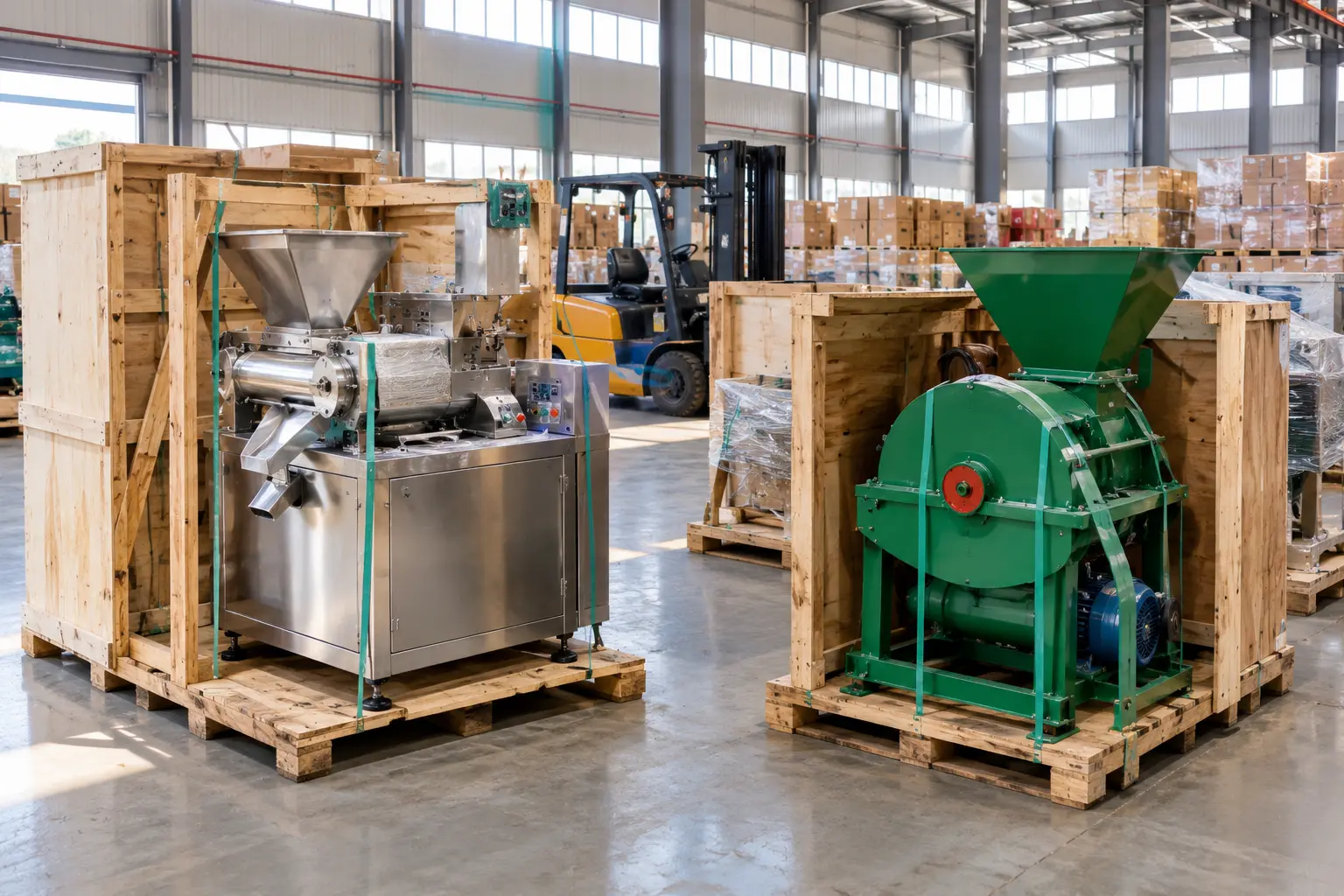
Kenyan buyers import machinery from China to Kenya for one reason above all: the same machine costs far less at the factory gate than from a local dealer. The requests we see at Pamoja cover a wide range, from farm equipment such as augers, balers and grass cutters to food processing machines such as oil presses and colour sorters. We also see tablet presses, cutting plotters, commercial laundry equipment and poultry incubators.
That variety is the first thing to understand. Machinery is not one product category. A grass cutter, a freeze dryer and a wheel loader sit in different parts of the tariff, need different power supplies and ship in very different packages. Guides that quote a single duty rate or a single freight figure for all machinery hide those differences, so this guide focuses on the steps that stay the same whatever the machine: supplier checks, pre-shipment checks, freight, taxes and a worked landed cost.
If you are working out how to import machines from China to Kenya for a workshop, farm or small factory, the practical sequence is simple. Shortlist suppliers, verify one, confirm the specification in writing, agree the packed weight and dimensions, price the landed cost, and only then pay. Most expensive mistakes come from skipping a step, not from the shipping itself. For the general process that applies to every product, see our complete guide to importing from China to Kenya.
How Do You Find Machinery Suppliers in China for Kenya Buyers?
Most first-time buyers find machinery suppliers in China through internationally accessible B2B platforms such as Alibaba, Made-in-China, DHgate and Global Sources. These platforms list thousands of sellers for every machine type, and that is exactly the problem. Many listings come from trading companies that buy from a factory and add a margin, and the listing rarely says so.
Vetting machinery suppliers in China for Kenya buyers therefore starts with one question: are you talking to the factory or to a middleman?
How can you tell a factory from a trader?
- Ask for the business licence and check that its scope covers manufacturing your type of machine, not only trading or sales.
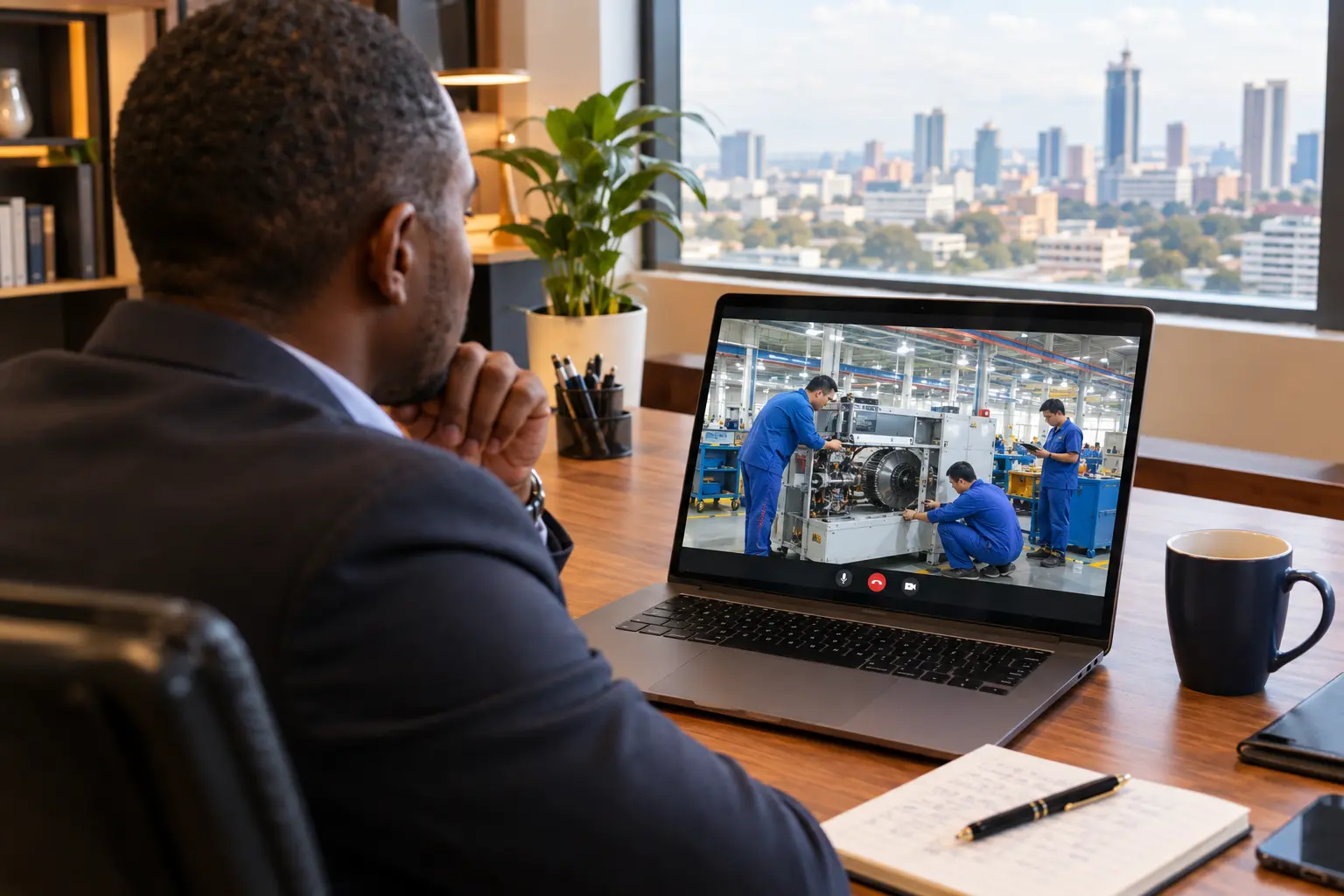
- Ask for a live video call from the production floor showing your exact model being assembled, not a generic factory tour.
- Ask for the factory address and check that it matches the name on the licence.
- Compare at least three quotes for the same specification. The cheapest quote often leaves out a motor, a controller or the spare parts kit.
Why should the specification be in writing?
Listing photos and titles are not a contract. Before you pay, get a proforma invoice that states the model number, power rating, voltage, phase, dimensions, packed weight, what is included in the box and the warranty terms. Ask for the packed weight and dimensions early, because freight and your landed cost both depend on them.
How should you structure the payment?
Pay a deposit rather than the full price, and tie the balance to a test-run video and photos of the packed machine. Pay into a company account whose name matches the business licence. Our guides on how to pay Chinese suppliers and negotiating with Chinese suppliers cover the mechanics, and our guide to finding Chinese suppliers covers the wider search process.
What Should You Check Before a Machine Ships?
Before a machine ships, confirm six things: the power rating, the manual and wiring diagram, the spare parts kit, a test-run video of your exact unit, the packing details and the documents. Each check prevents a second shipment or a KRA query, so complete them before you release the balance payment.
Pre-shipment checklist for machinery
- Power: Kenya uses a 240V, 50 Hz supply with type G sockets. Confirm the motor and controls are rated for it, and check whether the machine needs three-phase power and whether your site has it.
- Manual and wiring diagram: Ask for an English manual and a wiring diagram, not only a Chinese-language one.
- Spare parts kit: Ship wear items such as belts, blades, seals and fuses with the machine, because reordering later means paying freight again.
- Test-run video: Ask for footage of your actual unit running, with the serial number visible.
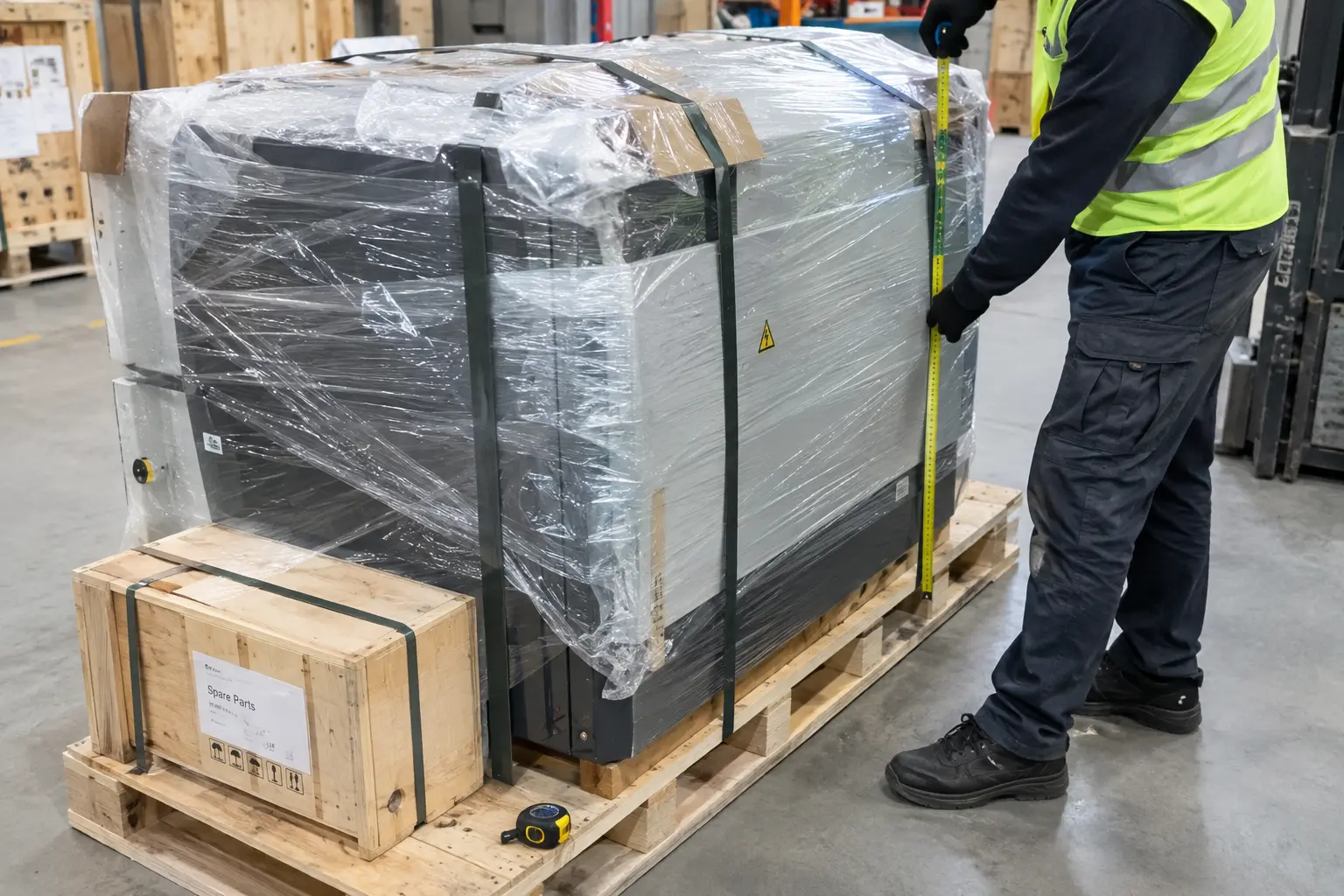
- Packing: Ask how the machine will be crated, and get the gross weight and packed dimensions in writing.
- Documents: The commercial invoice must show the real value, and the packing list must match the goods. Mismatches trigger KRA queries.
Does your machine need a PVoC certificate?
Whether a machine needs a Pre-Export Verification of Conformity (PVoC) certificate depends on its product category. Confirm this with the Kenya Bureau of Standards before you pay your supplier, because certificates are issued before the goods leave China. Our Kenya import compliance guide explains what changed in 2026, and our certificate of origin guide covers the current position on origin documents. For the clearance documents themselves, see our Kenya customs clearance guide.
Who provides support after delivery?
Agree in advance who supplies replacement parts and technical help once the machine is in Kenya. Ask the supplier for remote support by video call and get their response commitment in writing. A supplier who is vague about after-sales support before you pay will be harder to reach afterwards.
How Much Does Shipping Machinery from China to Kenya Cost?
If you import machinery from China to Kenya by sea, expect LCL, where your machine shares a container with other cargo. Shipping machinery from China to Kenya this way has cost about $70 to $150 per CBM freight-only to Mombasa over the past year, depending on the forwarder and the date.
Our figures come from forwarder quotes reviewed in July 2026 and in the fourth quarter of 2025, and they disagree: the July 2026 quote listed LCL at $70 per CBM, while the late 2025 estimate ran from $85 to $150 per CBM. Treat any single quote as a snapshot, and ask for a fresh one before you commit.
| Freight mode | Freight-only rate (USD) | Freight-only rate (ksh at 130) |
|---|---|---|
| Sea LCL, per CBM | $70 to $150 | 9,100 to 19,500 ksh |
| Air freight, per kg | $4.80 to $7.20 | 620 to 940 ksh |
Exchange rate of 130 ksh to the dollar as of September 2026. Freight-only rates are from quotes reviewed in July 2026 and late 2025.
Two points matter more for machinery than for general cargo. First, forwarders typically bill LCL on whichever is greater, the volume or the weight, so a dense machine can cost more than the per-CBM figure suggests. Ask for the chargeable weight on every quote. Second, machines that do not fit a standard container need different handling and are quoted case by case, so tell the forwarder the exact packed dimensions from the start.
For very large machines, ask for a container quote as well as an LCL quote and compare the two. To compare freight modes for lighter equipment, use our shipping calculator, and for how all-in rates work, see our shipping from China to Kenya guide.
What Duty and Taxes Apply to Machinery in Kenya?
Import duty on machinery in Kenya follows the HS code of the machine, not the word machinery. The EAC Common External Tariff has four bands, 0%, 10%, 25% and 35%, and the band depends on exactly what the machine does and how it is classified. Two machines that look similar can land in different bands. The EAC describes the 0% band as covering raw materials and capital goods, but individual machines are classified by HS code, so confirm your machine’s band before you pay.
The safe approach is to get the HS code from your supplier, cross-check it, and confirm the band before you pay. Our HS Codes Kenya guide and Kenya import duty guide explain how classification and bands work.
Duty is only one of four charges. As of September 2026, Kenya also applies the following on top:
Duty bands, IDF, RDL and VAT rates checked against the EAC and KRA sources linked above in September 2026.
- Import Declaration Fee (IDF): 2.5% of the CIF value. See our IDF guide.
- Railway Development Levy (RDL): 2% of the CIF value. See our Railway Development Levy guide.
- VAT: Generally 16%, charged on the CIF value plus duty, IDF and RDL.
Some machinery bought by certain manufacturers or for large investment projects can qualify for a VAT exemption, so ask your clearing agent whether yours does. The point that surprises most buyers is that 0% duty does not mean zero tax. In the example below, IDF, RDL and VAT still add about 22% to the price of the machine, even with duty at 0%. For the official position, check with the Kenya Revenue Authority.
What Does It Cost to Import a 670,000 ksh Machine from China to Kenya?
A commercial machine with an ex-factory price of 670,000 ksh costs about 879,000 to 896,000 ksh landed in Kenya when you import it yourself, and 755,800 ksh at our standard all-in rate. The table below shows every line.
This is an illustration, not a quote for a specific model. To see the cost to import machinery from China to Kenya line by line, take a machine packed at about 1.32 CBM. We assume duty falls in the 0% band, use the freight-only range from the previous section, and calculate IDF, RDL and VAT on the CIF value, meaning the machine price plus freight, with insurance left out for simplicity.
| Cost line (ksh) | DIY, low freight | DIY, high freight | Pamoja Imports standard rate |
|---|---|---|---|
| Machine price (ex-factory) | 670,000 | 670,000 | 670,000 |
| Freight only (1.32 CBM) | 12,010 | 25,740 | Included below |
| Duty (0% band, illustration) | 0 | 0 | Included below |
| IDF (2.5% of CIF) | 17,050 | 17,390 | Included below |
| RDL (2% of CIF) | 13,640 | 13,910 | Included below |
| VAT (16%) | 114,030 | 116,330 | Included below |
| Clearing agent and port handling (estimate) | 37,500 | 37,500 | Included below |
| Mombasa to Nairobi transport (estimate) | 15,000 | 15,000 | Included below |
| Freight, duty, taxes, clearance and delivery (65,000 ksh x 1.32 CBM) | n/a | n/a | 85,800 |
| Total landed cost | 879,230 | 895,870 | 755,800 |
| Estimated saving with Pamoja Imports | 123,430 | 140,070 | You save 123,430 to 140,070 |
The clearing agent line uses 37,500 ksh, within the 20,000 to 55,000 ksh range independent importers typically pay at Mombasa for agent fees and port handling. The transport line is an estimate for moving one packed consignment from Mombasa to Nairobi, and it varies widely with the vehicle and carrier. Your own quotes will differ, and if your business or project qualifies for a VAT exemption, the VAT line drops out. To test your own numbers, use our profit calculator.
The last column applies the Pamoja Imports standard sea rate of 65,000 ksh per CBM to the same packed volume. That rate is all-in: it covers freight, duty, VAT, IDF, RDL, customs clearance and delivery anywhere in Kenya. Machinery is quoted per shipment, so your actual quote can differ from this standard-rate figure. Message us the packed weight and dimensions of your shipment and we will give you a specific quote.
Pamoja Imports: Send us the packed weight and dimensions
Machinery varies too much in size, weight and value for a one-size quote. Send us the packed weight and dimensions of your shipment and we will give you a specific quote for the whole route.
Which Mistakes Cost Machinery Importers the Most?
The mistakes that cost you the most when you import machinery from China to Kenya are buying on the listing price, accepting a lower invoice value, guessing the HS code, ignoring power requirements and having no cash ready at arrival. Each is avoidable with the checks in this guide.
If you are still deciding between using a sourcing agent and hiring a freight forwarder on your own, our sourcing agent versus freight forwarder guide explains what each one covers.
Pamoja Imports: One team from factory to your door in Kenya
We source from domestic Chinese platforms such as Pinduoduo and 1688, with our team in Chengdu handling supplier communication, receiving and packing. Our standard sea rate is 65,000 ksh per CBM, and machinery shipments are quoted individually.
- The all-in rate covers duty, VAT, IDF, RDL and customs clearance, so there is no separate clearing invoice at the port.
- Sea shipments take 30 to 45 days.
- Already have a supplier? We handle the shipping only. Message us the packed weight and dimensions for a specific quote.
Frequently Asked Questions: Import Machinery from China to Kenya
For more answers to common questions about importing from China to Kenya, visit our Kenya import FAQ page.
Yes. If you already have a supplier, we handle the shipping, duty, clearance and delivery anywhere in Kenya. Message us on WhatsApp with the packed weight and dimensions of the shipment and we will give you a specific quote, because machinery quotes depend on the size, weight and value of each consignment.
No. Even when a machine falls in the 0% duty band, the Import Declaration Fee (2.5% of CIF), the Railway Development Levy (2% of CIF) and VAT (generally 16%) still apply. In our worked example, these add about 22% to the price of the machine. Certain manufacturers and large investment projects can qualify for VAT exemptions, so confirm with your clearing agent.
Kenya uses a 240V, 50 Hz supply with type G sockets. Ask your supplier to confirm in writing that the machine is rated for 240V at 50 Hz, and check whether it needs three-phase power, because not every workshop or site has a three-phase connection.
Ask the supplier for the HS code they use, then cross-check it against the tariff and your clearing agent. The code decides the duty band, so a wrong classification can mean underpaid duty, a KRA query and delays. Our HS Codes Kenya guide explains how classification works, and KRA has the final say at clearance.
With Pamoja Imports, sea shipments take 30 to 45 days. Timing depends on when the machine is ready, when it is packed and loaded, and how quickly clearance is completed at Mombasa, so agree a ready date with your supplier before you pay the balance.
Yes. Commercial goods must be cleared through KRA by a licensed clearing and forwarding agent, who lodges the declaration and takes responsibility for its accuracy. When you ship with Pamoja Imports, clearance is handled for you and is included in the all-in rate.
Get a Specific Quote for Your Machine
Tell us what you are buying, or send us the packed weight and dimensions if you already have a supplier, and we will give you a specific quote.
Need Sourcing? I Have a Supplier
Jonatan Sirak sirak.se
Founder of Pamoja Imports, a Kenya-China import agency with an operations team based in Chengdu, China. Based in China since 2018, he studied Mandarin and built direct factory relationships in Chengdu, and now helps Kenyan entrepreneurs source and import products profitably. He splits his time between Nairobi and Chengdu.