

Most Profitable Items to Import from China to Kenya in 2026

The most profitable items to import from China to Kenya in 2026 combine strong local demand, reasonable import duty rates, and healthy retail margins. Solar equipment, phone accessories, kitchen goods, and beauty products consistently top the list. This guide ranks the top 10 categories by profitability, demand, and compliance requirements, so you can make an informed decision before placing your first order.
Choosing the wrong product is the most common reason Kenya importers fail on their first shipment. High import duty eats into margins. Compliance requirements catch people off guard. Demand turns out to be seasonal or already saturated. For a full breakdown of what goes wrong beyond product choice, see our guide to the 10 most common mistakes Kenya importers make from China.
This list covers the most profitable items to import from China to Kenya based on real import data, current 2026 duty rates, and Kenya market demand. For each product we show the import duty rate, estimated retail margin, demand level, and any compliance flags you need to know before ordering. If you want to understand how duties and landed costs are calculated in detail, read our full Kenya import duty guide first.

How We Ranked These Products
Each product was assessed across four criteria: import duty rate (lower is better), estimated retail margin in the Kenya market, local demand strength, and compliance complexity. Products that score well across all four make the best starting point for new importers. Those with high margins but heavy compliance requirements are flagged accordingly. If you are still deciding whether to start importing, see our guide on How to Start an Import Business in Kenya in 2026.
Margin estimates are based on typical sourcing prices from Chinese manufacturers on Alibaba and 1688 compared to Nairobi retail prices. Not sure which platform to use? See our Alibaba vs 1688 Kenya importer guide. Once you know your product, use our guide on how to find reliable Chinese suppliers before placing your first order. Your actual margin will depend on your MOQ, supplier negotiation, and sales channel. If you have seen Temu and assumed it gives you Pinduoduo’s factory prices, it does not, see our Pinduoduo vs Temu guide for why.
Top 10 Most Profitable Items to Import from China to Kenya in 2026
Solar panels, inverters, charge controllers, and mounting hardware are among the best imports for Kenya right now. Demand is driven by unreliable grid power across residential, commercial, and agricultural sectors. China manufactures the majority of the world’s solar components, so sourcing is straightforward and prices are very competitive. Lithium-ion batteries used in solar storage also attract 0% duty. The low duty rate combined with strong and growing demand makes this the top category for 2026.
Charging cables, power banks, earphones, phone cases, and screen protectors have consistent year-round demand in Kenya. The markup on accessories sourced directly from Chinese factories versus local wholesale prices is substantial. Competition is high but the market is large enough to absorb new sellers, especially those with a focused niche such as a specific phone brand or accessory type. Avoid importing the phones themselves as they attract 35% duty plus excise, which makes margins very tight.
Cookware, blenders, kettles, storage containers, and general household items have broad appeal across all income segments in Kenya. Chinese manufacturers produce these at extremely low unit costs, and the retail markup in Kenya is high. The 25% duty rate adds to landed cost, but the margins remain strong if you source well. This category is ideal for importers selling through social media, WhatsApp, or market stalls due to the wide customer base.
Hair care products, skincare, cosmetics, and beauty tools are among the highest-margin imports available. Kenyan consumers spend heavily on beauty products and there is strong demand for affordable alternatives to Western brands. Sourcing directly from Chinese manufacturers allows significant pricing flexibility. The margins are the best on this list, but compliance requirements must be handled correctly before importing.
Laptops attract 0% import duty making them one of the lowest-cost imports relative to value. Demand is consistent driven by students, SMEs, and remote workers. The margin is lower than other categories because the market is price-sensitive and competition from established distributors is high. The opportunity lies in targeting specific segments such as refurbished units, budget student laptops, or business bulk orders where you can differentiate on price or service.
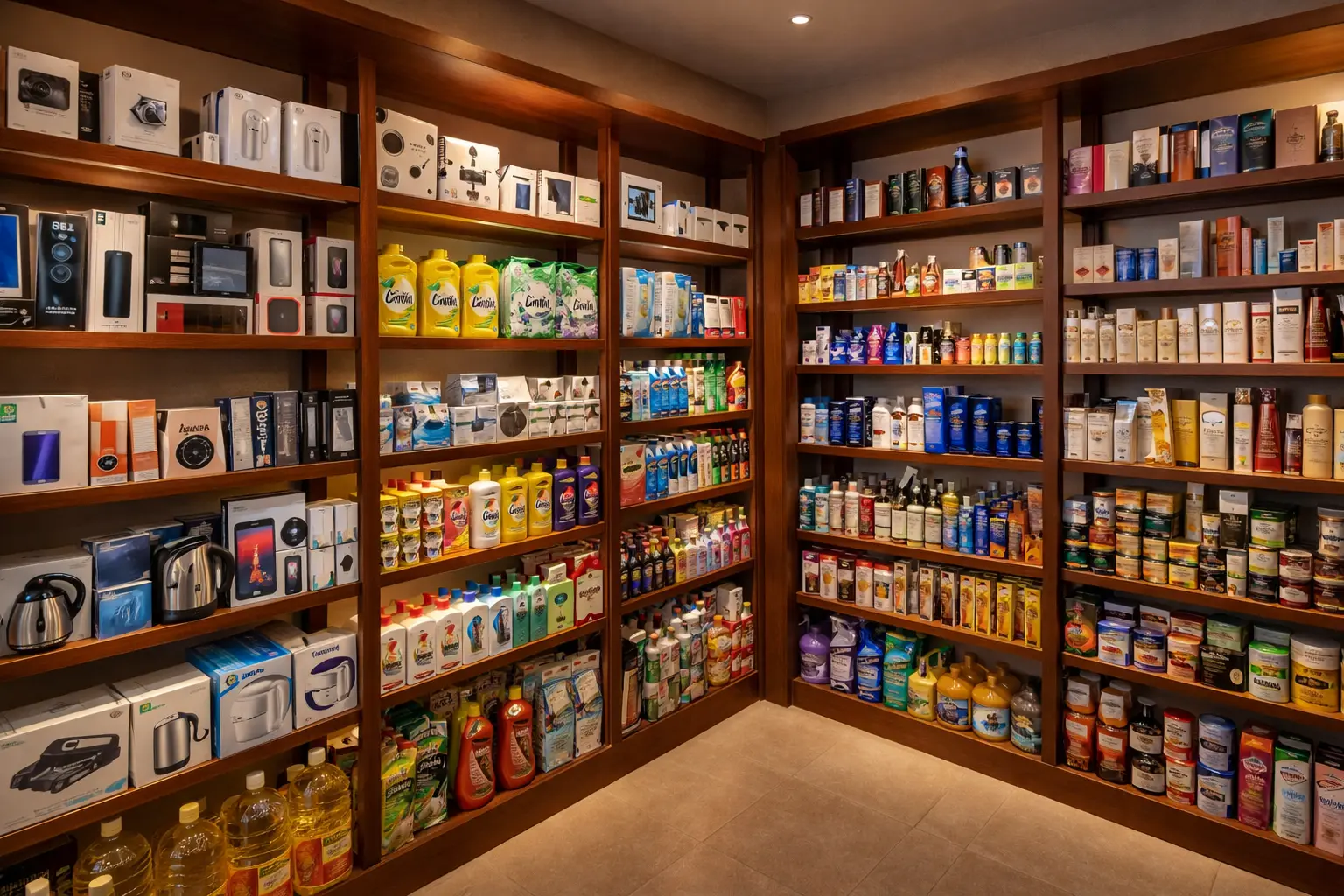
Kenya’s ongoing construction boom creates strong demand for fittings, fixtures, tools, electrical hardware, and building accessories. Chinese manufacturers supply these at a fraction of local wholesale prices. The margin is lower than consumer goods but volumes are higher and repeat orders are common. Steel and iron products attract 10 to 25% duty depending on HS code, while general hardware fittings typically attract 10%. This category suits importers with connections to contractors, hardware stores, or construction companies.
Plastic storage bins, organizers, water containers, and kitchenware have underrated appeal in the Kenyan market. Chinese factories produce these at very low unit prices and the retail markup is strong. Competition from other importers in this category is relatively low compared to electronics or clothing, making it easier to establish a position. The 25% duty is the main cost consideration but margins remain healthy.
Hand tools, irrigation equipment, greenhouse materials, and small farm machinery attract low or zero import duty and face very little competition from other importers. For larger or industrial machines, see our guide to importing machinery from China to Kenya. Kenya’s large agricultural sector creates steady demand, particularly from smallholder farmers and agribusiness operators. This is a niche category that rewards importers who understand the market and build relationships with agricultural cooperatives, agrovets, or county government procurement offices.
Office chairs, desks, shelving units, and modular furniture are in consistent demand from SMEs, schools, and residential buyers. Chinese manufacturers offer wide variety at competitive prices and the markup in Kenya is solid. Furniture is bulky, so freight cost is a significant part of landed cost and sea freight is almost always the right choice For a full cost comparison, see our guide on Sea Freight vs Air Freight China Kenya 2026: Cost and Time Compared.. This category rewards importers who can display stock and sell directly rather than those relying on online-only channels.
Clothing has high demand and strong margins but is ranked last on this list for a reason. The duty rate is 25 to 35%, KEBS PVoC compliance is required, and competition from both other importers and the second-hand clothing (mitumba) market is intense. It is not a category to start with. However, experienced importers who carve out a niche such as school uniforms, workwear, or a specific style can do well. The margins justify the complexity once you have the logistics and compliance sorted.
Most Profitable Items to Import from China to Kenya: Quick Comparison
| Product Category | Import Duty | Est. Margin | Demand | Competition | Compliance |
|---|---|---|---|---|---|
| Solar panels and equipment | 0% | 40–60% | High | Low–Medium | None |
| Phone accessories | 10% | 50–80% | High | High | None |
| Kitchen and household goods | 25% | 50–100% | High | Medium | None |
| Beauty and personal care | 25% | 80–150% | High | Medium | KEBS PVoC |
| Laptops and computers | 0% | 15–25% | High | High | None |
| Construction materials | 10–25% | 30–50% | High | Medium | None |
| Plastic storage and containers | 25% | 60–100% | High | Low | None |
| Agricultural tools | 0–10% | 40–70% | Medium | Low | None |
| Furniture | 25% | 50–80% | Medium | Medium | None |
| Clothing and textiles | 25–35% | 60–120% | High | High | KEBS PVoC |
Margin estimates based on typical sourcing prices from Chinese manufacturers vs. Nairobi retail. Import duty rates as of 2026. Always verify HS codes on kra.go.ke before ordering.

What to Avoid When Choosing the Most Profitable Items to Import from China to Kenya
Whatever product you choose to import, protecting your order quality from factory to Nairobi is essential. Our Quality Control for China Imports: Kenya Importer’s Guide 2026 covers every stage of the quality control process.
rademarks (fake Nike, fake Apple, etc.) will be seized at KRA customs and you will lose your entire shipment with no recourse. Never import counterfeit products.How Pamoja Imports Makes Importing Any of These Easier
Pamoja Imports: One rate covers everything. No surprises at the port.
For any of the most profitable items on this list, all import duties, VAT, IDF, RDL, freight, and customs clearance are included in Pamoja’s single all-in rate. You pay one price and your goods arrive at your door. Not sure how to evaluate shipping agents? Read our guide on how to find the best shipping agent from China to Kenya.
- Sea freight from KSH 65,000/CBM, all-in
- Air freight from KSH 1,700/kg, all-in
- Minimum order from KSH 30,000, no large MOQ required
- Our team in Chengdu sources, inspects, and ships on your behalf
- We verify HS codes and compliance requirements before you order
Not sure what to import or how much it will cost? Use our shipping calculator for an instant estimate, or send us a WhatsApp with the product you have in mind.
Chat on WhatsApp Shipping CalculatorFrequently Asked Questions
For more answers to common questions about importing from China to Kenya, visit our Kenya import FAQ page.
Beauty and personal care products typically offer the highest margins (80 to 150%) but require KEBS PVoC certification. Solar equipment offers strong margins (40 to 60%) with 0% import duty, making it one of the best combinations of profitability and low tax burden. Phone accessories are also highly profitable with margins of 50 to 80% and strong consistent demand.
Products with 0% import duty include laptops and computers, solar panels, lithium-ion batteries, and most agricultural machinery and equipment. These categories offer the lowest landed cost relative to FOB price, making them attractive for importers looking to maximize margins.
Most general goods do not require a special import license. However, certain categories require Pre-Export Verification of Conformity (PVoC) from KEBS, including electronics, clothing, cosmetics, and construction materials. Pharmaceutical products require KEBS and PPB approval. Always check KEBS requirements before ordering.
With Pamoja you can start from as little as KSH 30,000 for a small consolidated air or sea shipment. Going independently, most importers start with a minimum of KSH 100,000 to 200,000 to make the freight and clearing costs worthwhile as a percentage of the goods value.
Avoid mobile phones as a first import due to the 35% import duty plus excise duty, making margins very thin unless you have strong volume. Also approach clothing carefully as it faces 25 to 35% duty, strict KEBS PVoC requirements, and intense competition from second-hand clothing markets. Counterfeit or trademarked goods should never be imported as they will be seized at customs.
No. Pamoja’s shipping rate is fully all-in. Whether you ship by sea at KSH 65,000/CBM or by air at KSH 1,700/kg, the rate covers freight, import duty, VAT, IDF, RDL, and customs clearance. You pay one price and your goods are delivered. There are no separate invoices from KRA, no clearing agent fees on top, and no surprise charges at the port.
Know what you want to import? Let’s talk.
Send us a message or a photo of the product on WhatsApp. We will source it, handle the duties, and ship it all-in from China to your door.
Chat with us on WhatsApp
Jonatan Sirak sirak.se
Founder of Pamoja Imports, a Kenya-China import agency with an operations team based in Chengdu, China. With several years of hands-on experience facilitating shipments across electronics, solar equipment, construction materials, and consumer goods, he helps Kenyan entrepreneurs source and import products profitably. He splits his time between Nairobi and Chengdu.

Hi, I am a retail dealer in sports equipment, wears and accessories; which items from China have the highest profit margins in Kenya?
Hi Roger, thanks for reaching out! We don’t have specific profitability data for sports equipment in this guide, margins vary a lot by product, so we wouldn’t want to give you a number we can’t back up.
Best way to check: place a sourcing request (https://pamojaimports.com/source-request/) for the specific items you’re considering, and we’ll come back with actual prices. From there you can work out whether the margin fits your market before committing to an order.