

How to Sell Imported Products in Kenya: Platforms, Pricing and What Works 2026

How to sell imported products in Kenya comes down to three decisions: pricing your landed cost correctly so you actually make money, choosing the right platform for your product type, and building repeat customers from your first order. This Pamoja Imports guide covers the full selling process for Kenya importers from China: pricing formula, platform comparison, and what actually moves stock in 2026.
- How to Price Imported Products Correctly
- How to Sell Imported Products in Kenya: Platform Comparison
- WhatsApp Business: The Best Starting Platform
- Instagram and TikTok: How to Sell Imported Products in Kenya to a Wider Audience
- Jumia and Online Marketplaces
- Physical Retail and Market Stalls
- Best Platform by Product Category
- Pricing and Selling Mistakes That Kill Margins
- Frequently Asked Questions
How to sell imported products in Kenya is the question most import guides never answer. They cover sourcing, freight, and customs in detail, then stop at “deliver your goods to Nairobi.” But importing is only half the business. The other half is moving stock profitably, at the right price, through the right platform, to customers who come back. If you are still in the sourcing and importing phase, first review the 10 most common mistakes Kenya importers make from China before you commit to your first order.
Most Kenya importers who struggle financially are not failing at sourcing. They are failing at pricing and platform selection. They undercharge because they calculate from the supplier cost and forget the duty and freight. They sell on Jumia and lose 6 to 20% in commission depending on category. They do not build a repeat customer base and start from zero with every shipment. This guide fixes all of that. If you are still in the planning stage, start with our guide to starting an import business in Kenya and our complete import guide before diving into selling strategy.
How to Price Imported Products Correctly When You Sell Imported Products in Kenya
Pricing is the most important and most commonly misunderstood step in how to sell imported products in Kenya. The single biggest mistake is pricing from the supplier cost without including the full landed cost. Import duty, VAT, IDF, RDL, and freight can add 40 to 80% to the China supplier price depending on the product category. If you forget to include these, your margin disappears before you make a single sale.
The landed cost formula
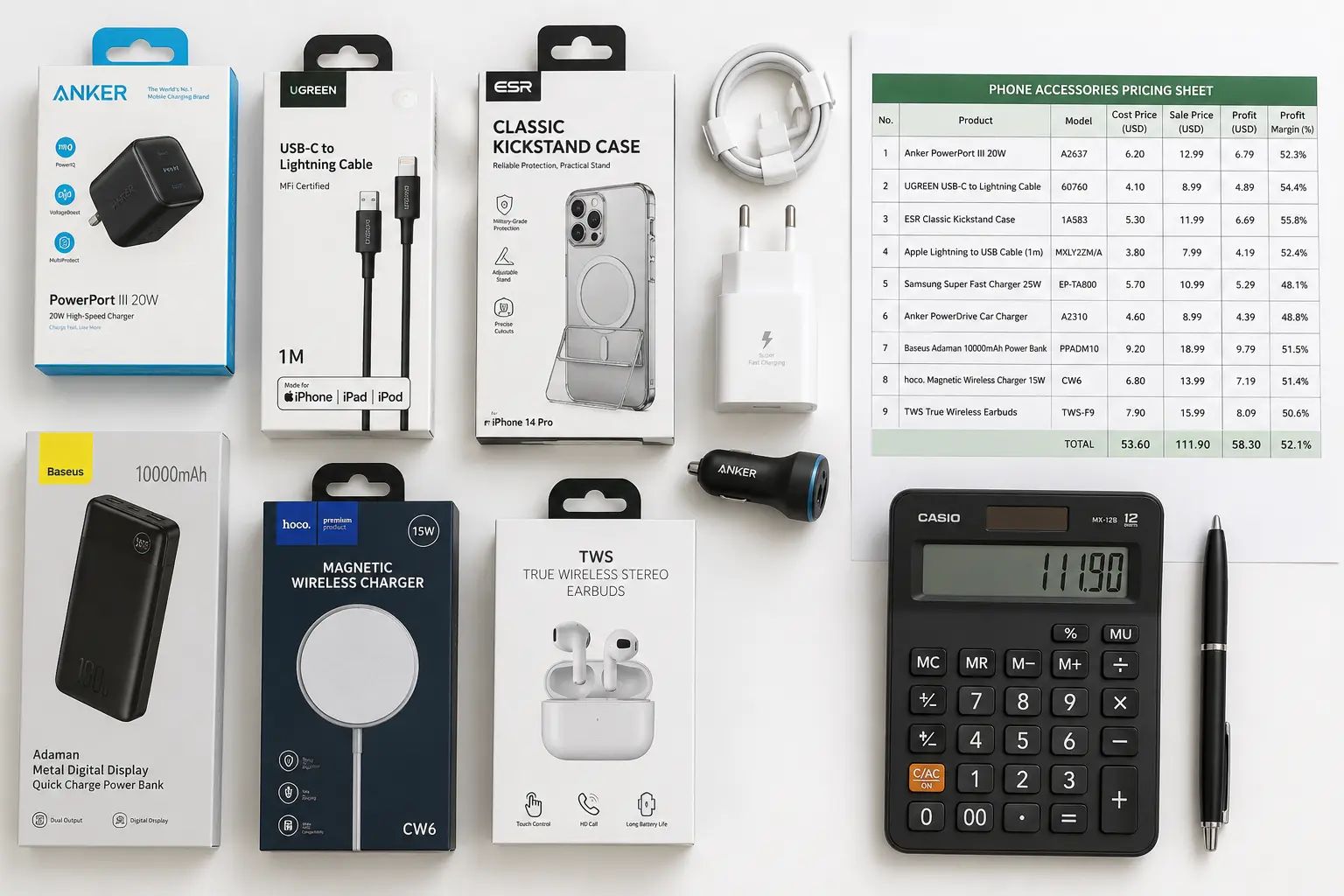
Your pricing must start from your total landed cost in Nairobi, not the Chinese supplier price. Use our shipping calculator and profit calculator to model your exact numbers before setting any retail price. Here is a worked example for phone accessories.
Pricing Example: Phone Accessories (100 units, 350 ksh supplier price each)
Goods value: 35,000 ksh. Estimated packed weight: 10kg / 0.08 CBM. Comparing air vs sea freight all-in with Pamoja Imports.
If you can wait 30 to 35 days for delivery, sea freight saves you 10,500 ksh on this order and improves your margin by 7 percentage points. For a first-time importer with limited capital, that saving is significant. Use our sea vs air freight guide to decide which method suits your situation.
The pricing formula
Once you have your landed cost per unit, apply this formula:
- Minimum viable price: Landed cost per unit divided by (1 minus your minimum margin). For 40% minimum margin: landed cost / 0.6.
- Target retail price: Check what the same or similar product sells for in your target market. Your price should be competitive with local alternatives while leaving your margin intact.
- Platform adjustment: Add platform commissions or selling costs to your cost base before calculating margin. If selling on Jumia with a 12% commission, your effective landed cost per unit is higher.
| Product Category | Typical Landed Cost Multiplier | Target Retail Range | Achievable Gross Margin |
|---|---|---|---|
| Phone accessories | 1.4–1.7x China price | 2.5–4x landed cost | 60–75% |
| Clothing (mid-range) | 1.5–1.8x China price | 2–3x landed cost | 50–65% |
| Beauty products | 1.4–1.7x China price | 2–3.5x landed cost | 55–70% |
| Household goods | 1.5–2x China price | 1.8–2.5x landed cost | 40–55% |
| Electronics | 1.6–2.2x China price | 1.5–2x landed cost | 30–50% |
Landed cost multiplier = China supplier price x (1 + duty rate + VAT + IDF + RDL + freight as % of goods value). Actual figures vary by order size, shipping method, and specific HS code. Always calculate from your own landed cost using the shipping calculator. For product ideas with strong margins, see our most profitable items to import from China to Kenya.
How to Sell Imported Products in Kenya: Platform Comparison
Knowing how to sell imported products in Kenya requires understanding that different platforms suit different products, budgets, and business stages. There is no single best platform. Across all of them, M-Pesa is the standard payment method. Whether you are selling on WhatsApp, Jumia, or from a market stall, your buyers will pay via M-Pesa. Here is an honest comparison of every major selling platform available to Kenya importers in 2026.
| Platform | Setup Cost | Commission | Best For | Reach |
|---|---|---|---|---|
| WhatsApp Business | Free | 0% | All categories, existing network | Your contacts |
| Instagram / TikTok | Free (ad spend optional) | 0% | Fashion, beauty, accessories | Broad, grows over time |
| Facebook Marketplace | Free | 0% | Household goods, electronics | Local buyers |
| Jumia | Free to list | 6–20% | Any category with volume | Very large |
| Jiji | Free (boosted listings cost) | 0% | Electronics, appliances, furniture | Large |
| Physical retail | High (rent, staff) | 0% commission but high fixed costs | High-volume, repeat products | Local foot traffic |
| Market stall | Low (daily/weekly fee) | 0% commission | Fashion, accessories, household | Local foot traffic |
WhatsApp Business: The Best Starting Platform for Selling Imported Products in Kenya
For most Kenya importers asking how to sell imported products in Kenya, WhatsApp Business is the right first answer. It costs nothing to set up, gives you 100% of the margin with no commission, and converts at a higher rate than any other platform because you are selling to people who already know and trust you.
Zero commission. High conversion. Start today.
Set up a WhatsApp Business account with your product catalogue, price list, and M-Pesa payment details. Broadcast new arrivals to your contact list. Customers order via WhatsApp and pay via M-Pesa. Payment is instant and familiar to every Kenyan buyer. For a first shipment, your existing network of friends, family, colleagues, and referrals is enough to sell through your stock. Build a broadcast list of interested buyers with every order and it grows with every shipment.
What works well: Clear product photos taken in good natural light. Short descriptions with price and available quantity. Limited-time offers (“20 units left at this price”). M-Pesa payment via Paybill or till number, the payment method every Kenyan buyer already uses. Fast response to enquiries.
Instagram and TikTok: How to Sell Imported Products in Kenya to a Wider Audience
Instagram and TikTok are the right channels for visual products: fashion, beauty, accessories, home decor, and anything with strong aesthetic appeal. How to sell imported products in Kenya on social media is primarily about content quality, consistency, and building an audience that trusts your curation.
Best for fashion, beauty, and accessories
Instagram Shopping allows you to tag products directly in posts and reels. In Kenya, in-app checkout is not available, so product tags link buyers to your WhatsApp or DM where they enquire and then pay via M-Pesa. For Kenya importers, the most effective approach is consistent posting of product content. reels showing the product in use, flat lay photos with price tags in the caption, customer testimonials. Build your audience before you import, not after. An account with 2,000 engaged followers converts better than one with 20,000 ghost followers.
Best for reaching new customers fast
TikTok’s algorithm gives new accounts organic reach that Instagram no longer provides. A single product video showing an unboxing, a transformation, or a product in use can reach tens of thousands of Kenyan viewers with zero ad spend. TikTok Shop with in-app checkout is not yet available in Kenya, so buyers typically DM you or message via WhatsApp after seeing your TikTok content. The content format is different from Instagram: raw, authentic, and entertaining beats polished production. A phone camera and good lighting are sufficient.

Jumia and Online Marketplaces: Scale with a Trade-off
Jumia gives you access to one of Kenya’s largest online buyer audiences. For importers with enough volume and margin to absorb the commission, it is a powerful distribution platform. The trade-off is real: commissions of 6 to 20% depending on category, plus fulfilment requirements, return handling, and competitive pressure from other sellers listing the same or similar products.
How to sell on Jumia Kenya
- Register as a vendor through the Jumia Seller Center at vendor.jumia.co.ke
- Provide your KRA PIN, business registration certificate, and bank account details
- List your products with clear photos, specifications, and competitive pricing
- Maintain a high seller rating by shipping within the promised window and minimising returns
- Use Jumia Ads for sponsored listings to boost visibility on competitive categories
Jiji for electronics and household goods
Jiji is effective for electronics, appliances, and household goods where buyers are actively searching. Listings are free and there is no commission on sales. The downside is that Jiji buyers tend to negotiate aggressively on price. Build your floor price into your listing and expect to sell at 5 to 10% below asking.
Facebook Marketplace: Local reach for household goods
Facebook Marketplace is the most underused platform for Kenya importers selling household goods, furniture, and electronics. Listings are free, there is no commission, and buyers are typically local to your area, meaning pickup is often an option that eliminates delivery cost. The audience skews older than TikTok and Instagram, which suits higher-consideration purchases. Post with clear photos, a competitive price, and your WhatsApp number to handle enquiries off-platform.
Physical Retail and Market Stalls
Physical selling remains the highest-volume option for many Kenya importers, particularly in categories like clothing, shoes, accessories, and household goods. The key advantage is that buyers can see, touch, and try the product. The key disadvantage is capital requirement for rent and stock.
Market stalls: low capital, high volume potential
Gikomba, Toi Market, Eastleigh, and the various county markets around Nairobi and other Kenyan towns are where imported goods move in the highest volumes. A market stall is the fastest way to liquidate a new shipment and test what sells. Margins are lower than online platforms because of competitive pressure, but sell-through is faster.
Retail shops: higher margin, higher commitment
A physical retail shop gives you brand control and the ability to build a loyal local customer base. The economics only work once you have proven demand for your product through other platforms and have enough volume to justify the rent. Do not open a physical shop on your first or second import. Test the product through WhatsApp and market stalls first.
Handling delivery for online sales
Whether you sell through WhatsApp, Instagram, or Jumia, delivery logistics are part of your cost structure. For Nairobi buyers, motorbike courier services like Sendy, Fargo, and Mpost typically charge 200 to 500 ksh per delivery depending on distance. For upcountry buyers, Posta Kenya, G4S, and various bus company parcel services are the standard options at 300 to 800 ksh per parcel. Build your delivery cost into your price or charge it separately, but always make it clear to the buyer before they confirm the order. Unexpected delivery charges are one of the biggest reasons buyers abandon purchases in Kenya.
Best Platform by Product Category
The right answer to how to sell imported products in Kenya is always product-specific. Here is the recommended platform mix by product type based on what we see working for Pamoja Imports clients.
| Product Category | Primary Platform | Secondary Platform | Avoid |
|---|---|---|---|
| Phone accessories | WhatsApp Business | Instagram, Jumia | Physical retail for first order |
| Clothing and fashion | Instagram / TikTok | WhatsApp, market stall | Jumia (returns are high) |
| Beauty products | Instagram / TikTok | WhatsApp Business | Jiji (low beauty demand) |
| Household goods | Facebook Marketplace | Jiji, market stall | TikTok (low intent buyers) |
| Electronics | Jiji | Jumia, WhatsApp | Instagram (low purchase intent) |
| Solar equipment | WhatsApp (B2B) | Facebook, physical | Jumia (high returns risk) |
| Construction materials | WhatsApp (B2B) | Physical showroom | Social media (wrong audience) |
Pricing Mistakes That Stop You Selling Imported Products in Kenya Profitably
These are the patterns we see most often from importers who struggle to make their import business profitable after landing goods in Nairobi.
Pricing from supplier cost not landed cost
Covered above but worth repeating: the supplier invoice is not your cost. Your cost is the supplier price plus all freight, duty, and clearance. For most product categories this means your actual cost is 40 to 80% higher than the China price. Always use landed cost as your pricing base.
Selling on too many platforms at once
New importers often list on WhatsApp, Instagram, Jumia, Jiji, and Facebook simultaneously and then spread themselves too thin to do any of them well. Start with one platform, get it working, then add a second. Two platforms done well outperform five platforms done poorly.
Not photographing goods before selling
Product photography is the single biggest lever on your conversion rate online. A clear, well-lit photo of the actual product you are selling outperforms supplier stock photos every time. Buyers in Kenya are increasingly aware of the gap between stock photos and actual goods. Photograph your real stock before you start selling.
Ignoring repeat customers
The most profitable sale is always the second sale to an existing customer. Keep a record of every buyer. Message them when new stock arrives. Offer returning customers a small discount or priority access to new arrivals. An importer with 200 loyal repeat customers is in a far stronger position than one with 2,000 one-time buyers.
Setting price before checking the market
Your landed cost formula gives you your floor price. The market gives you your ceiling. Before you set any retail price, search for the same or similar product on Jumia, Jiji, and in your local market. Know the competitive price range and position your price within it. Pricing above the competitive ceiling without a differentiation reason (better quality, faster delivery, added service) will stall your sales.
Pamoja Imports sources the right products at the right price so your margins are built in before you start selling.
The biggest selling advantage is having a lower landed cost than your competitors. When Pamoja Imports sources from 1688 and Pinduoduo at domestic Chinese prices in Mandarin, our clients consistently pay 20 to 40% less for the same goods than importers sourcing from Alibaba directly. That margin advantage translates directly into either lower retail prices that undercut the market, or higher profit margins on the same price point.
- Sourcing from Pinduoduo and 1688 at 20 to 40% below Alibaba prices (see our Alibaba vs 1688 guide)
- All-in rate includes duty, VAT, IDF, RDL, and clearance. no hidden costs eating your margin
- Use our profit calculator to model your margin before you order
- First 10 sourcing requests free
Frequently Asked Questions: How to Sell Imported Products in Kenya
For more answers to common questions about importing from China to Kenya, visit our Kenya import FAQ page.
The best platform depends on your product. WhatsApp Business is the highest-converting platform for most Kenya importers selling to existing networks. Instagram and TikTok work well for visual products like fashion, beauty, and accessories. Jumia gives you reach but charges commissions of 6 to 20% depending on category. Physical retail through shops or market stalls gives the highest volume but requires more capital. Most successful importers use two to three platforms simultaneously.
Start from your total landed cost including goods, freight, import duty, VAT, IDF, and RDL. Add your target gross margin, factor in selling costs like platform commissions or delivery fees, and set a retail price that leaves you with net profit after all costs. Use our profit calculator to model your exact numbers before you order anything.
Yes. Jumia Kenya allows third-party sellers to list products through the Jumia Seller Center. You need a KRA PIN, business registration, and products that comply with KEBS standards. Jumia charges commissions of 6 to 20% depending on category: phones are around 6%, fashion and beauty can reach 20%. The platform gives you access to a large customer base but margins are tighter than selling directly through WhatsApp or your own platforms.
Gross margins of 40 to 60% are achievable for well-sourced imported goods. Phone accessories can yield 50 to 80% gross margins. Clothing typically yields 40 to 55%. After selling costs, delivery, and returns, net margins of 20 to 35% are realistic for an established import resale business. The key is accurate landed cost calculation before pricing.
You need a KRA PIN and basic business registration to sell commercially in Kenya. A single business permit from your county government is also required. For some product categories, additional licences apply: pharmacy products need PPB registration, food products need KEBS certification. For standard consumer goods like clothing, accessories, and electronics, a KRA PIN and business permit are sufficient. See our Kenya import compliance guide for the full requirements by product category.
Yes, it is the single most effective platform for most Kenya importers at the SME level. WhatsApp Business allows you to create a product catalogue and broadcast to your contact list. Customers order via chat and pay via M-Pesa, Kenya’s universal payment method. The whole flow happens within one WhatsApp conversation. Conversion rates are high because you are selling to people who already know you or have been referred. It costs nothing to run and gives you 100% of the margin with no commission.
Source cheaper. Sell more profitably.
Pamoja Imports sources from 1688 and Pinduoduo at domestic Chinese prices, giving our clients a 20 to 40% landed cost advantage before they make a single sale. That is your margin built in from day one.
Chat with us on WhatsApp
Jonatan Sirak sirak.se
Founder of Pamoja Imports, a Kenya-China import agency with an operations team based in Chengdu, China. With several years of hands-on experience facilitating shipments across electronics, solar equipment, construction materials, and consumer goods, he helps Kenyan entrepreneurs source and import products profitably. He splits his time between Nairobi and Chengdu.