
Import Car Spare Parts From China to Kenya: Best 2026 Guide
To import car spare parts from China to Kenya, give the supplier an exact part number plus the vehicle make, model and year, order new parts only, and ship by sea once the order is bigger than a small restock. Most guides quote one flat duty rate for every part, but the tariff has several bands. Pamoja Imports sources the parts, ships them and clears them in Kenya under one all-in rate, so a reseller does not have to work out duty part by part.
- Is It Worth Importing Car Spare Parts From China to Kenya?
- Which Car Spare Parts Should You Import First?
- How Do You Make Sure Car Spare Parts Fit?
- OEM vs Aftermarket Car Parts: Which Should You Import?
- How Do You Avoid Counterfeit Car Parts?
- What Import Duty Applies to Car Spare Parts in Kenya?
- Do Car Spare Parts Need KEBS or PVoC Approval?
- Should You Ship Car Spare Parts by Sea or Air?
- How Does Pamoja Imports Handle a Car Parts Order?
- What Mistakes Cost Car Parts Importers Money?
- FAQ
Is It Worth Importing Car Spare Parts From China to Kenya?
Yes, if you sell the same wear parts again and again, because importing removes one or two layers of local markup. It is not worth it for a single set of brake pads for one customer, since freight and clearance on one small box can eat the saving. If you want to import car spare parts from China to Kenya as a reseller, the sensible starting point is a regular restock of a few fast-moving parts.
Workshops and parts shops in Nairobi, Mombasa and the towns in between replace the same service items on every car that comes in: pads, filters, shock absorbers, bearings and plugs. Most car spare parts in Kenya reach the shelf through an importer and then a wholesaler, and each of them adds a margin before the part gets to your counter. Buying closer to the factory is the main reason to import car spare parts from China to Kenya instead of buying from a local wholesaler.
The saving only shows up when volume is large enough to spread the fixed costs of freight and clearance. Our minimum product order for sourcing is 30,000 ksh, excluding shipping, and a mixed order of three or four fast movers usually clears that without difficulty. If your numbers are smaller than that, compare your current wholesale price per piece against the all-in freight rate before you decide, using our profit calculator.
If you already sell boda boda parts, the logic is the same one we describe in our guide to motorcycle spare parts from China to Kenya. Car parts add two difficulties that motorcycle parts mostly avoid: many more models to match, and a larger share of parts where a wrong fit makes the part unsellable.
This guide covers new parts only. It does not cover importing whole vehicles, and it does not cover used parts, which sit in a separate and more restricted category.
Which Car Spare Parts Should You Import First?
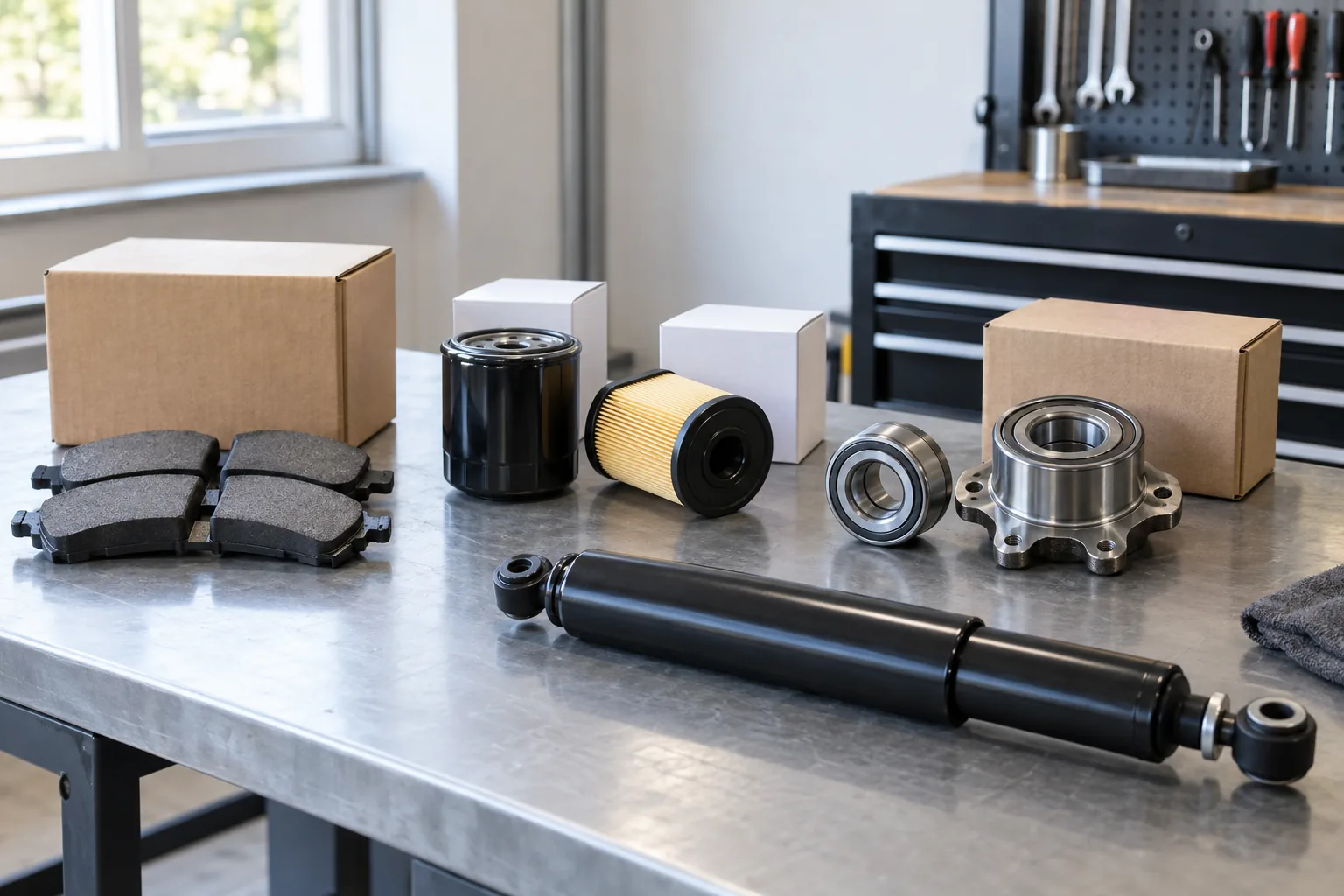
Start with plain service and wear parts that every workshop replaces on a schedule: brake pads, oil and air filters, shock absorbers, wheel bearings, spark plugs and lights. They turn over quickly, they are easy to specify by part number, and a mistake on one of them is cheap compared with a mistake on an engine or electronic part.
- Brake pads. Brake pads from China are the usual first test order, since the part number and the pad dimensions are easy to confirm and the demand does not depend on one car brand.
- Oil and air filters. Low value per piece, light, and replaced at every service. They are also one of the parts most often sold as a brand lookalike, so supplier checks matter.
- Shock absorbers and suspension parts. Heavier and bulkier, so the sea rate matters more than the air rate. Fitment depends on model and year, so confirm the part number twice.
- Wheel bearings. Small, dense and sold by exact size, which makes them straightforward to specify from the old part.
- Spark plugs and ignition parts. Light, cheap and always in demand, which makes them a good candidate for a small air restock between sea shipments.
- Lights and bulbs. Bulky relative to weight and fragile, so the packing method matters as much as the price.
Leave airbags, control units and anything electronic for a later order. Those are the parts where fakes and fitment errors cost the most, and they are not the place to learn how a new supplier performs. Batteries and lubricants also have their own shipping rules, so ask us before you plan an order around them.
A first order that spreads a small budget over ten different part types leaves you without enough volume in any category to negotiate or absorb a mistake. Two or three categories, confirmed and sold through, build a better supplier relationship than a wide catalogue on day one. Our guide to the best products to import from China to Kenya covers how to judge demand before you commit money to stock.
How Do You Make Sure Car Spare Parts Fit?
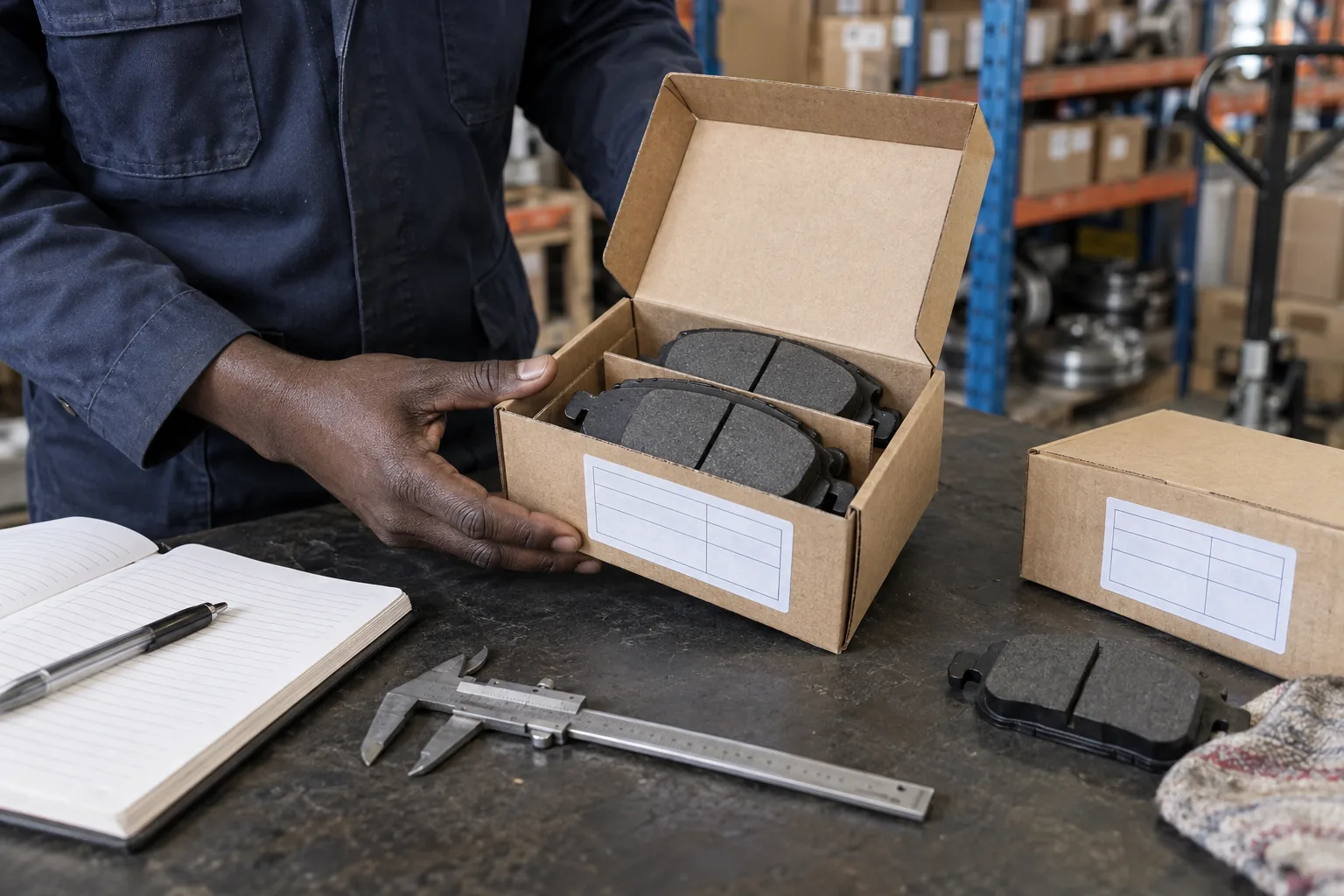
Give the supplier the original part number first, then the vehicle make, model, year and engine code, and ask them to confirm the match in writing before you pay. A listing that says “fits Toyota” or “fits 1.6 engines” is not a specification, and it is the most common reason a whole box of parts cannot be sold.
Cars sold in Kenya come from several markets, and the same model name can use different parts depending on year, engine and trim. That is why part number matching matters more than the picture on a listing. Work through this list before any order:
- Read the part number off the old part, the service manual or the vehicle’s parts catalogue. This is the single most useful piece of information you can send.
- Add the vehicle make, model, year of manufacture and engine code. The chassis number lets a supplier check the exact build.
- Send photos of the old part with measurements. For brake pads that means length, width and thickness, and for a bearing the inner diameter, outer diameter and width.
- Ask the supplier to confirm in writing that the part number and the vehicle details match, before payment and not after the goods have left the factory.
- Order a sample first when a part is new to you. For sourcing clients we ask for a sample deposit of at least 5,000 ksh, credited against the order, and the supplier may require more.
You can also check part numbers against the cross-reference listings that parts makers publish on their own websites. If a supplier cannot tell you the part number of what it is selling, treat that as a warning about the rest of the order.
OEM vs Aftermarket Car Parts: Which Should You Import?
OEM parts are made to the carmaker’s own specification and sold in the carmaker’s packaging, while aftermarket parts are made by other manufacturers to fit the same vehicle. For a reseller importing from China, the realistic choice is between good and poor aftermarket parts, and any part sold far below the carmaker’s price should be treated as aftermarket unless the supplier can prove otherwise.
The terms get mixed up in supplier listings, so it helps to separate four groups:
| Type | What it is | What to watch |
|---|---|---|
| Genuine OEM | Made for the carmaker and sold under its brand or through its approved channel | Highest price. Rarely the route for a reseller buying at factory level |
| OEM-spec aftermarket | Made by an independent maker to the original dimensions and tolerances, under the maker’s own name | Often the best value. Ask for the manufacturer’s specification, not only photos |
| Budget aftermarket | Cheaper parts that fit but with looser tolerances and shorter life | Fine for some customers if you are honest about the grade. Test a sample first |
| Counterfeit | A copy that carries a carmaker’s or major brand’s logo without permission | Never import it. See the next section |
For brakes and suspension, where a failing part affects safety, choose the better aftermarket grade and test a sample of brake pads from China before you commit stock. For items such as bulbs, trim clips or filters, a budget grade can make sense for customers who want the lowest price, provided you tell them what they are buying.
How Do You Avoid Counterfeit Car Parts?
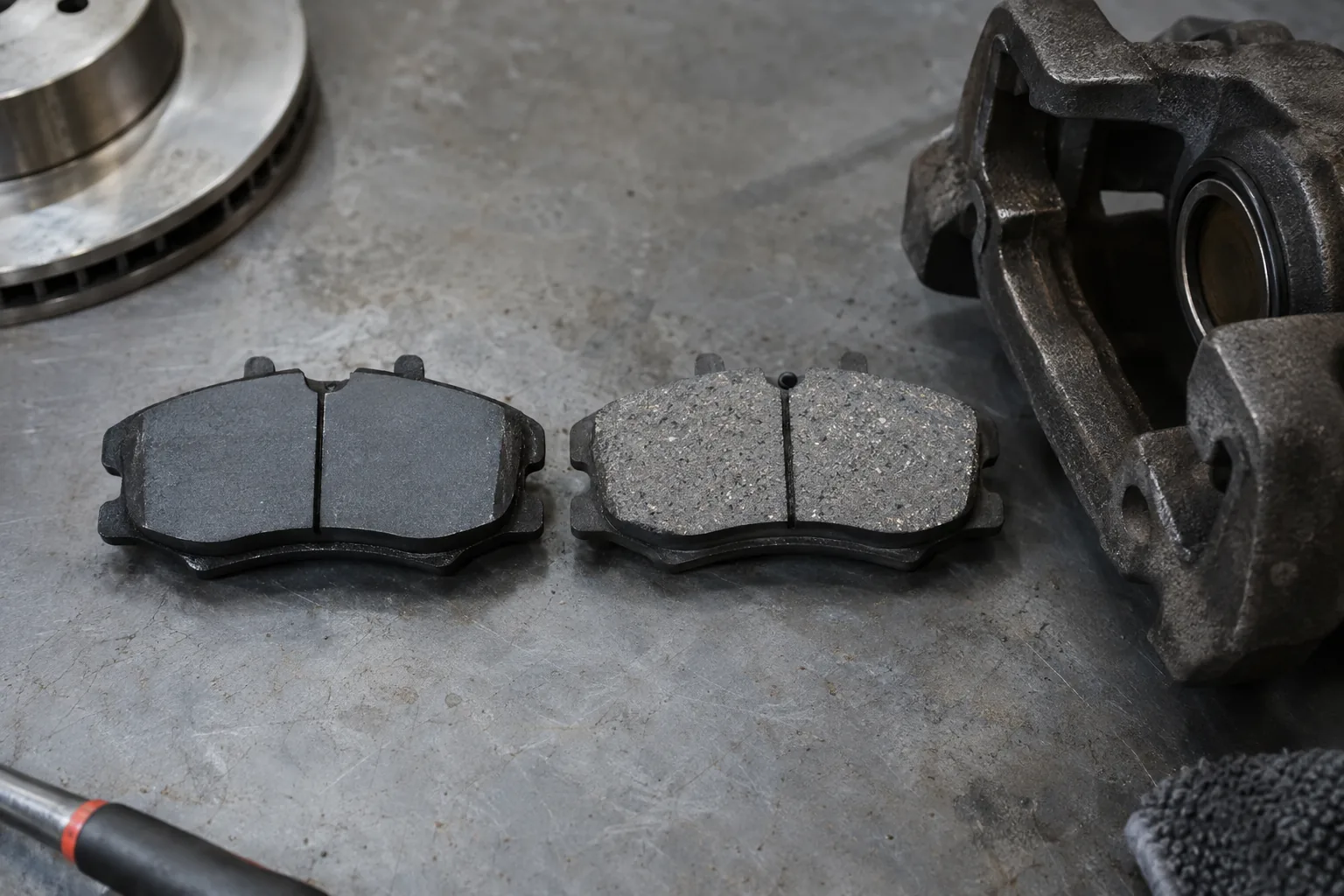
Do not import any part that carries a carmaker’s or major brand’s logo unless the supplier is a documented authorised source, and ask for plainly marked parts from a named manufacturer instead. Counterfeit car parts are the fastest way to lose a whole shipment, and they put your customer’s safety at risk as well as your money.
Fake parts often come in near-perfect packaging, so the box tells you very little. These signs help:
Our guide to quality control for China imports goes through what to check on a sample before you place a bulk order. The rules on counterfeit goods in Kenya are a topic for a separate guide, so this post sticks to the practical point: choose honest aftermarket parts over lookalike branding every time.
What Import Duty Applies to Car Spare Parts in Kenya?
Duty depends on each part’s HS code, and the East African Community tariff has several bands rather than one flat rate. In the 2022 version of the EAC Common External Tariff, most motor vehicle parts under heading 8708 are 10%, while oil, petrol and intake air filters are 25%.
That matters because many guides give one figure for every auto part. The table below lists the lines a car parts reseller meets most often, as they appear in that tariff:
| Part | HS code | Duty rate in the 2022 EAC tariff |
|---|---|---|
| Brakes and servo-brakes, and parts | 8708.30 | 10% |
| Brake linings and pads, not mounted | 6813.81 | 10% |
| Shock absorbers and suspension parts | 8708.80 | 10% |
| Clutches and parts | 8708.93 | 10% |
| Radiators and parts | 8708.91 | 10% |
| Bumpers and parts | 8708.10 | 10% |
| Other body parts and accessories | 8708.29 | 10% |
| Other parts and accessories | 8708.99 | 10% |
| Oil or petrol filters for engines | 8421.23 | 25% |
| Intake air filters for engines | 8421.31 | 25% |
| Ball and tapered roller bearings | 8482.10, 8482.20 | 10% |
| Spark plugs | 8511.10 | 10% |
| Other lighting and signalling equipment | 8512.20 | 10% |
Two cautions. First, the tariff in the table is the 2022 version, and the EAC adjusts rates each financial year, with temporary stays and rate adjustments effective 1 July 2026, so the rate on your invoice date is what counts. Second, the HS code is decided from the exact part and how it is made, not from its name, so a mounted brake pad and a loose friction pad can fall under different headings. Our HS codes guide explains how classification works.
Duty is only one of the charges. VAT, the Import Declaration Fee, the Railway Development Levy and clearance come on top of it, and our import duty breakdown shows how they stack. With Pamoja Imports all of these are inside our all-in rate per kilogram or per cubic metre, so a reseller is quoted one number for the shipment and does not need to calculate each line.
Do Car Spare Parts Need KEBS or PVoC Approval?
It depends on the part. Some products need a Certificate of Conformity under the Pre-Export Verification of Conformity programme, and others do not, so we confirm the position for each part on your request before the order is placed. We found no current official source that clears all new car parts in one sentence, so this guide does not claim that.
What is reported is a 2019 restriction on used parts. At that time the Kenya Bureau of Standards said the standard covered specific used items, including oil filters, brake pads and bearings, and that used parts outside the list were allowed if they met the standard. That article is from 2019 and only discusses used parts, which is one more reason this guide sticks to new parts. Our Kenya import regulations guide covers the general clearance process, and KEBS explains the PVoC programme on its own site.
Should You Ship Car Spare Parts by Sea or Air?
Ship by sea for stock orders and heavy or bulky parts, and use air only for small, light restocks. Sea freight is priced at 65,000 ksh per cubic metre with a 0.1 CBM minimum, while air is 1,700 ksh per kilogram with a 1 kg minimum, and dense parts such as bearings and shock absorbers weigh a lot for their size.
Both rates are all-in, meaning duty, VAT, IDF, RDL and clearance are included. Two simple examples show the gap, and both are illustrations, not quotes:
- A small restock by air: 20 kg of spark plugs, bulbs and small ignition parts costs 34,000 ksh by air at 1,700 ksh per kg.
- A stock order by sea: a pallet-sized order of 1 CBM costs 65,000 ksh by sea. The same 1 CBM of dense parts could weigh several hundred kilograms, and by air that weight would cost many times more.
The volumetric divisor is 6,000, so for air we compare the actual weight with length times width times height in centimetres divided by 6,000 and charge the higher figure. Palletised sea cargo that needs a forklift costs 1,000 ksh per pallet. Very dense loads, such as boxes of brake discs, are priced after we see the packing list, so confirm the sea cost before you order heavy stock. Batteries go by sea only, with an MSDS and packing list, and phones and liquids cannot go by air at the moment.
Transit is 7 to 14 days by air and 30 to 45 days by sea, counted from the China warehouse departure until the goods are cleared and ready at our Kenya warehouse. Our full timeline guide explains the stages before departure. If you buy from several suppliers, consolidated shipping brings them into one shipment. Use the shipping calculator for a figure on your own weights, and read our sea freight vs air freight comparison for the trade-offs.
How Does Pamoja Imports Handle a Car Parts Order?
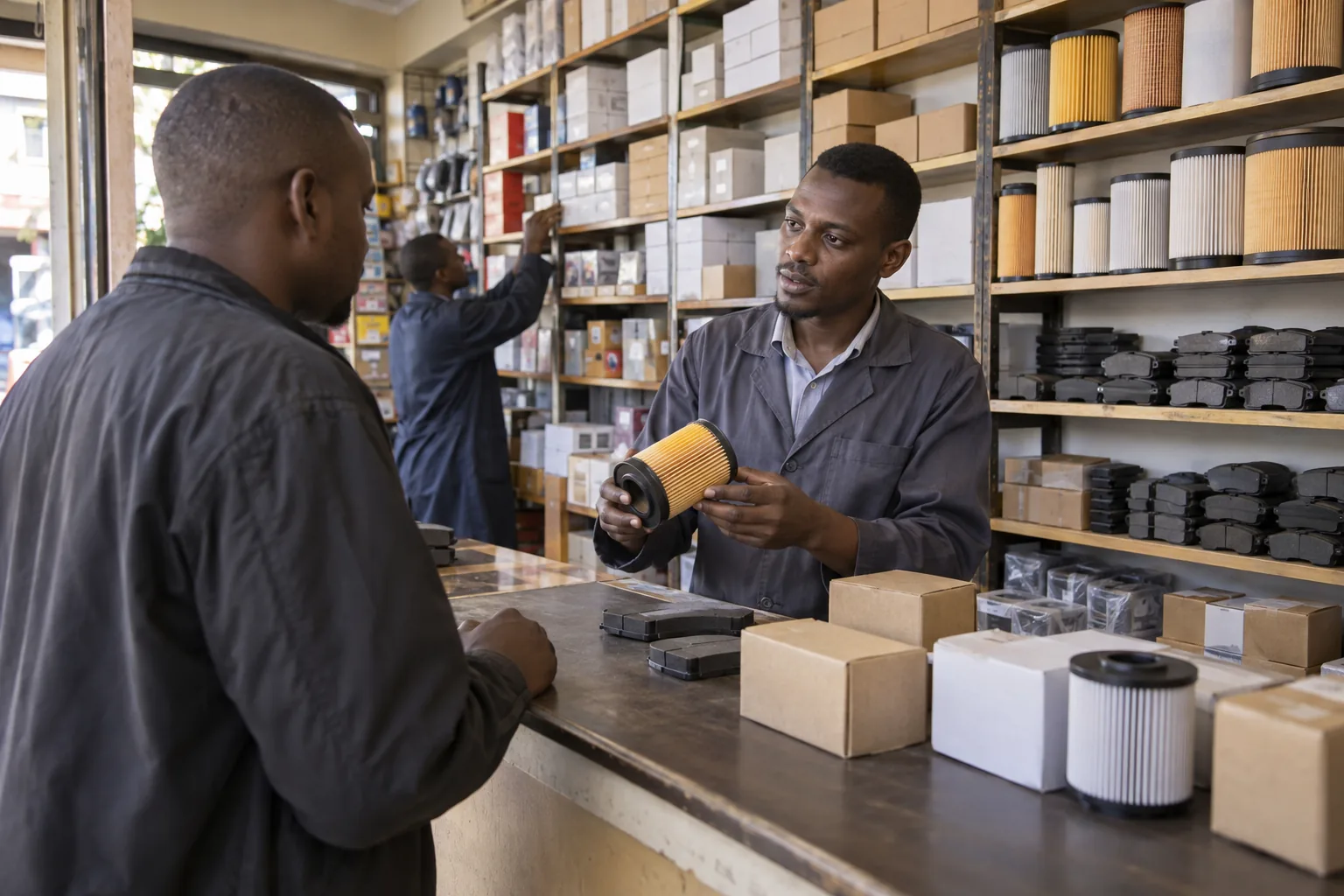
You send the part numbers, vehicle details and quantities, and we find suppliers on Pinduoduo and 1688, order for you, and ship to our Kenya warehouse under one all-in rate. If you already have a supplier, we ship for you from our China warehouse and you give the supplier our contact for the shipping details. Sourcing itself is free.
These platforms are domestic Chinese marketplaces that need a Chinese phone number and payment method, which is why our Chengdu team uses them for you. We do not curate or propose products, so the request needs to say which parts you want. We pass your part number and vehicle details to the supplier.
You do not have to find your own supplier first. If you do, the guide to finding Chinese suppliers covers the open B2B platforms, which are internationally accessible sites such as Alibaba, Made-in-China, DHgate and Global Sources. If you cannot pay a supplier directly, we can buy on your behalf for a purchasing fee of 10% of the product cost, with a minimum of 2,500 ksh.
Pamoja Imports: from part number to our Kenya warehouse
We source new car spare parts on Pinduoduo and 1688, ship by air or sea, and clear them in Kenya under one all-in rate. You collect from our warehouse or we deliver for a separate last-mile fee.
- Send the part number, vehicle make, model and year with your request
- Sourcing is free, with a 30,000 ksh minimum product order
- All-in freight covers duty, VAT, IDF, RDL and clearance
What Mistakes Cost Car Parts Importers Money?
The costly mistakes are ordering without a confirmed part number, importing branded lookalikes, and pricing a shipment without working out freight on the real weight. Each one is cheap to fix before the shipment leaves China and expensive once it is at sea.
These sit alongside the wider list in our mistakes to avoid when importing from China to Kenya, and a plan to resell what you import is covered in how to sell imported products in Kenya.
Frequently Asked Questions: Import Car Spare Parts From China to Kenya
For more answers to common questions about importing from China to Kenya, visit our Kenya import FAQ page.
Yes. You can find a supplier on an internationally accessible B2B platform, then arrange your own freight and clearance. The risks are fitment, supplier quality and counterfeit branding, so you need a part number for every item and a written confirmation of the match before you pay.
It depends on the HS code of the part. In the 2022 EAC Common External Tariff, most motor vehicle parts under heading 8708 are 10%, and oil and air filters are 25%. The rate on your invoice date is what counts, because the EAC adjusts rates each financial year.
It depends on the part. Some products need a Certificate of Conformity under PVoC and others do not, so we confirm the position for your parts before the order is placed. See our Kenya import regulations guide for the general process.
This guide covers new parts only. Used parts are a separate and more restricted category in Kenya, with a 2019 restriction reported on specific items, so ask us before you plan an order around them.
Air takes 7 to 14 days and sea takes 30 to 45 days, counted from the China warehouse departure until the goods are cleared and ready at our Kenya warehouse. Suppliers with the parts in stock usually reach our China warehouse in 2 to 3 days. See our full timeline guide.
Ready to Source Car Spare Parts?
Send us the part numbers and vehicle details, and we will find suppliers and ship under one all-in rate.
Need Sourcing? I Have a Supplier
Jonatan Sirak sirak.se
Founder of Pamoja Imports, a Kenya-China import agency with an operations team based in Chengdu, China. Based in China since 2018, he studied Mandarin and built direct factory relationships in Chengdu, and now helps Kenyan entrepreneurs source and import products profitably. He splits his time between Nairobi and Chengdu.