

Seasonal Import Ideas Kenya: Avoid Costly 2026 Mistakes

The best seasonal import ideas Kenya businesses can act on right now come down to timing more than product choice: order festive stock by late September to comfortably use cheaper sea freight, and you protect both your margin and your shelf date. Wait past mid-October, and the same order usually gets forced onto air freight, which can cost several times more per kilogram. We source festive goods from Pinduoduo and 1688 and coordinate freight and clearance so the timing decision is one less thing to manage alone.
- Why Timing Beats Product Choice for Seasonal Imports
- The Real Sourcing-to-Shelf Calendar From China to Kenya
- What to Import for Kenya’s Festive Season
- Order Early vs Order Late: The Same Shipment, Two Outcomes
- Why Freight Costs and Capacity Tighten Later in the Year
- A Simple Ordering Timeline You Can Actually Use
- Frequently Asked Questions
Why Timing Beats Product Choice for Seasonal Imports
Most advice on importing seasonal goods focuses on what to sell. Toys, artificial Christmas trees, ornaments, string lights, gift sets, novelty items, all of it moves well in Kenya between October and December. But the question that actually determines whether you make money on a seasonal order is not what you import, it is when you place the order. Get the timing wrong, and even a well-chosen product can end up costing you far more than planned, arriving late, or both.
This is the gap in most seasonal sourcing advice available to Kenyan importers. Generic China-sourcing guides are written for buyers in the United States and Europe, where production lead times for custom-manufactured decorations can stretch for months and factories genuinely book up by early summer. That is not how most Kenyan small importers actually source seasonal stock. If you are buying already-manufactured goods off Pinduoduo or 1688 rather than commissioning a custom production run, your real constraint is not a factory queue, it is the combined time your goods spend in supplier preparation, consolidation, export clearance, and ocean or air transit to Mombasa or Nairobi.
Understanding china sourcing timing Kenya specifically, rather than borrowing a timeline built for a different market, is what separates a profitable festive season from a rushed and expensive one.
There is also a second reason product choice gets more attention than it deserves: it feels like the controllable variable. You can research which toys are trending, compare a handful of suppliers, and settle on a product with confidence. Timing feels less concrete, so it gets pushed down the priority list until an order is already late. The worked example later in this guide puts a real number on that gap, and it is larger than most first-time seasonal importers expect.
The Real Sourcing-to-Shelf Calendar From China to Kenya
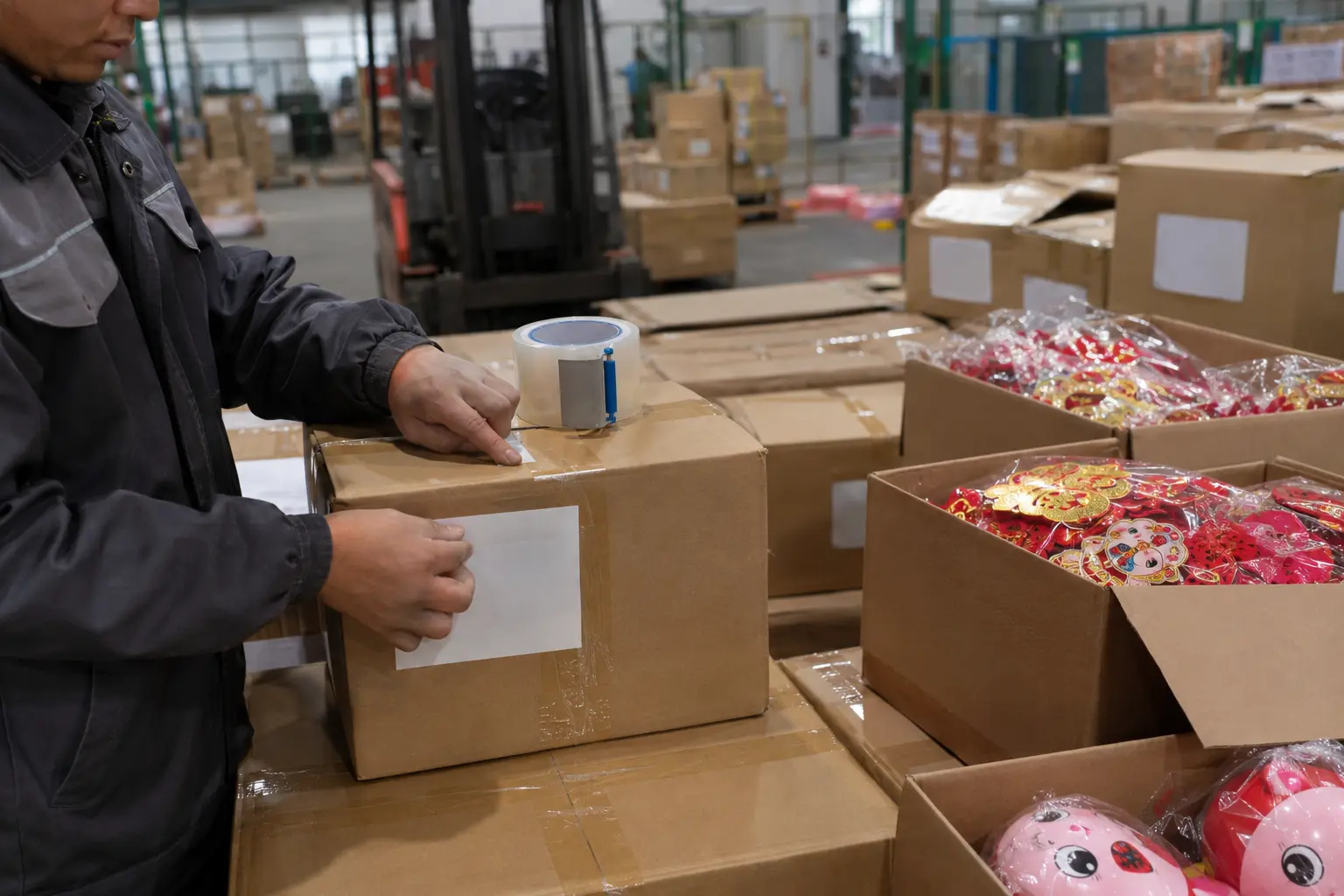
Getting china sourcing timing Kenya right starts with an honest picture of how long each stage of the journey actually takes, before you can decide when to order. For a typical off-the-shelf product order, not a custom-manufactured run, the pre-shipment stages usually look like this:
Supplier Preparation
Once your order is confirmed, the supplier typically needs 1 to 3 days to pull stock, pack it, and prepare it for pickup, since these are already-manufactured goods rather than a production run.
1 to 3 daysTransport to Warehouse
Getting the goods from the supplier to a consolidation warehouse in China typically takes another 1 to 3 days, depending on the supplier’s location relative to the warehouse.
1 to 3 daysConsolidation (If Needed)
If your order needs to be combined with other items into a single consolidated shipment, add another 1 to 3 days for this step. Single-supplier orders can often skip this stage entirely.
0 to 3 daysExport Clearance
Once your cargo is at the warehouse, count roughly 1 week for export clearance and loading onto a vessel or aircraft. This stage is fairly fixed regardless of freight mode.
About 7 daysAdded together, that is roughly 9 to 16 days from placing your order to your cargo actually leaving China. Only after that does transit time begin. Sea freight via consolidated LCL shipping on the China to Kenya route typically takes 36 to 47 days once your cargo is actually loaded and moving, a figure that runs meaningfully longer than the general sea transit times often quoted for full container loads. Air freight is far faster, typically 5 to 8 days for standard cargo.
Put the two halves together and a realistic total is roughly 45 to 63 days for sea freight, and roughly 14 to 24 days for air freight, from the day you place your order to the day stock is sitting in your Nairobi warehouse ready to sell. That gap between the two modes is the entire basis for the timing argument in this guide. These totals cover supplier preparation, export clearance, and carrier transit, if you are coordinating freight and import clearance yourself, add your own import clearance time on the Kenya side on top of this. The worked example further down shows Pamoja’s own warehouse-to-warehouse figures, which already include import clearance.
What to Import for Kenya’s Festive Season
Several product categories make up most of the holiday season stock Kenya sellers restock every year, and each one comes with its own classification quirks worth knowing before you order.
- Children’s toys: classified under HS heading 9503. This is one of the more commonly imported festive categories, and duty on this heading was raised in a recent EAC gazette amendment, so confirm the current rate before finalizing your landed cost, not an outdated or assumed rate.
- Artificial Christmas trees, ornaments, and festive decorations: typically classified under HS heading 9505, a separate heading from toys with its own duty treatment. Do not assume the toy duty rate applies here.
- String lights and electrical decorations: often fall under a different chapter entirely because they are electrical goods, not festive articles. These need their own HS code check.
- Gift sets and novelty items: classification depends heavily on the dominant material and function of the item, so a mixed gift set may need to be broken into separate line items on your commercial invoice rather than declared under one code.
Order Early vs Order Late: The Same Shipment, Two Outcomes
Anyone deciding whether to import christmas products Kenya customers will actually buy needs to see the real cost difference timing makes, not just be told it matters. Here is what the timing decision actually costs in practice, using a realistic mid-size shipment: 200 kg, roughly 1.2 CBM, of festive toys and gift items with an FOB value of 250,000 ksh. This is compact enough and dense enough to move by either sea or air, which is what makes it a fair comparison, and it uses a typical freight-only market rate at each stage, not Pamoja’s all-in rate, since the point here is showing what a DIY importer using a standard freight forwarder actually pays.
Using a typical freight-only market rate of roughly 12,930 ksh per CBM for sea and 711 ksh per kg for air, and applying the 35% duty band that currently applies to HS 9503 toys, confirmed against KRA before you order:
| Cost Stage | DIY Sea (Early Order) | DIY Air (Late Order) | Pamoja Sea (All-In) | Pamoja Air (All-In) |
|---|---|---|---|---|
| FOB product value | 250,000 ksh | 250,000 ksh | 250,000 ksh | 250,000 ksh |
| Freight | 15,516 ksh (1.2 CBM x 12,930 ksh freight-only market rate) | 142,200 ksh (200 kg x 711 ksh freight-only market rate) | 78,000 ksh (1.2 CBM x 65,000 ksh all-in rate) | 340,000 ksh (200 kg x 1,700 ksh all-in rate) |
| CIF value | 265,516 ksh | 392,200 ksh | n/a, see total below | n/a, see total below |
| Import duty (35%, HS 9503, confirm with KRA) | 92,931 ksh | 137,270 ksh | Included | Included |
| VAT (16% of CIF plus duty) | 57,352 ksh | 84,715 ksh | Included | Included |
| IDF (2.5% of CIF) | 6,638 ksh | 9,805 ksh | Included | Included |
| RDL (2% of CIF) | 5,310 ksh | 7,844 ksh | Included | Included |
| Clearing agent fee | 15,000 ksh (midrange estimate) | 23,000 ksh (midrange estimate) | Included | Included |
| Total landed cost | 442,747 ksh | 654,834 ksh | 328,000 ksh | 590,000 ksh |
| Savings vs DIY | n/a | n/a | 114,747 ksh less (26%) | 64,834 ksh less (10%) |
| Transit time | 36 to 47 days (sea carrier transit only, LCL consolidated) | 5 to 8 days (air carrier transit only) | 36 to 47 days (warehouse-to-warehouse, includes both clearances) | 7 to 14 days (warehouse-to-warehouse, includes both clearances) |
The DIY columns and Pamoja columns are not directly interchangeable line by line, the DIY figures use a standard freight-only market rate you would get from an independent forwarder, while the Pamoja columns use our published all-in rate that already bundles duty, VAT, IDF, RDL, and clearance into one number.
The same distinction applies to the transit time row: the DIY figures measure carrier transit only, from cargo loading to arrival, while our figures measure warehouse-to-warehouse, from your goods leaving our China warehouse to arriving cleared at our Nairobi warehouse, including both export and import clearance. On air freight that difference is visible, our 7 to 14 days runs longer than a bare 5 to 8 day carrier quote because clearance time is included. On sea freight the two numbers happen to land in the same 36 to 47 day range, since the additional clearance time is small relative to a transit that already runs over a month, not because the two figures are measuring the same thing.
What the savings row shows is the real-world outcome: on this shipment, going through Pamoja rather than coordinating a freight forwarder and clearing agent yourself comes out roughly 114,747 ksh cheaper on sea and 64,834 ksh cheaper on air, on top of not having to track five separate charges and deadlines yourself. This is the clearest illustration in this guide of the best time to import from china question, since the same product, ordered at two different points in the calendar and through two different routes, produces four very different outcomes.

Ordering early and using sea freight lands this shipment at roughly 442,747 ksh. Leave the order too late and the same shipment, forced onto air freight because there is no longer enough time for sea transit, costs roughly 654,834 ksh, a difference of about 212,000 ksh, or roughly 32% more, for the identical goods. Nearly all of that gap comes from the freight line itself, since duty, VAT, IDF, and RDL all scale up with the higher CIF value that a more expensive freight cost creates.
This is why understanding the best time to import from china for a given freight mode matters more than most seasonal sourcing advice suggests. The product choice barely moved the number. The date you placed the order did.
Pamoja Imports: one all-in rate instead of six separate DIY calculations
We source festive goods, toys, decorations, and gift items directly from Pinduoduo and 1688, and our all-in rate already includes duty, VAT, IDF, RDL, and customs clearance. As the table above shows, that means a lower total landed cost than the DIY route on both freight modes, without you having to track five separate charges and deadlines yourself.
- No separate clearing agent to coordinate
- Sourcing direct from Pinduoduo and 1688, not Alibaba
- One quoted rate, paid via M-Pesa on arrival
Why Freight Costs and Capacity Tighten Later in the Year
There is a second, separate reason to order early that has nothing to do with running out of time and everything to do with cost. Shipping lines serving the China to Kenya route have on multiple occasions applied a Peak Season Surcharge, an industry-standard mechanism carriers use when global demand for container space rises sharply, typically in the run-up to the year-end shopping season worldwide. This is a documented practice on this specific route, not a guess dressed up as urgency.
This does not mean rates are guaranteed to rise on any fixed date every year, and it is not the same claim as saying you will miss Christmas if you order in October. It means that ordering earlier in the year gives you a real chance of booking space and rates before that seasonal demand pressure builds, rather than competing with every other importer trying to secure holiday season stock Kenya businesses are all chasing on the same shrinking timeline.
Combined with the freight rate comparison above, the case for ordering early is straightforward: you get access to the cheaper freight mode, and you reduce your exposure to rate increases that tend to cluster later in the year.
A Simple Ordering Timeline You Can Actually Use
Turning all of this into practical seasonal import ideas Kenya sellers can act on this week is simpler than it looks. Rather than working backward from a specific date, use the lead times from earlier in this guide to set your own deadline based on when you actually need stock on shelves.
Ordering Timeline for Festive Season Stock
- Need stock by early December: place your sea freight order by late September at the latest, allowing roughly 9 to 10 weeks total. This is generally the best time to import from china for holiday season stock Kenya sellers need on shelves by the season.
- Missed that window: air freight remains an option through most of November, but expect a significantly higher landed cost as shown in the worked example above
- Ordering multiple product categories: confirm the HS code and duty rate for each one separately, since toys, decorations, and lights are not interchangeable for duty purposes
- Uncertain about your own timeline: run your specific shipment through our shipping calculator or send us your product and target date on WhatsApp
If cash flow is a concern alongside timing, particularly for a larger seasonal order tying up capital for weeks before you can sell, our cash flow guide for China to Kenya imports walks through how sea and air freight compare on how long your money stays locked up, not just on cost per unit.
It is also worth keeping a short record of what actually worked once this season is over. Note the date you placed your order, which freight mode you used, and how close your stock arrival was to your target shelf date. Kenyan importers who repeat a seasonal import ideas Kenya strategy each year, rather than treating every festive season as a first attempt, tend to tighten their timeline and reduce their freight costs simply because they are no longer guessing at lead times. If this is your first time trying to import christmas products Kenya shoppers buy every year, treat this year’s order as the baseline you improve on next year, not a one-time gamble.
Pamoja Imports: coordinating seasonal stock from source to your Nairobi warehouse
Whether you already have a Chinese supplier for your festive stock or need us to find one, we handle sourcing, freight, and customs clearance under one transparent all-in rate. Submit your product and target date and we will tell you which freight mode still works.
- Sourcing from Pinduoduo and 1688 for toys, decorations, and gift items
- Sea and air freight coordinated end to end, duty and clearance included
- Payment via M-Pesa once your goods reach our Nairobi warehouse
Frequently Asked Questions: Seasonal Import Ideas Kenya
For more answers to common questions about importing from China to Kenya, visit our Kenya import FAQ page.
For sea freight, order roughly 9 to 10 weeks before you need stock on shelves, covering supplier preparation, export clearance, and 36 to 47 days of LCL transit. For air freight, 3 to 4 weeks is a safer minimum, though air costs significantly more per unit than sea. Ordering earlier lets you use the cheaper freight mode instead of being forced onto the expensive one.
For a typical festive-goods shipment moving by consolidated sea freight, place your order by late September to comfortably reach Kenya before December. This allows for supplier preparation, optional consolidation, export clearance, and 36 to 47 days of sea transit. Waiting past mid-October usually means paying for air freight instead, which can cost several times more per kilogram, as shown in our worked example above.
Shipping lines have repeatedly applied Peak Season Surcharges on the China to Kenya route in the past, timed around periods of high global demand for container space. This is a documented industry practice, not a guaranteed annual event, so treat it as a real cost risk worth planning around rather than a fixed yearly certainty.
Toys generally fall under HS heading 9503, while Christmas trees, ornaments, and festive decorations typically fall under HS heading 9505, a separate classification with its own duty treatment. Lights and electrical decorations often sit under a different chapter entirely. Always confirm the exact HS code and current duty rate for your specific product with KRA or a licensed clearing agent before ordering, since misclassification is a common and costly mistake. See our HS Codes Kenya guide for the full verification process.
Yes. We source festive goods including toys, decorations, and gift items from Pinduoduo and 1688, and coordinate freight and customs clearance under one all-in rate covering duty, VAT, IDF, RDL, and clearance. Submit a source request or message us on WhatsApp with your product and timeline.
Planning Your Next Festive Season Order?
Tell us your product and target date, and we will tell you which freight mode still works and what it will actually cost, all-in.
Need Sourcing? I Have a Supplier
Jonatan Sirak sirak.se
Founder of Pamoja Imports, a Kenya-China import agency with an operations team based in Chengdu, China. With several years of hands-on experience facilitating shipments across electronics, solar equipment, construction materials, and consumer goods, he helps Kenyan entrepreneurs source and import products profitably. He splits his time between Nairobi and Chengdu.