

Import School Supplies from China to Kenya: The Term 2 2027 Plan

To import school supplies from China to Kenya for Term 2 2027, which opens on May 3, pay your supplier before Chinese New Year or have your goods leave our China warehouse by about March 19. Sea freight takes 30 to 45 days, so count back from the opening date. The duty is what surprises most buyers: exercise books and ball point pens carry 35%, while pencils, other pens and plastic lunch boxes carry 25%. With Pamoja Imports, duty, VAT, IDF, RDL and clearance are all inside one all-in rate.
- Should You Import School Supplies from China to Kenya for Term 2?
- When Must You Order School Supplies to Beat Each School Term?
- What Is the Import Duty on School Supplies in Kenya?
- Do School Supplies Need KEBS or PVoC Certification?
- Which School Supplies Are Worth Importing from China?
- Is Importing Cheaper Than School Stationery Wholesale in Kenya?
- Should You Ship School Supplies by Sea or Air?
- What Mistakes Do Importers Make with School Supplies?
- Frequently Asked Questions: Import School Supplies from China to Kenya
Should You Import School Supplies from China to Kenya for Term 2?
Yes, if you plan around the school calendar and choose the right lines. Term 2 2027 is the best target. Term 1 opens on January 4, which is already too close for sea freight, while Term 2 leaves enough time to order, ship and shelve stock before May 3.
School supplies are one of the steadiest categories a small Kenyan shop can stock. Every term, parents buy exercise books, pens, pencils, geometry sets, lunch boxes and water bottles on a fixed deadline, and that deadline is published months in advance. The Ministry of Education calendar for 2027 puts Term 1 from January 4, Term 2 from May 3 to July 30, and Term 3 from August 30 to November 5.
That fixed deadline is also the risk. Stock that lands two weeks after the term opens has missed the peak, and unsold exercise books do not gain value. This guide is for shop owners, bookshops, tuck shops and small wholesalers who want to import school supplies from China to Kenya on a schedule, with the duty known before they pay a supplier. It also tells you where importing does not pay: several popular school items carry high duty, and for some of them local wholesale is the better buy.
We keep the scope tight. We do not currently source school bags, uniforms or shoes (we ship them if you already have a supplier), so this guide covers stationery, lunch boxes, water bottles and similar items. If you are still deciding what to stock overall, our guide to the best products to import from China to Kenya compares categories.
When Must You Order School Supplies to Beat Each School Term?
Count back from the term opening date. For sea freight, your stock must leave our China warehouse about 45 days before you want it on the shelf, and for air freight about 14 days before. Those are the slow ends of the 30 to 45 day and 7 to 14 day windows, counted from warehouse departure until the goods are cleared and ready in Kenya.
Add the time the supplier needs to reach our China warehouse (usually 2 to 3 days for in-stock items, longer for goods produced to order) and up to a week of waiting for the next departure. Our full China to Kenya timeline explains each stage. Here is what that means for the next three terms.
| School term (2027) | Opens | Sea freight: leave China warehouse by | Practical order and payment date |
|---|---|---|---|
| Term 1 | January 4 | About November 20, 2026 | Too late for most sea orders if you read this after mid-November. Use air for a small, light top-up only |
| Term 2 | May 3 | About March 19, better early March | Pay before Chinese New Year, or immediately when factories reopen. See the two plans below |
| Term 3 | August 30 | About July 16 | Order and pay by early June |
The dates above are counted at the slow end of the sea window (45 days), so they leave you no buffer for the last mile or for sorting stock. Add a week or two if you can. The term dates come from news reports of the Ministry of Education calendar, so confirm them against the official circular before you commit money.
Plan A for Term 2: order before Chinese New Year
Chinese New Year 2027 falls on February 6. Flexport notes that factories are closed or slowed for at least four weeks around it. If you pay your supplier in December or early January and the goods leave our China warehouse in January, your stock arrives in Kenya between early February and mid-March. It ties up your cash for longer, but the timing is reliable.
Plan B for Term 2: order after the factories reopen
If you wait until the factories are back in March, the sea window is tight. Goods would have to leave the warehouse by about March 19 to arrive by May 3, and one slow week at the supplier breaks it. Use Plan B only for in-stock items and keep air freight as the backup for the lines you cannot afford to miss. Our guide to how long shipping from China to Kenya takes covers the holiday slowdowns in more detail.
What Is the Import Duty on School Supplies in Kenya?
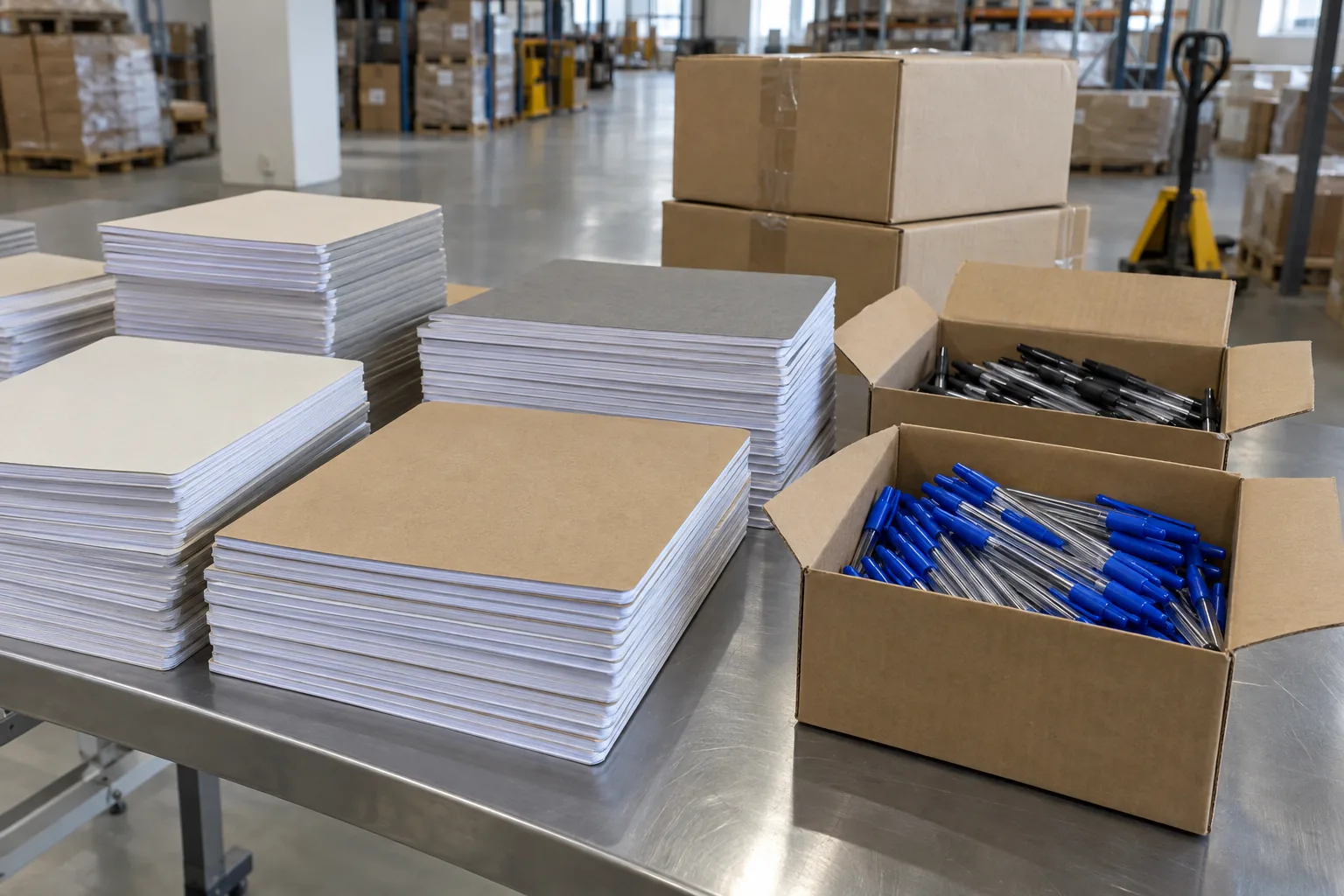
The duty depends on the item, and it is higher than most buyers expect. Under the EAC Common External Tariff (2022 version) published by KRA, finished exercise books, notebooks and ball point pens carry 35%, while pencils, crayons, most other pens and plastic tableware sit at 25%.
Exercise books import duty Kenya, in short: 35%. That is the rate to watch, because exercise books are usually the biggest line in a school order. The table shows the school supplies import duty Kenya applies to the other common lines.
| Item | HS code | Import duty |
|---|---|---|
| Exercise books | 4820.20.00 | 35% |
| Notebooks, registers, diaries | 4820.10.00 | 35% |
| Binders, folders, file covers | 4820.30.00 | 35% |
| Ball point pens | 9608.10.00 | 35% |
| Felt tip pens and markers, other pens, propelling pencils | 9608.20 to 9608.50 | 25% |
| Pencils and crayons | 9609.10.00 | 25% |
| Plastic lunch boxes (tableware and kitchenware) | 3924.10.00 | 25% |
| Plastic bottles | 3923.30.00 | 25% |
| Compasses and similar drawing instruments | 9017.20.00 | 0% |
Two things need care. First, this table comes from the 2022 version of the schedule, and later EAC gazettes can change individual lines, so check the current rate for your exact HS code before you pay a supplier. Our HS codes Kenya guide shows how to look it up. Second, the HS code depends on what the item actually is, not on what the supplier calls it. A geometry set that includes plastic items, or a lunch box with a vacuum flask, may classify differently from the table.
Excise duty on plastic bottles and containers
Plastic items can carry excise duty on top of import duty. A KRA public notice on excise duty lists 10% on articles of plastic under tariff headings 3923.30.00 and 3923.90.90, effective December 27, 2024. Water bottles fall under 3923.30.00, so expect excise on them. The same notice does not list heading 3924, where lunch boxes classed as tableware sit, but classification decides, so confirm it for your product. A Finance Act can change this, which is why we check before quoting.
On top of duty, VAT of 16% and the IDF and RDL apply to imports. Our Kenya import duty guide explains how they stack. If you ship with us, all of it is inside the all-in rate of 65,000 ksh per CBM by sea (minimum 0.1 CBM) or 1,700 ksh per kg by air (minimum 1 kg), so you do not pay a separate duty bill.
Do School Supplies Need KEBS or PVoC Certification?
Assume yes unless KEBS confirms an exemption. Under the PVoC scheme, Intertek explains that all products are in scope unless KEBS specifically exempts them, and consignments that need a certificate of conformity cannot clear customs without one.
We could not find a published list that names stationery or school supplies, so we do not claim a particular item is exempt or required. The practical step is simple. Before you pay a supplier, ask KEBS or a PVoC contractor whether your exact product needs a certificate, and ask the supplier whether they can provide the test reports that go with it.
For the wider picture on standards and documents, see our guide to Kenya import regulations in 2026.
Which School Supplies Are Worth Importing from China?
If you want to import stationery from China to Kenya, the best lines are the ones where the duty is below the top band and Chinese suppliers offer plenty of choice. In practice that means lunch boxes, water bottles, pens other than ball point, art and craft supplies, and drawing instruments, rather than plain exercise books.
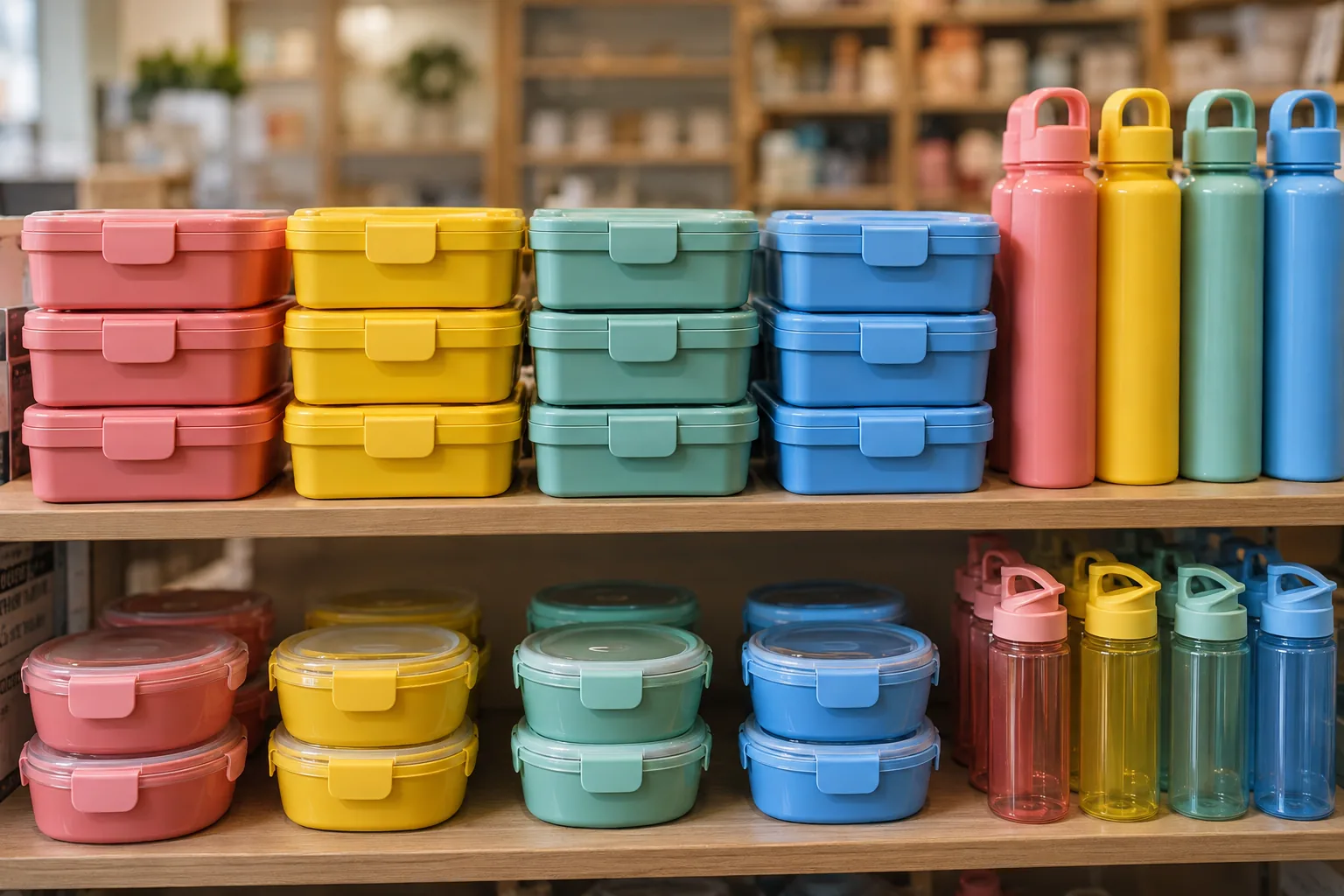
Lunch boxes and water bottles
These are the strongest candidates for anyone who wants to import school supplies from China to Kenya at scale. Chinese factories make them in many sizes, colours and materials, and the duty is 25%. Both are bulky for their weight and sea freight is charged by volume, so ask the supplier for carton dimensions before you compare prices. Bottles carry the excise question above, so ask for the HS code on the supplier’s invoice. Our guide to importing kitchen utensils covers plastic and stainless steel kitchenware classification in more detail.
Pens, pencils, markers and art supplies
Ball point pens carry 35%, but markers and other pens, propelling pencils, pencils and crayons are at 25%. Colour pencils, markers, crayons and craft sets come in a wide range from Chinese suppliers and pack into compact cartons. A shop that wants to import stationery from China to Kenya for resale should start with these lines.
Geometry and drawing instruments
Compasses, rulers and similar drawing instruments appear at 0% in the tariff under heading 9017.20. Check how your supplier packs sets, because a mixed set is classified by what it contains and the rate can change.
School items we do not source
We do not currently source school bags, uniforms, shoes or other clothing. If your shop sells them and you already have a supplier, we can ship them for you. For stationery, lunch boxes, bottles and similar items, we can source from Chinese domestic platforms (Pinduoduo, 1688 and Taobao) or ship goods you have already bought from your own supplier.
Is Importing Cheaper Than School Stationery Wholesale in Kenya?
Not always. For plain exercise books and ball point pens, the 35% duty makes local wholesale hard to beat, because wholesalers who buy from Kenyan producers pay no import duty on those goods. Importing wins more often on lines that carry 25% or 0%, and on products you cannot buy at a good price locally.
School stationery wholesale Kenya: how to compare prices
Compare the full landed cost per unit, not the factory price. This method avoids guessing:
- Get the supplier’s price per unit and the carton weight or volume.
- Ask us for the all-in shipping quote, or use our shipping calculator, and divide it by the units in the shipment.
- Add last-mile delivery if you want the goods brought to your shop.
- Compare the total per unit with the price a local wholesaler would charge for the same quantity.
- Import only the lines where the imported unit cost is clearly lower or the product is not available locally.
For help selling the goods afterwards, our guide on how to sell imported products in Kenya covers pricing and channels. For a first order, ship two or three lines where importing makes sense, in small quantities to test demand.
Should You Ship School Supplies by Sea or Air?
Ship by sea for almost every school supplies order. Paper, plastic and cartons are bulky and low in value per unit, and sea freight costs far less than air for that kind of cargo. Use air only for a small, light top-up that must arrive before term opens.
Sea freight with us is 65,000 ksh per CBM, minimum 0.1 CBM, all-in. Air is 1,700 ksh per kg, minimum 1 kg. Exercise books and boxes of pencils are heavy for their value, so air rarely makes sense for them. Our comparison of sea freight vs air freight from China to Kenya shows where the break-even sits. If you have bought from your own supplier, our ship from China to Kenya guide explains the process from quote to delivery. If your stationery, lunch boxes and bottles come from different suppliers, our guide to consolidated shipping from China to Kenya explains how we combine them into one shipment.
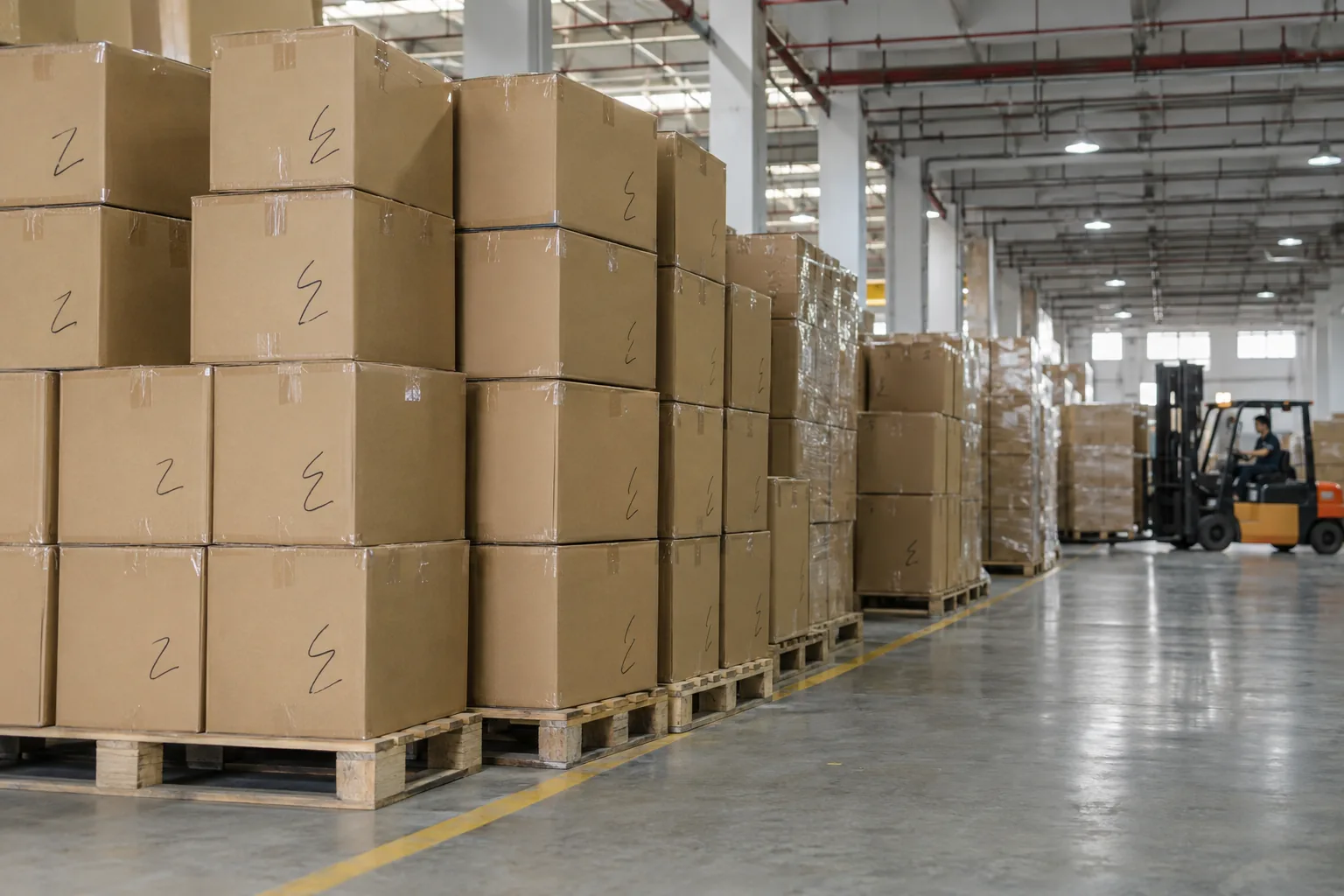
Every carton must carry our shipping mark. We send it straight to your supplier, so cartons are matched to your order at our China warehouse. Goods that arrive without the mark are returned to the supplier. Read more in our guide to the shipping mark for China to Kenya shipments.
Pamoja Imports: Stock for the term, with the duty already counted
Whether you already have a supplier or need one found, we move your goods from China to Kenya with duty, VAT and clearance included, so you know the cost per carton before the term starts. On sourcing orders our Chengdu team finds suppliers on Pinduoduo and 1688 and handles them for you. On shipping-only orders you give your supplier our contact and we send them the shipping mark directly.
- Sea freight in 30 to 45 days and air freight in 7 to 14 days, from our China warehouse to our Kenya warehouse
- Duty, VAT, IDF, RDL and customs clearance included in the all-in rate
- Weekly departures, with tracking on our order tracking page
- Warehouses in Nairobi and Mombasa, delivery with our driver for a last-mile fee
What Mistakes Do Importers Make with School Supplies?
The most common mistake is ordering for the term that is already too close. The rest are about duty and classification, and they are all avoidable.
- Ordering too late. Sea freight takes 30 to 45 days from warehouse departure and Chinese New Year can add weeks. Count back from the term opening date, as in the table above.
- Assuming 25% duty for everything. Exercise books import duty Kenya is 35%, the same as notebooks and ball point pens. Check the line for each item, as our Kenya import duty guide explains.
- Ignoring excise on plastic bottles. Plastic articles under 3923.30.00 carry a separate 10% excise duty. Ask about it before you buy.
- Buying a mixed set without checking its HS code. A set is classified by its contents, and the rate depends on the code.
- Skipping the certificate question. Ask KEBS or a PVoC contractor whether your exact product needs a certificate of conformity before the goods ship.
- Stocking one line deep. Test demand with several lines in small quantities before you import school supplies from China to Kenya at pallet scale.
If you pay a supplier directly, read our guide on how to pay Chinese suppliers first. For goods made to order, ask the supplier for a written ready date before you pay, because preparation time varies by product and quantity.
Frequently Asked Questions: Import School Supplies from China to Kenya
For more answers to common questions about importing from China to Kenya, visit our Kenya import FAQ page.
Term 2 opens on May 3, 2027. For sea freight, either pay your supplier before Chinese New Year (February 6, 2027) so the goods leave our China warehouse in January, or make sure they leave by about March 19 at the latest. Count 30 to 45 days from warehouse departure and add a week or two of buffer.
Finished exercise books (HS 4820.20.00) are at 35% in the EAC Common External Tariff 2022 version published by KRA, the same top band as notebooks and ball point pens. Check the current rate for your exact code before paying a supplier, because later gazettes can change lines.
Usually yes. Exercise books carry 35% duty, plus VAT and other charges, so they are hard to import more cheaply than local wholesalers sell them. Importing makes more sense for lunch boxes, bottles, markers, art supplies and other lines at 25% or 0%, or for products you cannot get locally.
Under Kenya’s PVoC scheme all products are in scope unless KEBS exempts them, so assume a certificate may be needed and confirm for your exact product with KEBS or a PVoC contractor before you ship. We could not find a published list that names stationery, so we do not state that it is exempt.
A KRA notice effective December 27, 2024 lists 10% excise duty on articles of plastic under headings 3923.30.00 and 3923.90.90. Water bottles fall under 3923.30.00. Lunch boxes classed as tableware under 3924.10.00 are not on that list, but classification decides, so confirm it for your product.
We do not currently source school bags, uniforms, shoes or other clothing, but if you already have a supplier for them, we ship them for you. We source stationery, lunch boxes, bottles and similar school items.
On sourcing orders the minimum product order is 30,000 ksh, excluding shipping. Sea freight has a minimum of 0.1 CBM and air freight a minimum of 1 kg. If you already have a supplier and only need shipping, send us the package details and we will quote.
Planning Term 2 stock? Get a quote with the duty included
Send us your supplier’s details or the school items you want sourced, and we will quote sea or air with duty, VAT and clearance included, so you can plan the order dates before the term opens.
Need Sourcing? I Have a Supplier
Jonatan Sirak sirak.se
Founder of Pamoja Imports, a Kenya-China import agency with an operations team based in Chengdu, China. Based in China since 2018, he studied Mandarin and built direct factory relationships in Chengdu, and now helps Kenyan entrepreneurs source and import products profitably. He splits his time between Nairobi and Chengdu.