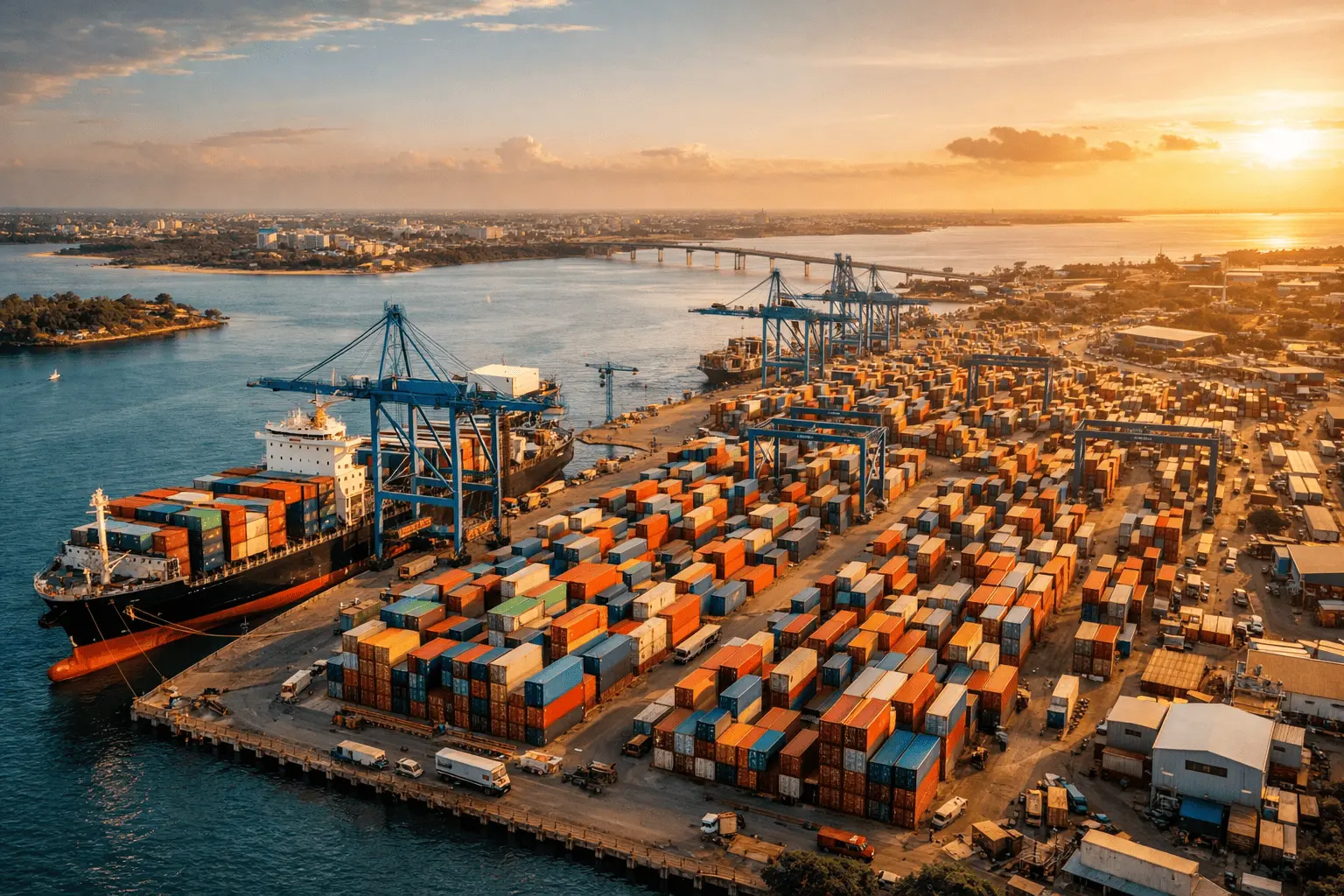

Motorcycle Spare Parts from China to Kenya: Best 2026 Guide
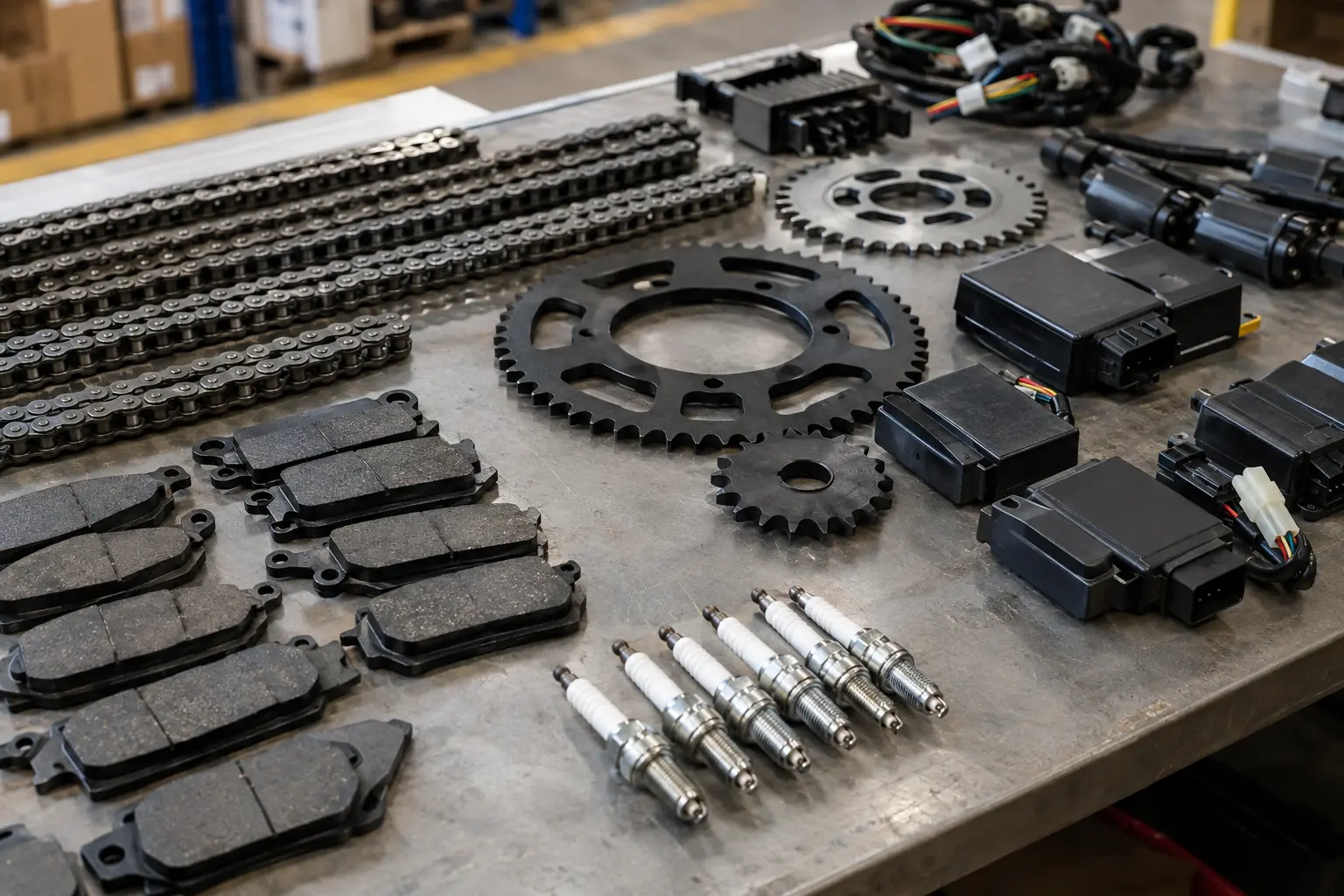
Importing motorcycle spare parts from China to Kenya means sourcing directly from Chinese suppliers instead of buying from a Nairobi wholesaler at retail markup, then clearing the shipment through Kenya’s standard PVoC, IDF, and customs duty process. Done right, it cuts out the wholesaler’s margin. Done wrong, it means paying that margin twice: once in freight mistakes, and again in parts that do not fit the bikes your customers actually ride. Pamoja Imports handles this process for Kenyan boda boda parts sellers end to end.
- Why Import Motorcycle Spare Parts From China to Kenya Directly?
- Which Motorcycle Spare Parts Should You Start With?
- Can You Import Motorcycle Spare Parts From China Yourself?
- How Does Pamoja Imports Source Motorcycle Parts Differently?
- What Duty and PVoC Rules Apply to Motorcycle Spare Parts?
- How Much Does It Cost to Ship Motorcycle Parts by Air or Sea?
- What Mistakes Should You Avoid When Importing Motorcycle Parts?
- FAQ
Why Import Motorcycle Spare Parts From China to Kenya Directly?
Importing directly cuts out the markup added by each link in Kenya’s import chain, so a shop selling brake pads, chains, or CDI units pays closer to the manufacturer’s price instead of a wholesaler’s retail markup. It only makes sense once your order volume is large enough to absorb the freight and clearance cost, which usually means restocking regularly rather than buying one box at a time.
Kenya’s boda boda sector runs on a small set of fast-moving parts: brake pads, chains, sprockets, spark plugs, clutch plates, and electrical components like CDI units. Almost all of it is imported, mostly from India and China, and it moves through a chain of importers, wholesalers, and retail shops before it reaches a mechanic’s counter on Kirinyaga Road or a small town spares shop.
If you plan to import motorcycle parts Kenya buyers can already get from a Nairobi wholesaler, the real question is not whether it is possible. It is whether your order volume justifies doing it yourself, whether you are supplying a single shop or a network of stalls near boda boda stages.
Every link in that chain adds a markup. If you are selling spare parts, whether from a shop, a stall near a boda boda stage, or online, buying from a motorcycle parts wholesale Kenya supplier means you are paying for their import costs plus their profit, on top of the manufacturer’s price.
That markup is not small. A wholesaler importing a container of brake pads, chains, and electrical components has to price in their own freight, clearance, storage, and staff costs before they even add profit, and all of that gets passed down to whoever buys from them next.
Importing directly removes one of those layers. It only makes sense once your order volume is large enough to justify the freight and clearance cost, which is usually the case once you are restocking regularly rather than buying one box at a time.
A shop owner who currently buys a few boxes a month from a Nairobi wholesaler and is thinking about cutting out that middle step should start by comparing their current per-unit cost against what direct sourcing plus freight would actually total, rather than assuming direct import is automatically cheaper. For low volumes, it usually is not.
This guide walks through both the do-it-yourself route and the sourcing agent route to import motorcycle spare parts from China to Kenya, so you can see where the real savings are and where the real risk sits.
Which Motorcycle Spare Parts Should You Start With?
Brake pads, chains and sprockets, spark plugs, clutch plates, and CDI units are the highest-turnover categories in Kenya’s boda boda spares market, which makes them the safest first order for a new importer. Starting with two or three of these and expanding once quality and fitment are confirmed builds a reliable supplier relationship faster than one large, mixed order.
If you are placing a first order, starting with the parts that turn over fastest keeps your risk low while you learn how a new supplier performs. These are consistently the highest-volume categories in the boda boda spares market:
- Brake pads. High turnover, low unit cost, and compatible across most common models with the right part number, which makes them a safe first category to test a supplier on.
- Chains and sprockets. Sold as a set on most bikes, wear out predictably, and are easy to specify correctly since chain pitch and link count are standard measurements rather than model-specific guesswork.
- Spark plugs. Cheap, light, and consistently in demand, which also makes them a good candidate for air freight if you need a fast restock between larger sea shipments.
- Clutch plates. Slower-turning than brake pads or chains, but higher margin per unit, and worth stocking once you have a reliable supplier for the faster-moving categories.
- CDI units and electrical components. Higher value per piece, but also the category where counterfeit and substandard parts are most common, so this is where supplier verification matters most.
New importers often make the mistake of trying to stock a wide catalog on day one. Starting narrow with two or three of these categories, confirming quality and fitment, then expanding is a more reliable way to build a supplier relationship than placing one large, mixed order upfront. If your goal is to import motorcycle parts Kenya’s boda boda shops restock every month, these five categories are the ones to master first.
Can You Import Motorcycle Spare Parts From China Yourself?
Yes. You can source through internationally accessible B2B platforms and arrange your own freight forwarder and customs clearance, though these platforms carry exporter-level pricing rather than domestic factory rates. The tradeoff is that you take on part-compatibility checks, quality verification, and supplier vetting yourself instead of a sourcing team doing it for you.
If you want to import motorcycle spare parts yourself, you will be working through internationally accessible B2B platforms such as Alibaba, Made-in-China, DHgate, or Global Sources. These platforms are open to any buyer with an internet connection and a payment method, which is exactly why the pricing on them reflects export-ready, marked-up rates rather than the domestic factory price a supplier would offer a Chinese buyer.
Sourcing boda boda spare parts China-side through these platforms is straightforward in principle: Search the part, compare listings, message a few suppliers, and place an order. In practice, three problems tend to show up at this stage, and all three are avoidable with the right process:
- Minimum order quantities. Many manufacturers only deal in bulk, which forces small buyers into consolidating multiple part types into one order just to hit the MOQ.
- Part compatibility. A part listed for a “125cc engine” is not automatically compatible with a Bajaj Boxer, TVS, or Honda CG125. Fitment varies by model and sometimes by production year, and getting this wrong means a container of stock you cannot sell.
- Verifying the supplier. Photos and star ratings on a listing page do not tell you whether a factory actually produces to OEM tolerances or is selling a cheaper aftermarket casting under the same listing.
None of this is unmanageable if you already know your product categories, as covered in our guide to finding reliable Chinese suppliers. It does mean budgeting real time for supplier vetting before you place a first order, and treating the first shipment as a test of the supplier relationship rather than a full-scale bet on it.
A small sample order before committing to bulk stock is the cheapest insurance available at this stage. It costs little relative to a full shipment, and it tells you whether the supplier’s actual product matches their listing photos before you have hundreds of units of the wrong part sitting in a warehouse.
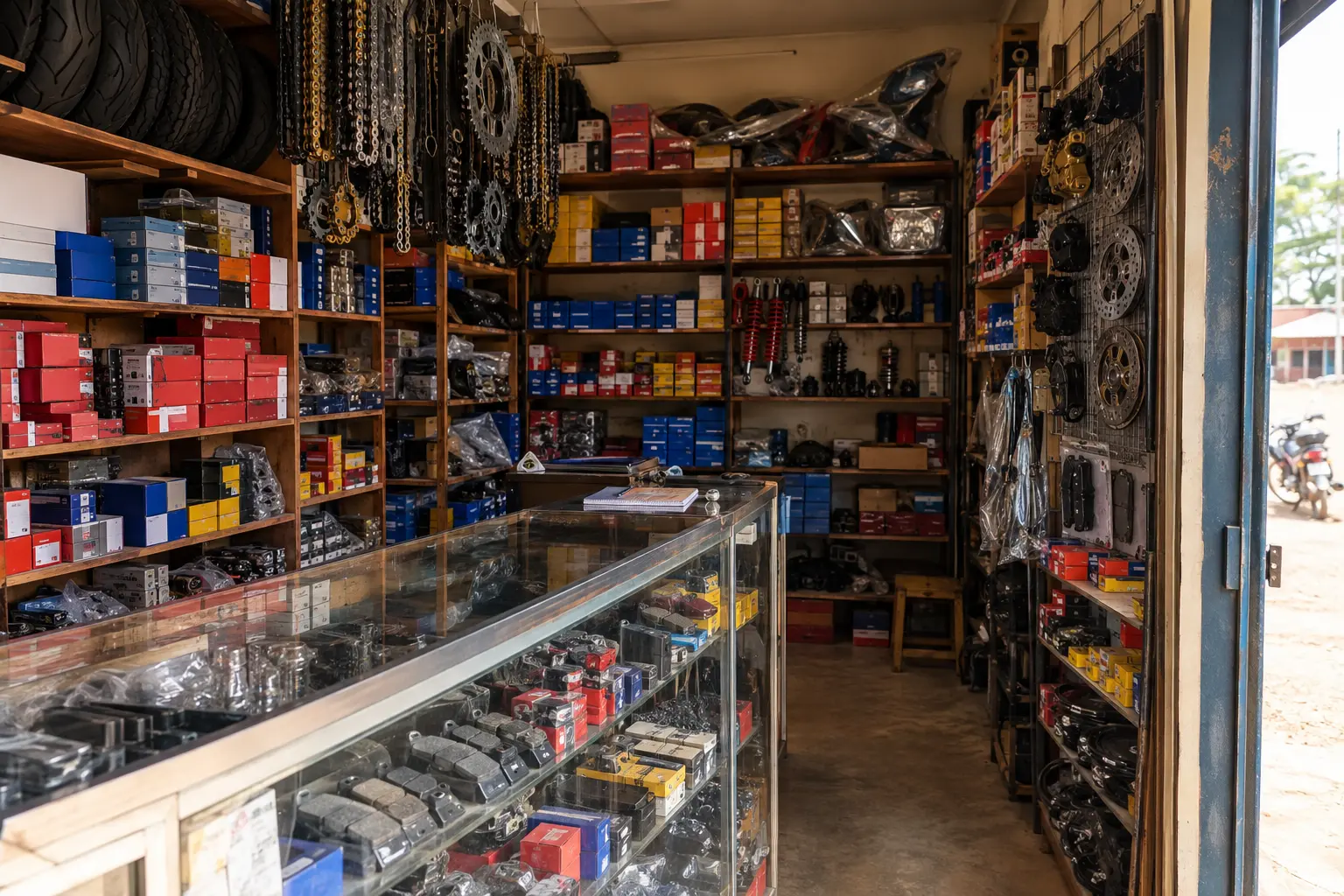
How Does Pamoja Imports Source Motorcycle Parts Differently?
We source through Pinduoduo and 1688, domestic Chinese platforms that require a Chinese phone number and payment method to access, so we pay the same price a Chinese buyer would pay rather than the marked-up export price. On parts with thin per-unit margins, that difference compounds fast across a full shipment.
The gap between the DIY route and what we do comes down to which platforms we can access. Alibaba, Made-in-China, and similar platforms are built for international buyers, so their listed prices already include the margin a Chinese exporter adds for handling foreign orders.
Pinduoduo and 1688 are domestic Chinese platforms that require a Chinese phone number and domestic payment method to use, which is exactly why most Kenyan buyers never see the pricing on them. Our Chengdu-based team sources through these platforms directly, at the same price a Chinese buyer would pay.
For motorcycle spare parts specifically, that difference matters more than on most product categories, because parts pricing is thin-margin to begin with. A markup that barely registers on a single item compounds fast across a shipment of hundreds of pieces.
Pamoja Imports: factory pricing without the platform barrier
We source motorcycle spare parts through Pinduoduo and 1688 at domestic factory pricing, verify part compatibility against your target bike models before ordering, and handle freight and customs clearance under one all-in rate.
- Chengdu-based team negotiates directly with the factory in Mandarin
- All-in freight rate covers duty, VAT, IDF, RDL and customs clearance
- No hidden fees between the quote and what lands in Nairobi
What Duty and PVoC Rules Apply to Motorcycle Spare Parts?
Motorcycle spare parts clear through the same Import Declaration Form, Pre-Export Verification of Conformity, and KRA customs duty process as other regulated goods, with the exact duty band depending on the part’s HS code. This is different from importing a complete, assembled motorcycle, which requires separate NTSA registration that spare parts shipments do not go through.
Every shipment used to import motorcycle spare parts from China to Kenya goes through the same core clearance steps: an Import Declaration Form (IDF) filed through KRA, Pre-Export Verification of Conformity (PVoC) where applicable, and payment of the relevant import duty, VAT, IDF fee, and Railway Development Levy. We cover the detail of how this process works in our Kenya import regulations guide and our import duty breakdown.
The exact duty band applied to a given part depends on its specific HS code classification under the EAC Common External Tariff, which is one reason we quote an all-in rate rather than asking clients to calculate duty themselves. If you want to see how HS codes are assigned, our HS codes guide explains the process.
PVoC motorcycle parts Kenya clearance works the same way it does for any other regulated product category: The shipment is verified against relevant Kenyan standards before or on arrival, and a Certificate of Conformity is required to release the goods. Where a part falls under PVoC, we handle this as part of the standard clearance process, alongside IDF and customs duty.
Motorcycle spare parts clear through the same PVoC, IDF, and KRA customs process as other regulated goods, and Pamoja Imports handles this as part of our all-in rate. This is different from importing a complete, assembled motorcycle, which requires separate NTSA registration for road use. Spare parts shipments do not go through that process.
How Much Does It Cost to Ship Motorcycle Parts by Air or Sea?
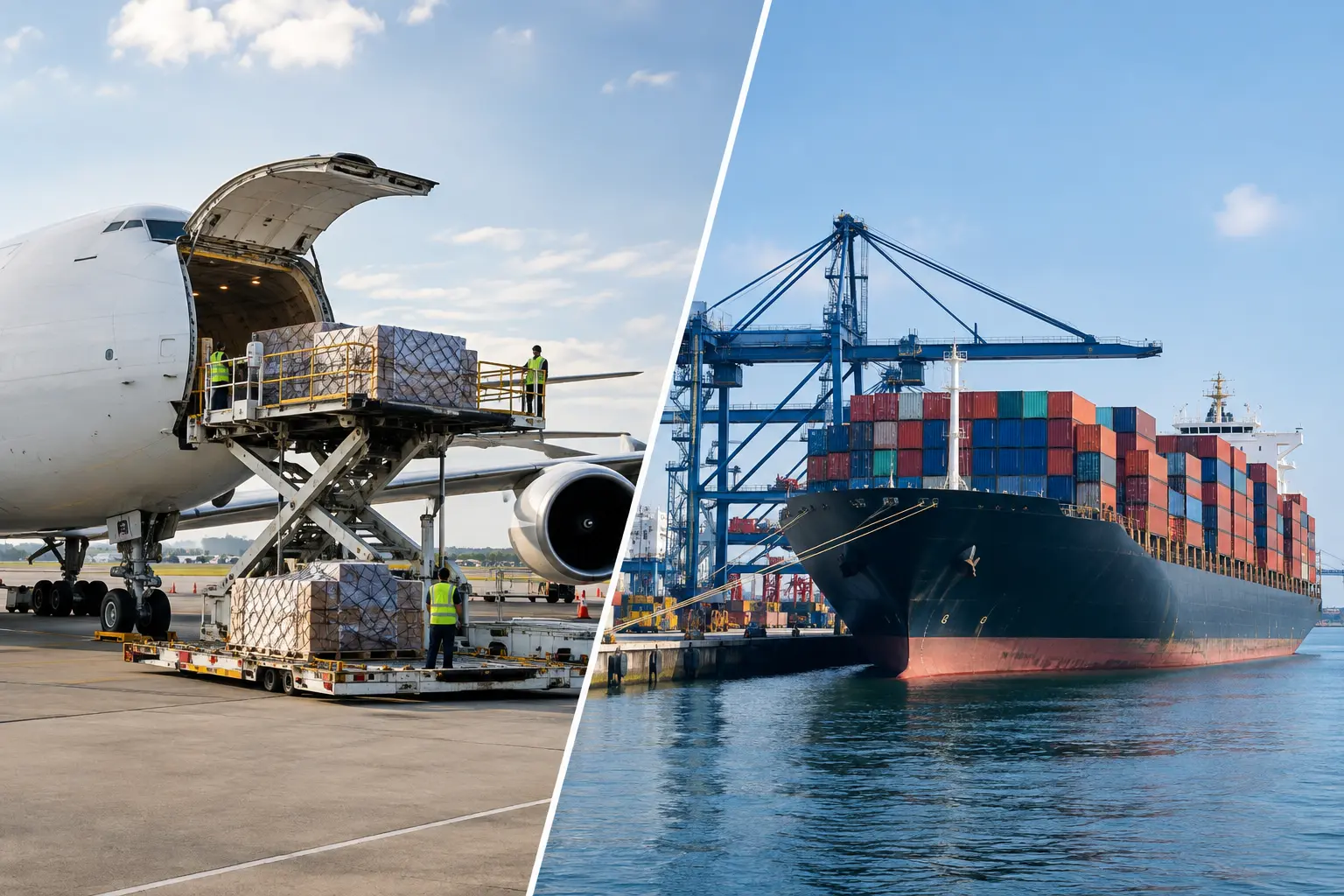
Small, urgent restocks of lightweight parts such as brake pads and spark plugs are usually cheaper by air on a per-kilogram basis, while bulk orders of heavier items such as wheel hubs or engine components are usually cheaper by sea on a per-cubic-metre basis. Which one wins for a specific order depends on the exact weight, volume, and part mix, which is why we run the numbers against your actual shipment rather than quoting one blanket rate.
Whichever route you choose to import motorcycle spare parts from China to Kenya, the right shipping method depends on how urgently you need stock and how much of it you are ordering. Small, urgent restocks of lightweight parts (brake pads, spark plugs, small electrical components) are usually cheaper to move by air on a per-kilogram basis once you account for how little they weigh.
Bulk stock orders of heavier items (engine components, wheels, frames) are almost always cheaper by sea, priced per cubic metre. Our sea freight vs air freight comparison walks through this tradeoff in more detail.
| Shipment Type | Best Freight Method | What’s Included |
|---|---|---|
| Small restock (under 50kg, lightweight parts) | Air freight | Duty, VAT, IDF, RDL, customs clearance |
| Bulk stock order (heavier parts, full or partial container) | Sea freight | Duty, VAT, IDF, RDL, customs clearance |
Because product cost varies by part type and order size, use our profit calculator to estimate your landed cost against expected resale price, or our shipping calculator to compare air and sea freight for your specific shipment weight or volume.
As a rough illustration: A shop restocking brake pads, chains, and spark plugs in a small consolidated shipment under 50kg is a typical air freight candidate, since the parts are light relative to their value and speed matters more than shaving a few shillings off the per-kilogram rate.
A shop building out stock across multiple part categories, including heavier items like wheel hubs or engine components, usually reaches the point where a partial or full container by sea works out cheaper per unit, even though it takes longer to arrive. The crossover point depends on your specific product mix, which is why we run the numbers against your actual order rather than quoting a single blanket figure for “motorcycle parts” as a category.
Even after freight and clearance, the landed cost often still comes in below what a motorcycle parts wholesale Kenya supplier would charge per unit, provided your order volume is large enough to spread the fixed cost of shipping.
What Mistakes Should You Avoid When Importing Motorcycle Parts?
The costliest mistakes are ordering by engine size alone instead of confirming the exact bike model and part number, and skipping a sample order before committing to bulk stock. Both are cheap to fix before a shipment leaves China and expensive or unfixable once it is already at sea.
Whether you are sourcing boda boda spare parts China direct or buying through a local wholesaler, the same fitment and quality risks apply. The mistakes below cost real money when they are caught late instead of before the order ships.
These sit alongside the broader list in our 10 mistakes importing from China to Kenya guide, most of which apply just as much to parts as to any other product category. The pattern across almost all of them is the same: Problems that would have been a quick fix before the shipment left China become expensive, slow, or unfixable once the container is already at sea.
Pamoja Imports: from part number to Nairobi delivery
We verify compatibility, source through Pinduoduo and 1688 at factory pricing, and handle freight and clearance under one all-in rate so there are no surprises between the quote and what arrives at your door.
- Compatibility check against your target bike models before ordering
- Chengdu-based team negotiates directly with the factory
- Air or sea freight, all-in rate covers duty, VAT, IDF, RDL and clearance
Frequently Asked Questions: Motorcycle Spare Parts from China to Kenya
For more answers to common questions about importing from China to Kenya, visit our Kenya import FAQ page.
Yes. You can source directly through internationally accessible platforms such as Alibaba, Made-in-China, or DHgate, then arrange your own freight forwarder and customs clearance. The tradeoff is that these platforms carry exporter-level pricing, and you are responsible for verifying part compatibility, quality, and clearance documentation yourself.
Total landed cost depends on part weight, volume, and shipping method. Air freight suits small, urgent restocks and is priced per kilogram. Sea freight suits bulk stock orders and is priced per cubic metre. Duty, VAT, IDF, and RDL apply on top of the product cost in either case. Use our shipping calculator for an estimate specific to your order.
PVoC motorcycle parts Kenya clearance is all that applies here. No separate certification step is required beyond the standard PVoC, IDF, and KRA customs process that spare parts go through generally. NTSA registration is a separate requirement for complete, assembled motorcycles being registered for road use, and does not apply to spare parts shipments.
Buying from a Nairobi wholesaler is faster but includes their markup on top of what they paid to import the stock. Importing your own shipment cuts out that layer, but only makes sense once your order volume is large enough to absorb freight and clearance costs. Small, one-off orders are usually not worth importing directly.
Fast-moving items include brake pads, chains and sprockets, spark plugs, clutch plates, piston kits, and electrical components such as CDI units and switches. These are the parts with the highest turnover in the boda boda market, which makes them the most common first order for new importers.
Ready to Source Motorcycle Spare Parts?
Tell us the bike models and parts you stock, and we will source, verify, and ship at factory pricing with one all-in rate.
Need Sourcing? I Have a Supplier
Jonatan Sirak sirak.se
Founder of Pamoja Imports, a Kenya-China import agency with an operations team based in Chengdu, China. With several years of hands-on experience facilitating shipments across electronics, solar equipment, construction materials, and consumer goods, he helps Kenyan entrepreneurs source and import products profitably. He splits his time between Nairobi and Chengdu.