
Quality Control for China Imports: Kenya Importer’s Guide 2026

Quality control for China imports works best as a process, not a single step. The most effective approach covers four stages: specifying quality requirements before production, ordering a sample before bulk, requesting pre-shipment photos when goods are packed, and arranging a physical pre-shipment inspection for orders above 100,000 ksh. This Pamoja Imports guide covers every stage of quality control China imports require, with practical steps Kenya importers can apply immediately.
- Why Quality Control Matters More for Kenya Importers
- Stage 1: Before You Place Any Order
- Stage 2: The Sample Order
- Stage 3: During Production
- Stage 4: Pre-Shipment Inspection
- Quality Control by Product Category
- What to Do When Goods Arrive with Problems
- How Pamoja Imports Handles Quality Control
- Frequently Asked Questions
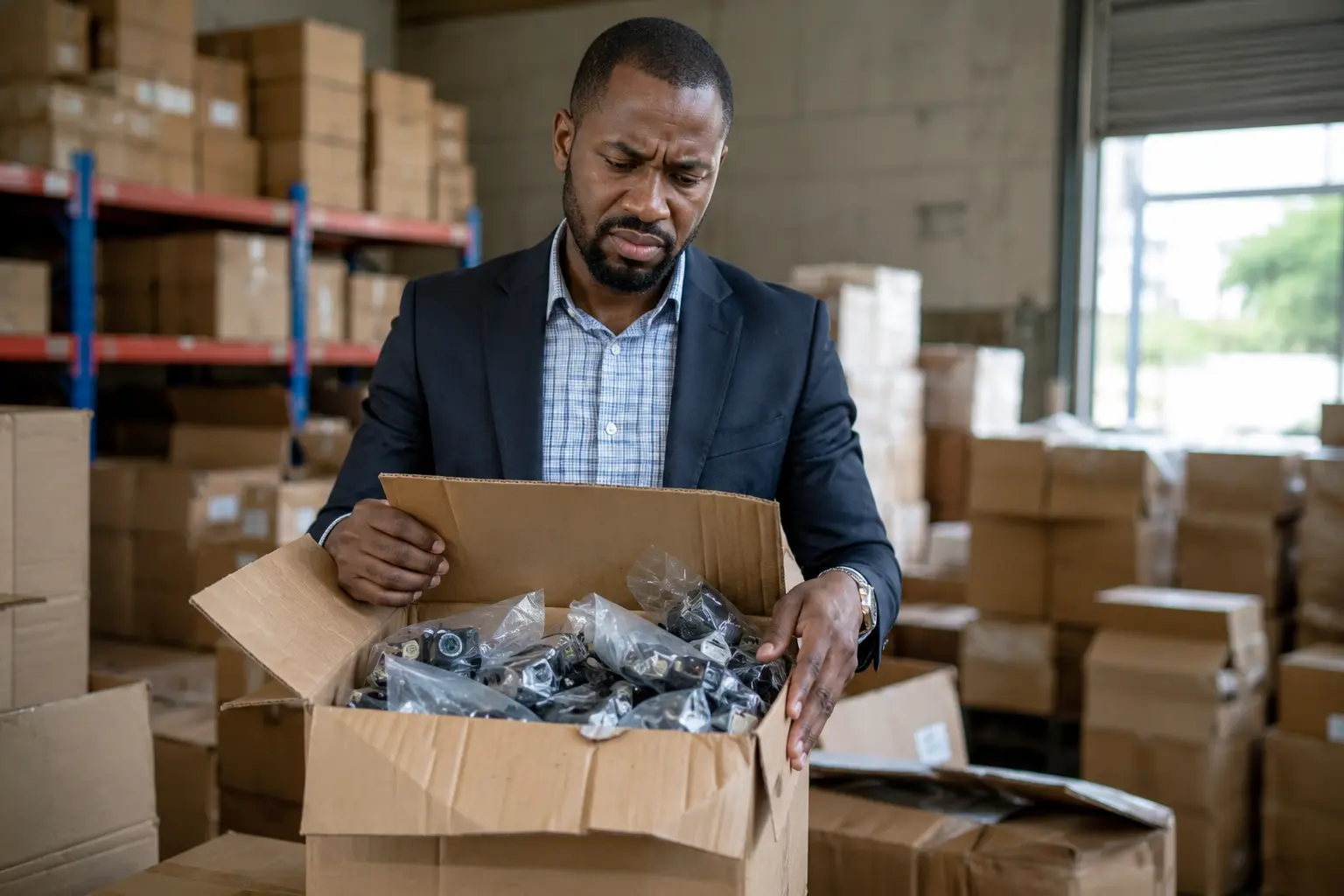
Quality control China imports is the most underinvested step in the entire Kenya import process, and usually the most expensive oversight. A shipment of 300 phone cases where 80 arrive cracked. A container of clothing where the sizing runs two sizes smaller than agreed. Electronics that pass visual inspection but fail within a week of use. These are not rare events. They are the standard outcome when importers skip the quality control process. Skipping the sample order is one of the 10 most common mistakes Kenya importers make from China, and this guide explains exactly what to inspect when it arrives.
The distance and language barrier between Kenya and China makes quality problems more costly than in any other sourcing relationship. By the time goods arrive in Nairobi, your payment is long gone and your leverage is limited. The time to protect yourself is before the goods leave China. This guide covers the complete quality control process for Kenya importers, from supplier selection through to what to do when things still go wrong despite your best efforts. If you are still in the planning stages of your import business, our guide to starting an import business in Kenya covers the full process including product selection and business registration. For the full import process from start to finish, see our complete guide to importing from China to Kenya.
Why Quality Control Matters More for Kenya Importers
Kenya importers face a specific set of quality risks that Western importers deal with less acutely. Three factors make quality control China imports especially important for Kenyan buyers.
Distance makes resolution expensive
If a UK buyer receives defective goods, they can negotiate a credit note, return a sample for replacement, or escalate through Trade Assurance with relative ease. If you receive defective goods in Nairobi, re-exporting to China for replacement is prohibitively expensive, and most suppliers will dispute a claim made weeks after delivery. The cost of a quality failure in Kenya is higher than almost anywhere else.
Customs clearance is final
Once goods clear KRA at Mombasa or JKIA and enter Kenya, the ability to return them to China essentially does not exist at a practical level. Whatever arrived is what you work with. This makes pre-shipment quality control the only realistic point of intervention. For a full breakdown of what happens at Mombasa and JKIA, see our Kenya customs clearance guide.
Most Kenya importers have no presence in China
You cannot visit the factory. You cannot check production. You cannot inspect the packed goods before they are loaded. Without a trusted team or agent in China, your only visibility into quality is what the supplier chooses to show you.
Stage 1: Quality Control Before You Place Any Order
Most quality problems are predictable before production even starts. The supplier selection and specification process is where quality control China imports actually begins.
Choose the right supplier first
Quality control is significantly easier with a verified, experienced supplier than with the cheapest option. Before you place any order, check the supplier’s transaction history, production scope, and business registration. A supplier with 10,000 completed transactions and consistent ratings is a different risk profile than one with 200 transactions. The platform you are sourcing from also affects your quality risk. Our Alibaba vs 1688 guide covers the quality and verification differences between platforms. Our guide on finding reliable Chinese suppliers covers the full vetting process including how to verify a supplier’s business licence on China’s national database. Once you have found a supplier, see our guide on negotiating with Chinese suppliers to get the best price and MOQ before specifying your quality requirements.
Write a product specification document
The single most important quality control action you can take is writing your product specifications in detail before you agree on a price. Vague specifications lead to vague goods. Here is what a proper specification covers:
- Materials. Not “good quality plastic” but “ABS plastic, minimum 2mm wall thickness.” Not “stainless steel” but “304-grade stainless steel.”
- Dimensions. With tolerances. “Width: 150mm, tolerance +/- 2mm.” Not just “150mm wide.”
- Colour. Use Pantone colour codes, not colour names. “Navy blue” means something different to every factory.
- Weight or quantity per unit. Especially important for consumables, clothing, and packaged goods.
- Packaging. Box type, individual wrapping, labelling requirements, carton dimensions.
- Compliance certifications. Any required CE, RoHS, KEBS, or PVoC requirements must be stated upfront.
The specification document becomes part of your order agreement. It is what any inspection is judged against, and what your dispute is based on if quality falls short. For first orders it is acceptable to have a simple specification. As your relationship with a supplier develops, the specification becomes your product standard.
Supplier red flags and green flags
Stage 1 checklist: before you place any order
- Supplier has verifiable transaction history and business licence
- Product specification document written with materials, dimensions, colour codes, and packaging
- Compliance requirements identified and stated in the specification
- At least two to three competing supplier quotes obtained
- Supplier has agreed to sample order before bulk commitment
Stage 2: The Sample Order
Ordering a sample before bulk is the most basic and most consistently skipped step in quality control for China imports. It is also the one that saves the most money when things go wrong. A sample costs a fraction of a bulk order and tells you everything about the supplier’s actual production quality, not their marketing quality.
What a sample order tells you
- Whether the product matches the photos and description
- Whether the materials match what was specified
- Whether the supplier can meet your specifications consistently
- Whether the packaging is appropriate for transport
- How the supplier handles problems if the sample is not right
- Whether the supplier’s communication and lead time are reliable
How to use your sample order effectively
Do not just inspect the sample visually. Test it the way your customers will use it. If you are importing phone cases, put phones in them and drop them. If you are importing clothing, wash the fabric. If you are importing kitchenware, use it for cooking. The failure modes that matter are the ones your customers will find, not the ones visible on the surface.
If the sample has issues, do not automatically move to another supplier. Most quality problems at the sample stage are fixable. Use the sample feedback to refine your specification and request a revised sample. A supplier who responds constructively to sample feedback is often more reliable than one who sends a perfect first sample but cannot handle correction.
This section covers what to do with a sample once you have it. For how to actually request, pay for, and ship one from Alibaba to Kenya, see our Alibaba sample Kenya guide.
Stage 3: Quality Control During Production
Once your bulk order is in production, you have limited visibility unless you are proactive about requesting it. For larger orders, there are two practical ways to maintain oversight.
Request production updates and photos
At the midpoint of production, ask your supplier for photos of the goods being produced. Not marketing photos. Photos of the actual production run: goods on the production line, a sample pulled from the batch, packaging being applied. A reliable supplier will provide these without issue. Resistance to sharing production photos is a warning sign.
During production inspection (DPI)
For very large orders above 500,000 ksh, a during production inspection by an independent inspector or by Pamoja Imports’ Chengdu team catches problems when there is still time to correct them in production. A DPI typically checks a sample of the first completed units from the batch. If a defect pattern is found at this stage, the supplier can correct the remaining production rather than producing an entire defective batch.
Stage 4: Pre-Shipment Inspection
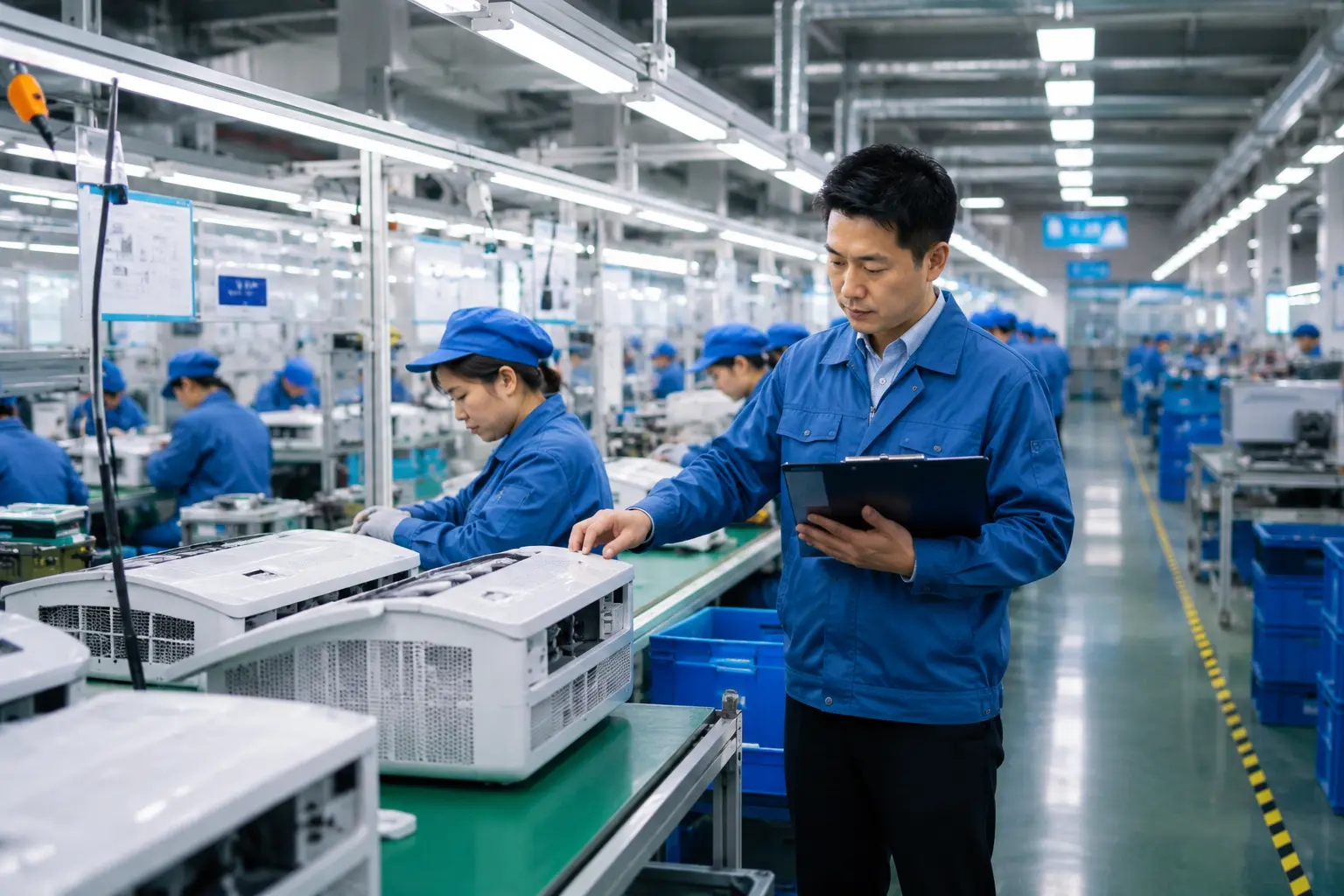
A pre-shipment inspection (PSI) is a physical check of your packed goods at the factory or warehouse in China, conducted before loading. This is the most important quality control step for most Kenya importers, and the one that catches the largest number of problems.
What a PSI covers
- Quantity verification. Counting cartons and units to confirm the ordered quantity is present.
- Visual quality inspection. Checking for visible defects, damage, and appearance against the specification.
- Measurement and weight checks. Confirming dimensions and weight match what was ordered.
- Functional testing. For electronics and mechanical products, testing that units work as specified.
- Packaging inspection. Checking that packaging is correct, labelled properly, and suitable for sea or air freight.
- Barcode and label verification. Checking that any required markings, brand labels, or compliance marks are correct and correctly applied.
When is a PSI worth it
| Order value | Recommendation | Reason |
|---|---|---|
| Under 50,000 ksh | Sample + photos sufficient | PSI cost is disproportionate to order value |
| 50,000–100,000 ksh | PSI recommended for new suppliers | Risk justifies cost, especially first order |
| Above 100,000 ksh | PSI strongly recommended | A 3% defect rate on a 300,000 ksh order is 9,000 ksh in losses |
| Any order, new supplier | PSI recommended regardless of value | No track record means higher risk |
Who conducts the PSI
You have three options: an independent third-party inspection company (SGS, Bureau Veritas, Intertek), a local agent in China who you hire for the purpose, or a sourcing agent like Pamoja Imports whose Chengdu team conducts the inspection as part of the service. Independent inspection companies charge USD 150 to 300 (approximately 19,500 to 39,000 ksh) per inspection. Pamoja Imports includes pre-shipment inspection on request for larger orders as part of our sourcing service.
Stage 4 checklist: pre-shipment inspection
- PSI booked before goods are packed and ready for loading
- Inspector has your product specification document to inspect against
- Quantity, quality, packaging, and labelling all included in scope
- Functional testing included for electronics and mechanical products
- PSI report received and reviewed before releasing final payment
Quality Control by Product Category
The right quality control approach depends on what you are importing. Different product categories have different failure modes and require different inspection focus.
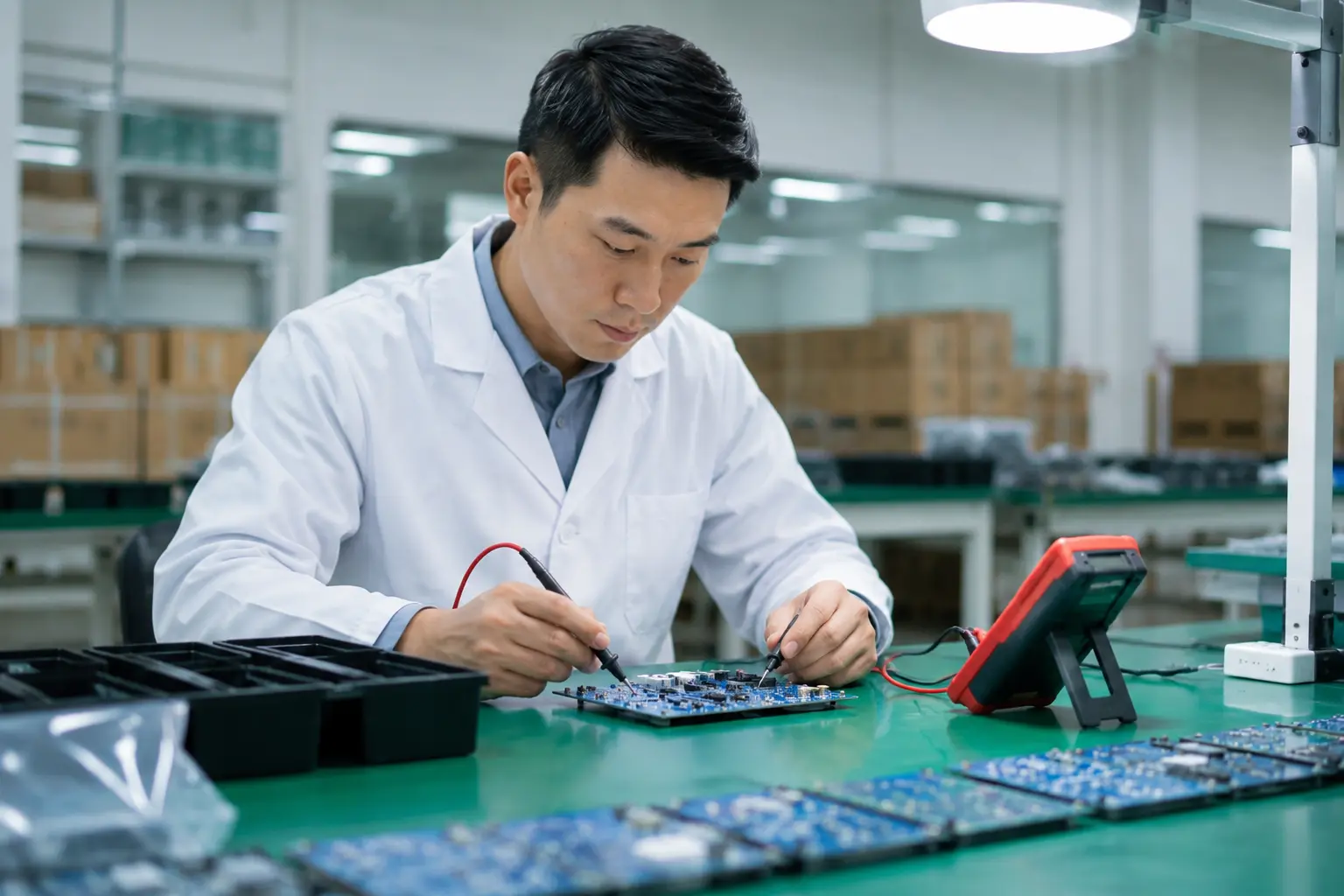
Functional testing is essential
Visual inspection alone is not sufficient for electronics. Every unit or a statistically significant sample must be powered on and tested for basic functionality. Check battery life, charging, screen quality, button function, and connectivity. For phones, verify IMEI registration and ensure units comply with Kenya’s Communications Authority requirements. Our guide to importing phones from China to Kenya covers compliance requirements in detail.
Test every unit or minimum 20% sampleMeasurement, colour, and fabric
The three most common clothing quality failures are: sizing that does not match spec, colour that fades on first wash, and fabric weight or composition that differs from what was ordered. Inspection should include measurement of at least 10 to 15 units against your size chart, wash testing of a sample, and fabric weight verification if the composition is important to your product. For a complete clothing-specific QC checklist and sizing guide, see our guide on importing clothing from China to Kenya.
Check measurements on 10+ units per sizeStrength, dimensions, and compliance
Construction materials need dimension verification and, for structural products, material grade confirmation. Tiles should be checked for consistent sizing, surface finish, and absence of cracks. Fittings should be tested for thread tolerance and material grade. For electrical components, verify compliance certifications are present and legitimate, not just stickers.
Sample test minimum 5% of unitsLabelling, ingredients, and PVoC
Beauty products must have accurate ingredient labelling and comply with KEBS standards. Inspect packaging for correct labelling before shipment. Products in this category require PVoC certification before they can be imported into Kenya. Confirm the Certificate of Conformity is genuine and covers your specific products before the shipment leaves China. Our Kenya import compliance guide covers PVoC requirements in full.
Verify PVoC cert + check labelling on 100% of SKUsWhat to Do When Goods Arrive with Problems
Even with thorough quality control, problems occasionally arrive in Nairobi. How you respond in the first 48 hours determines whether you can recover anything from the supplier.
Document everything immediately
Before unpacking further, photograph and video the condition of the cartons as received. Then open cartons methodically and document every defective unit with photos showing the specific defect. Do not discard any packaging or defective goods until the dispute is resolved. This documentation is your entire case in a supplier dispute.
Contact the supplier within 48 hours
Most supplier contracts and platform policies require quality complaints to be raised within a specific timeframe after delivery. Waiting more than 48 hours weakens your position significantly. Send your photographic evidence and a clear description of the defect immediately. Be factual and specific: “47 of 300 units have cracked housing at the charging port” is a better complaint than “the quality is very bad.”
Your options depending on how you paid
- Alibaba Trade Assurance. File a dispute through the platform. Alibaba mediates between you and the supplier. Your documentation is your case. See our guide to paying Chinese suppliers for how Trade Assurance protection works.
- T/T with balance unpaid. If you have not yet paid the final balance, you have significant leverage. Do not release the balance until the quality issue is resolved.
- T/T fully paid. Your leverage is limited to the supplier’s willingness to cooperate and the strength of your documentation. A partial credit, replacement of defective units in the next order, or a discount on the next order are realistic outcomes. Full refunds are rare once goods have been received.
Pamoja Imports inspects your goods in China before they ship.
Our Chengdu team visits factories, checks production quality, and conducts pre-shipment inspections on behalf of our Kenya clients. If goods do not meet the agreed specification, we resolve the issue directly with the supplier in Mandarin before anything leaves China. You never receive a defective shipment and then have to fight for a remedy from 6,000 kilometres away.
- Pre-shipment inspection included on request for orders above 100,000 ksh
- Factory visits for large or first-time orders
- Disputes handled in Mandarin by our Chengdu team with direct supplier access
- Production photos provided as standard at packing stage
- Quality specification review before any order is placed
Frequently Asked Questions: Quality Control China Imports
For more answers to common questions about importing from China to Kenya, visit our Kenya import FAQ page.
The most effective quality control steps are: order a sample before bulk, define quality specifications in writing before production, request pre-shipment photos or video when goods are packed, and arrange a physical pre-shipment inspection for orders above 100,000 ksh. Working with Pamoja Imports, who has a team on the ground in China, adds an additional layer of protection at every stage.
A pre-shipment inspection (PSI) is a physical check of your goods at the Chinese factory or warehouse before they are loaded for shipment. An inspector checks quantity, quality, packaging, and that the goods match your specifications. For orders above 100,000 ksh or first orders with a new supplier, a PSI is strongly recommended. The cost is typically 150 to 300 USD and finding a problem before shipment is far cheaper than dealing with it after goods arrive in Nairobi.
Document everything immediately with photos and video before unpacking further. Contact your supplier with photographic evidence within 24 to 48 hours of receipt. If you paid via Alibaba Trade Assurance, file a dispute through the platform. If you paid via T/T, your leverage depends on whether you have held any balance payment. Working through Pamoja Imports means disputes are handled in Mandarin by our Chengdu team with direct supplier access.
A good specification document covers: exact materials with grade and thickness, dimensions with tolerances, colour using Pantone codes, packaging requirements, and any compliance certifications required. Include photos of reference samples where possible. The specification becomes part of your order contract and is what any inspection or dispute is judged against.
Yes. Electronics require functional testing in addition to visual inspection. Clothing requires fabric testing and measurement checking against your size chart. Construction materials require strength and dimension verification. Beauty products require PVoC certification verification and accurate ingredient labelling checks. The inspection checklist varies by category and Pamoja Imports’ team tailors the process to your specific product.
No. Supplier photos are always the best version of the product, often taken with professional lighting of pre-production samples. The bulk production goods may differ significantly. Always request photos and video of the actual packed goods from your specific order, not stock product photos. A sample order gives you a far more accurate picture of production quality than any supplier photo.
Let our Chengdu team be your eyes in China
Pamoja Imports inspects your goods at the factory before they ship. If something is wrong, we fix it before it gets on a truck to Mombasa.
Chat with us on WhatsApp
Jonatan Sirak sirak.se
Founder of Pamoja Imports, a Kenya-China import agency with an operations team based in Chengdu, China. With several years of hands-on experience facilitating shipments across electronics, solar equipment, construction materials, and consumer goods, he helps Kenyan entrepreneurs source and import products profitably. He splits his time between Nairobi and Chengdu.