
China Suppliers Under Invoicing Kenya: A 2026 Risk to Avoid
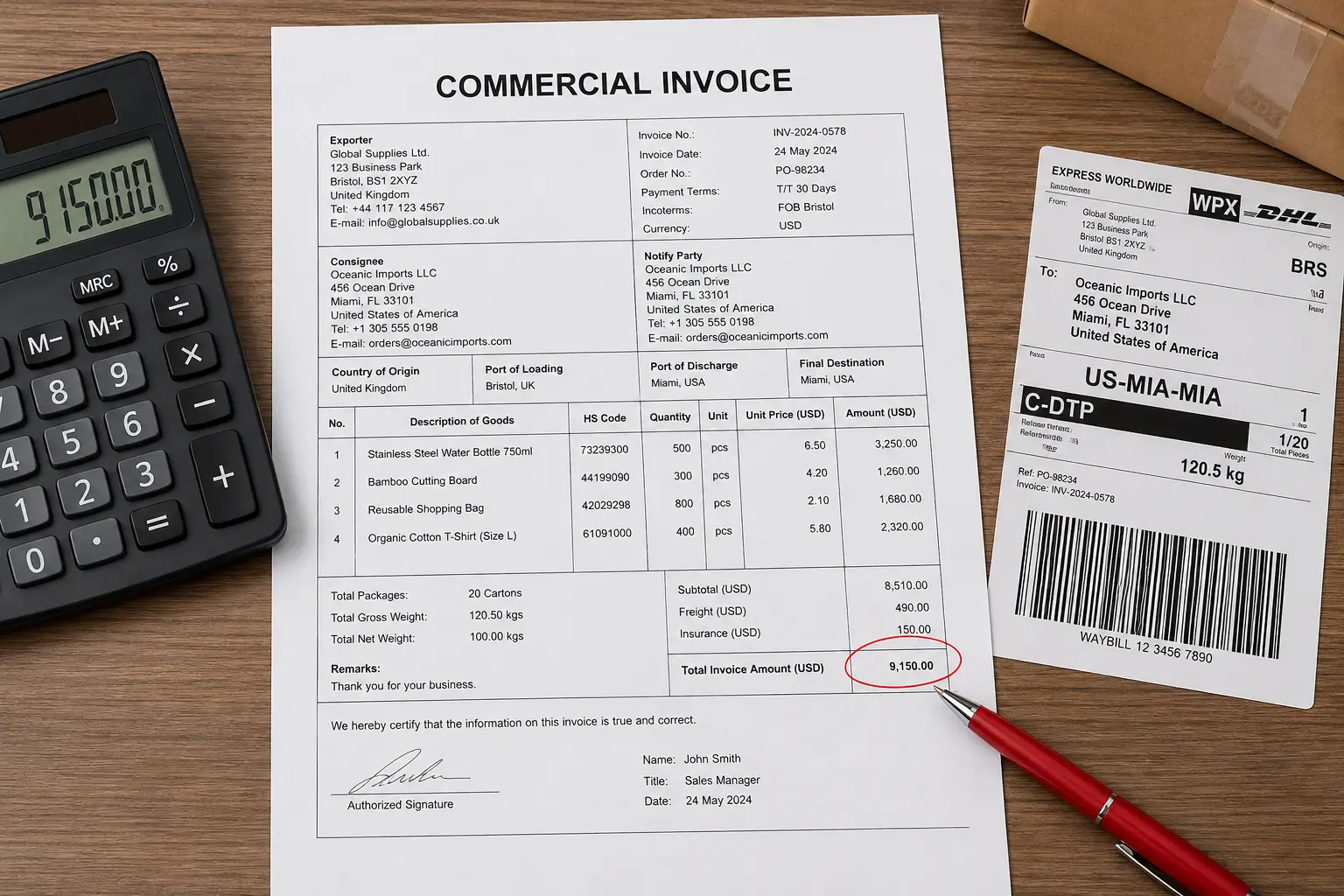
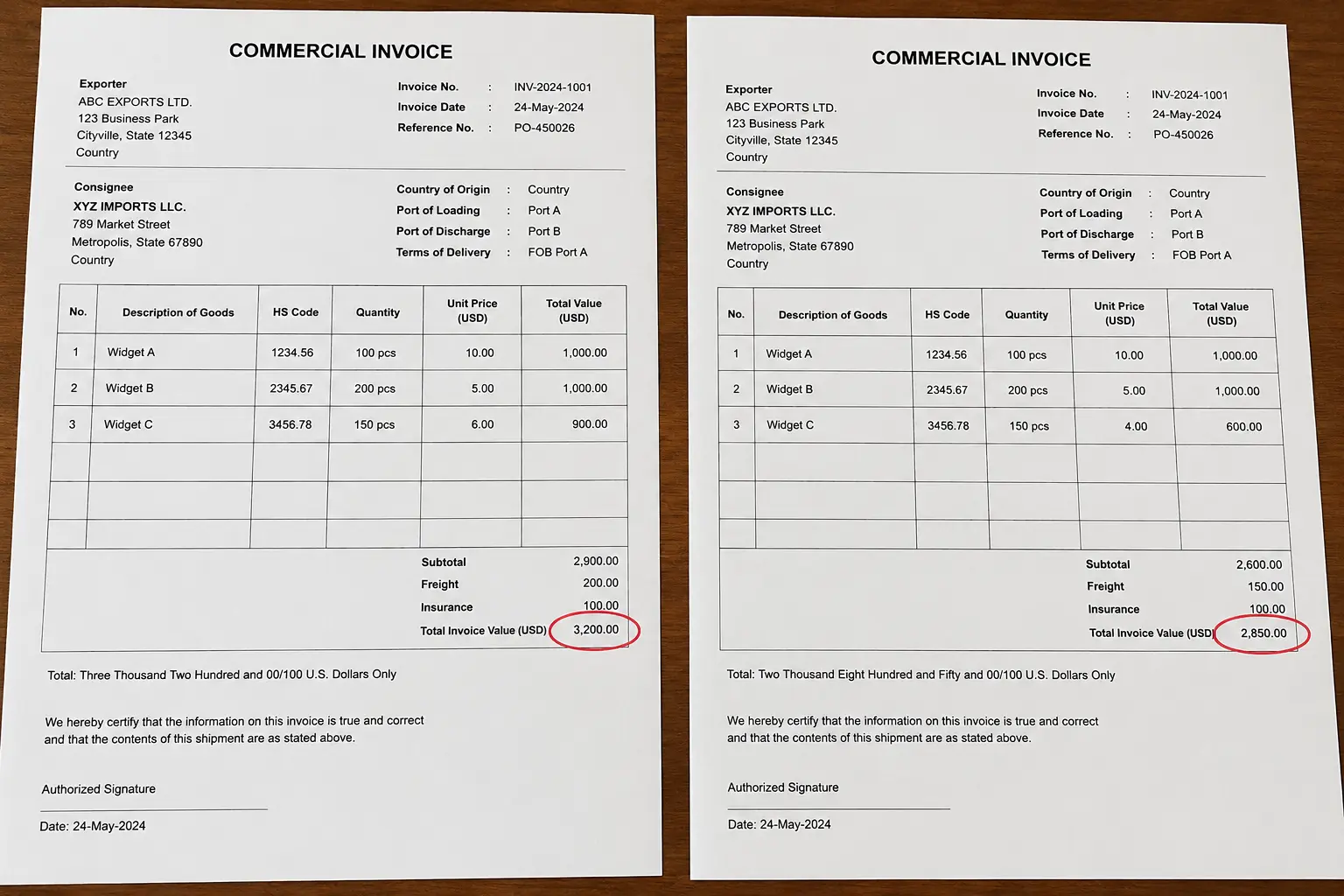
China suppliers under-invoice Kenya orders when they write a lower value on your commercial invoice than what you actually paid, to reduce your declared customs value at Mombasa or JKIA. It is usually proposed by the supplier, not the importer, and it protects the supplier’s own paperwork in China at no cost to them. If Kenya Revenue Authority reassesses the shipment, the full penalty and duty difference falls on you as the importer, not on the supplier who wrote the invoice. Pamoja Imports never accepts under-invoiced commercial invoices on client shipments, for exactly this reason.
What Under-Invoicing Actually Means
Every commercial invoice a Chinese supplier issues for a Kenya shipment does two jobs at once. It tells you what you owe them, and it tells Kenya Revenue Authority what your goods are worth for customs purposes. Under normal circumstances those two numbers are the same. Under-invoicing is when a supplier deliberately splits them: you pay the real price through your agreed payment method, but the invoice that travels with your shipment states a lower figure, sometimes 20 to 50 percent below the actual transaction value.
The proposal usually comes in casually, near the end of price negotiation. A supplier who has just agreed to your unit price will ask, almost as an afterthought, what value you would like written on the invoice. Framed that way, it sounds like a service. It is not. It is a request to misstate the customs value of goods you are legally responsible for declaring accurately under the East African Community Customs Management Act, and the consequences of that misstatement do not touch the supplier at all.
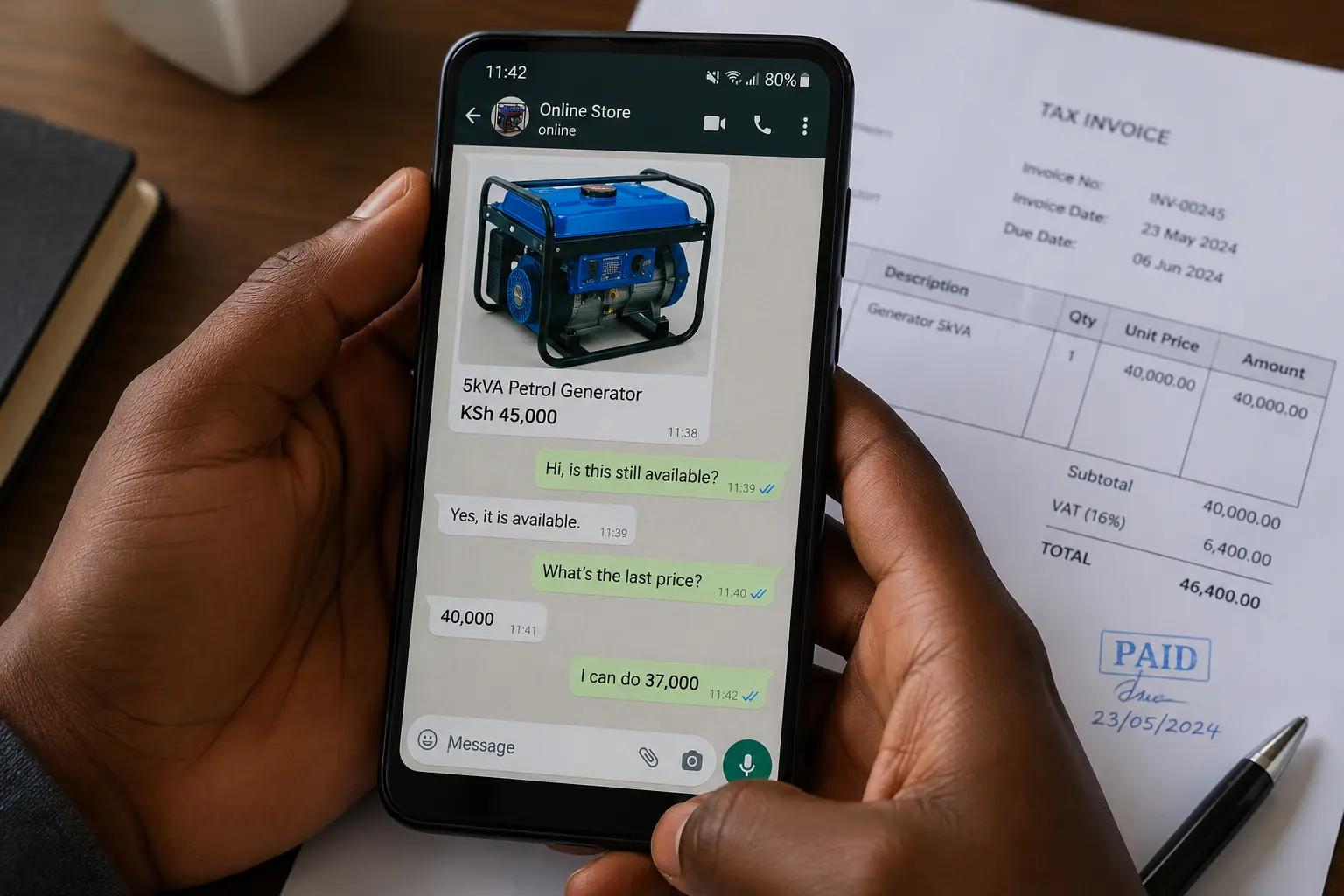
This is different from ordinary price negotiation. Negotiating your unit price down through back and forth with a supplier on Alibaba is normal, expected, and legal. If your negotiated price is 40,000 ksh instead of an initial quote of 50,000 ksh, the invoice should say 40,000 ksh. Under-invoicing only starts when the number on the invoice stops matching what you actually agreed to pay. A suspiciously cheap delivered quote from an Alibaba supplier can hide the same problem, which we cover in our guide on does Alibaba ship to Kenya.
Why Chinese Suppliers Propose It
This is the part most guides for Kenya importers skip. They tell you not to under-invoice, and then move straight to the penalty, without explaining why a supplier who benefits nothing from your customs bill would bring it up at all. The answer sits on the supplier’s side of the transaction, not yours.
Chinese exporters file their own export declarations with Chinese customs, and in many cases their export value interacts with domestic VAT rebate calculations and their own reporting obligations to Chinese tax authorities. A lower declared export value can simplify that filing for the supplier, reduce the paperwork trail on a transaction they would rather keep quiet, or in some cases reflect that the factory itself is under-reporting output to avoid scrutiny at home.
None of this is your problem to solve, and none of it costs the supplier anything once your container leaves a Chinese port. The risk transfers entirely to you the moment the goods are underway, because Kenyan customs law does not care what value a Chinese supplier reported to Chinese authorities. It cares what value you, the importer, declared on arrival.
Some suppliers propose it as a genuine, if misguided, favor, believing it saves you money with no real understanding of how Kenya’s valuation system works. Others propose it as a routine part of how they operate with every buyer, regardless of destination country, because it has never personally cost them anything before. Either way, the important fact for a Kenya importer is the same: the reason China suppliers under-invoice Kenya shipments has nothing to do with your customs risk, and everything to do with theirs.
How KRA Catches an Under-Invoiced Shipment
Kenya Revenue Authority does not rely on trust when assessing customs value. It uses reference value databases built from historical import data across thousands of shipments in each product category, cross-checked against the HS code declared on your entry. When your declared CIF value for a category sits well below what similar shipments have historically cleared at, the system flags the entry for further review rather than accepting the number on face value.
A flagged entry can mean several things happen at once. Customs may query the discrepancy directly and ask for supporting payment evidence. Your shipment may be routed for physical inspection rather than the faster document-only channel. In more serious cases, a KRA reference value reassessment replaces your declared figure with its own reference pricing entirely, and calculates the correct duty, VAT, IDF, and RDL on that higher number. For a full breakdown of how each of those charges is calculated on the correct value, see our Kenya import duty from China guide.
Several factors increase the odds of a flag beyond the value gap itself. A vague product description on the commercial invoice, such as “general goods” instead of a specific item name, raises suspicion on its own. An HS code that does not clearly match the stated product invites a second look, a topic covered in full in our HS codes Kenya guide. And a prior history of queries against your KRA PIN, covered further below, makes every future entry more likely to be scrutinized, even an honest one.
Who Actually Pays When It Goes Wrong
This is the core liability question, and it is the one under-invoicing proposals never mention. Kenyan customs law places responsibility for the accuracy of a customs declaration on the importer of record, which is the person or business whose KRA PIN is on the entry. That is you.
It is not the Chinese supplier who suggested the lower figure, and it is not anyone else in the supply chain. You signed nothing agreeing to this, in most cases you simply said yes to a number in a WeChat message, but Kenyan customs law treats you as the importer of record regardless, and the legal and financial exposure lands on your business.
When KRA reassesses a shipment, the consequences stack in a specific order. First, you owe the duty difference between what you declared and what KRA determines the correct value to be, calculated across import duty, VAT, IDF, and RDL. Second, a penalty applies on top of that difference, which under Kenyan customs practice can equal or exceed the shortfall itself, meaning your total exposure can be more than double the duty you originally tried to avoid.
Third, your cargo sits at the port during the reassessment process, and storage fees accumulate for every day it remains uncleared, a cost explored in more depth in our Kenya customs clearance guide. In the most serious cases involving a pattern of deliberate misdeclaration, goods can be seized outright.
None of this reaches the supplier. They already have your payment. The invoice they wrote did its job for them. The risk they proposed, and that you agreed to without necessarily understanding the full mechanics, belongs entirely to you.
A Real Cost Example
Consider a shipment of general consumer electronics accessories with a real, agreed transaction value of 200,000 ksh FOB, shipped as roughly 1.5 CBM by sea freight. A supplier proposes writing the invoice at 100,000 ksh instead, calling it a way to reduce your duty bill.
| Item | Declared at 100,000 ksh | Correct value at 200,000 ksh |
|---|---|---|
| Import duty (25%) | 25,000 ksh | 50,000 ksh |
| VAT (16% of CIF + duty) | 20,000 ksh | 40,000 ksh |
| IDF (2.5% of CIF) | 2,500 ksh | 5,000 ksh |
| RDL (2% of CIF) | 2,000 ksh | 4,000 ksh |
| Subtotal duty and levies | 49,500 ksh | 99,000 ksh |
The apparent saving from under-invoicing here is 49,500 ksh, roughly half the correct duty bill. That is the number the supplier’s proposal dangles in front of you. But if KRA’s reference value database flags the shipment, and consumer electronics accessories are a frequently flagged category, the outcome looks very different.
You now owe the duty difference of 49,500 ksh, plus a penalty that Kenyan customs practice allows to match or exceed that shortfall, meaning a realistic total exposure of 90,000 to 100,000 ksh or more on top of what you already paid the supplier. Add port storage fees accumulating during the reassessment, and the shipment that was supposed to save you money now costs meaningfully more than if you had declared the correct value from the start. Use our Kenya import duty calculator to see exactly how a reassessment like this changes your total cost.
The Cost That Outlasts This One Shipment
The financial hit from a single reassessment is bad enough, but it is not where the cost ends. KRA tracks queries and reassessments against your KRA PIN over time, not just against the single entry in question. An importer with a flagged shipment in their history is treated as a higher-risk profile on every subsequent declaration, even ones where the invoice is completely accurate.
In practice, this means more frequent physical inspections instead of faster document channels, longer average clearance times, and closer scrutiny of invoice values that would otherwise pass without comment. An importer building a repeat business around regular restocking from China, where clearance speed genuinely affects how quickly you can turn inventory, is the one who loses the most from this.
One under-invoiced shipment that seemed to save money in the moment can quietly slow down every shipment that follows it, for as long as that flag sits on your compliance history. This is a cost that never shows up in the supplier’s WeChat message pitching the idea, because it is a cost that only exists on your side of the border.
How to Decline Without Losing the Supplier
Declining an under-invoicing request from a China supplier does not need to be confrontational, and it rarely damages a supplier relationship when handled directly. Most suppliers offer it as a default option, not a condition of doing business, and will proceed normally once you say no.
How to handle the request when it comes up
- State plainly that you want the invoice to reflect the actual agreed price, no exceptions.
- Request the proforma invoice early, before final payment, so the declared value is set before goods ship, not negotiated after the fact.
- Keep your own payment records, bank transfer receipts or platform payment confirmations, that match the invoice value, in case KRA ever requests supporting evidence.
- If a supplier pushes back or insists it is standard practice, treat that as a signal to evaluate the relationship, not a reason to agree.
- Confirm the HS code and product description on the invoice match the actual goods, since a mismatch here creates the same red flag risk as an undervalued price.
None of this requires confrontation. A short, direct message stating that you need the invoice to match the real transaction value is enough for the vast majority of suppliers, who will simply issue the correct document and move on. The suppliers worth working with long term are not the ones offering to misstate your customs paperwork.
Pamoja Imports: we do not accept under-invoiced commercial documents, on any client shipment
Our sourcing team in Chengdu negotiates directly with suppliers on Pinduoduo and 1688 in Mandarin, and every commercial invoice we generate reflects the actual agreed transaction value, with no exceptions. Because our all-in rate already includes import duty, VAT, IDF, RDL, and customs clearance, there is no incentive on our side to under-declare, and every incentive to keep your KRA compliance history clean for the shipments that follow this one.
- Direct Mandarin-speaking negotiation removes the guesswork from what a supplier is actually proposing
- Accurate invoicing on every shipment, with no separate duty surprises at the port
- All-in rate: 65,000 ksh/CBM sea freight or 1,700 ksh/kg air freight, duty and clearance included
Frequently Asked Questions: China Suppliers Under Invoicing Kenya
For more answers to common questions about importing from China to Kenya, visit our Kenya import FAQ page.
Under-invoicing is when a Chinese supplier writes a lower value on your commercial invoice than what you actually paid for the goods, so that your declared customs value at Mombasa or JKIA appears lower than the real transaction value. The goal, from the supplier’s side, is usually to keep their own China export declarations simple. For the Kenyan importer, it looks like a duty saving but it is a compliance and financial risk that sits entirely with you, not the supplier.
Most commonly it is about the supplier’s own paperwork and reporting, not a favor to you. A lower export declaration can simplify their domestic tax filings and reduces scrutiny on their side of the transaction. It costs the supplier nothing extra to write a lower number on your invoice, because once the goods leave China, the customs consequence in Kenya lands on the importer of record, which is you, not them.
You do, in full. Kenya Revenue Authority holds the importer of record responsible for the accuracy of the declared customs value, not the supplier who wrote the invoice. If KRA reassesses your shipment using its reference value database and finds the declared value too low, you pay the duty difference plus a penalty that can equal or exceed the shortfall, and your cargo is held at the port accumulating storage fees while the reassessment is resolved.
KRA maintains reference value databases for major product categories, built from historical import data across many shipments of similar goods. When your declared CIF value on the commercial invoice sits well below the reference price for that product category, the system flags the entry for review, which can mean a query, a physical inspection, or a full reassessment. HS code mismatches and vague product descriptions increase the chance of a flag.
Yes. KRA tracks queries and reassessments against your KRA PIN over time. An importer with a history of flagged declarations faces more frequent inspections on future shipments, even ones with accurate invoices, because the system treats a prior compliance issue as a risk signal. A single under-invoiced shipment that clears without incident can still cost you speed and predictability on every shipment after it.
Yes, negotiating a genuinely lower unit price is normal and legal. The issue is not negotiation, it is declaring a value on the commercial invoice that does not match what you actually agreed to pay. If your negotiated price is real, declare that real price. The problem only arises when the invoice number and the actual payment number are different.
Do not let a supplier’s shortcut become your penalty
We negotiate directly with Pinduoduo and 1688 suppliers in Mandarin and keep every invoice accurate, with duty, VAT, IDF, RDL, and clearance already built into one transparent rate.
Submit a Source Request
Jonatan Sirak sirak.se
Founder of Pamoja Imports, a Kenya-China import agency with an operations team based in Chengdu, China. With several years of hands-on experience facilitating shipments across electronics, solar equipment, construction materials, and consumer goods, he helps Kenyan entrepreneurs source and import products profitably. He splits his time between Nairobi and Chengdu.