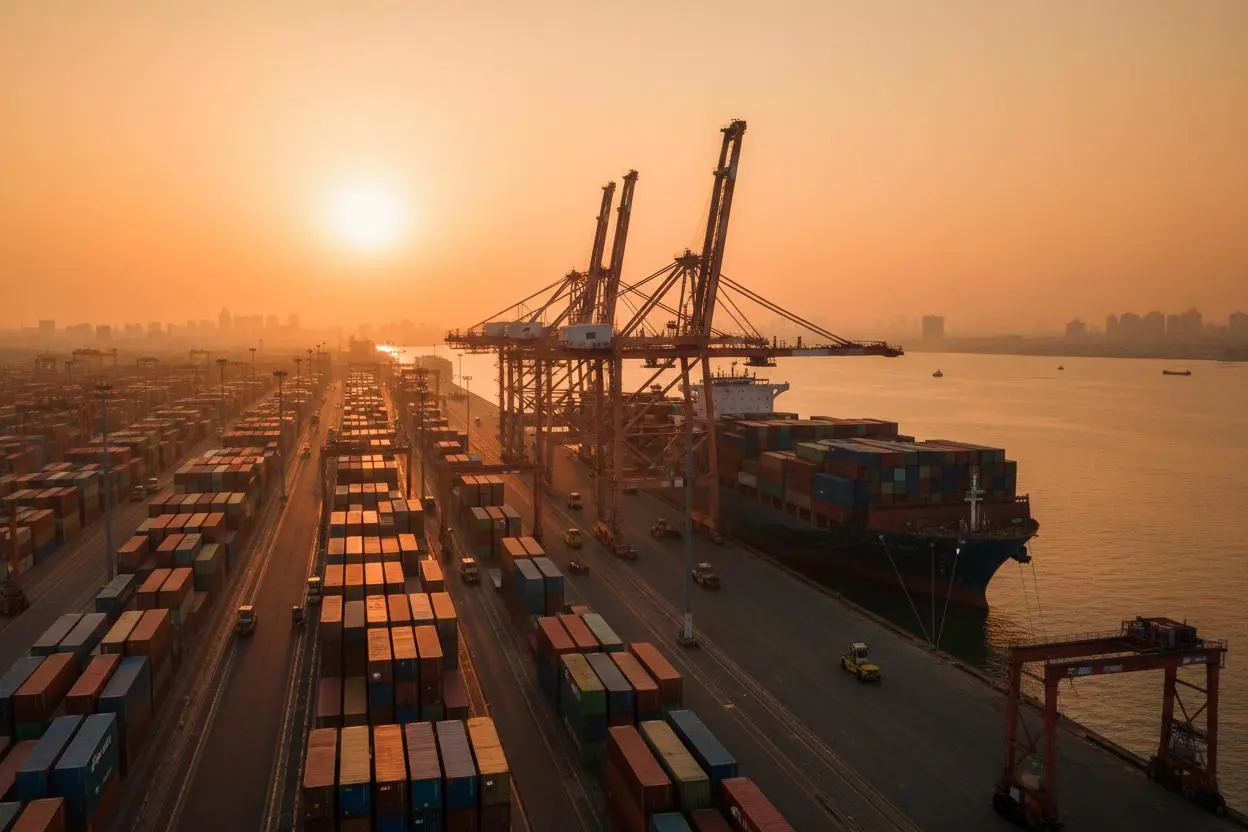

Sea Freight vs Air Freight China Kenya: Best 2026 Guide

Sea freight vs air freight China Kenya in 2026: sea costs 65,000 ksh per CBM all-in and takes 30 to 45 days to Mombasa. Air costs 1,700 ksh per kg all-in and takes 7 to 14 days to Nairobi. At these rates sea freight is cheaper for almost every shipment, and air only wins on cost when the chargeable weight is under about 3.8 kg. For everything larger, you pay for air to save time, not money.
New to importing altogether? Start with our How to Start an Import Business in Kenya in 2026 guide for the full picture before diving into freight costs.
- How much does sea freight vs air freight from China to Kenya cost in 2026?
- When should you ship from China to Kenya by sea?
- When is air freight from China to Kenya worth paying for?
- Which is cheaper for your shipment, sea or air?
- What does the same shipment cost by sea and by air?
- Which method works best for each product type?
- What hidden costs change the sea vs air decision?
- Frequently Asked Questions: Sea vs Air Freight China Kenya
Most articles on sea freight vs air freight China Kenya give you the same answer: sea is cheaper, air is faster. That is true but useless on its own. What a Kenya importer needs to know is which method costs less in total for a specific shipment, and whether the time saved is worth the extra cost. This Kenya freight comparison uses Pamoja Imports’ real all-in rates, so you get an actual shipping from china to kenya cost instead of a range.
Both of our rates include import duty, VAT, IDF, RDL, and customs clearance. That makes the comparison honest in a way most freight forwarder articles cannot be, because they rarely publish what they charge. For the full breakdown of each tax, see our Kenya import duty from China guide. If a supplier quotes you CIF, read our FOB vs CIF Kenya guide first, because the freight inside a CIF quote feeds the customs value KRA taxes. If you are still choosing who should handle the shipment, our guide on how to find the best shipping agent from China to Kenya covers what to look for.
How Much Does Sea Freight vs Air Freight from China to Kenya Cost in 2026?
Sea freight vs air freight China Kenya comes down to two rates. With Pamoja Imports, sea freight costs 65,000 ksh per CBM and air freight costs 1,700 ksh per kg, both all-in. The shipping from china to kenya cost shown below is the landed cost to your door, not freight alone, so there is no second invoice at the port.
Sea Freight
Air Freight
When Should You Ship from China to Kenya by Sea?
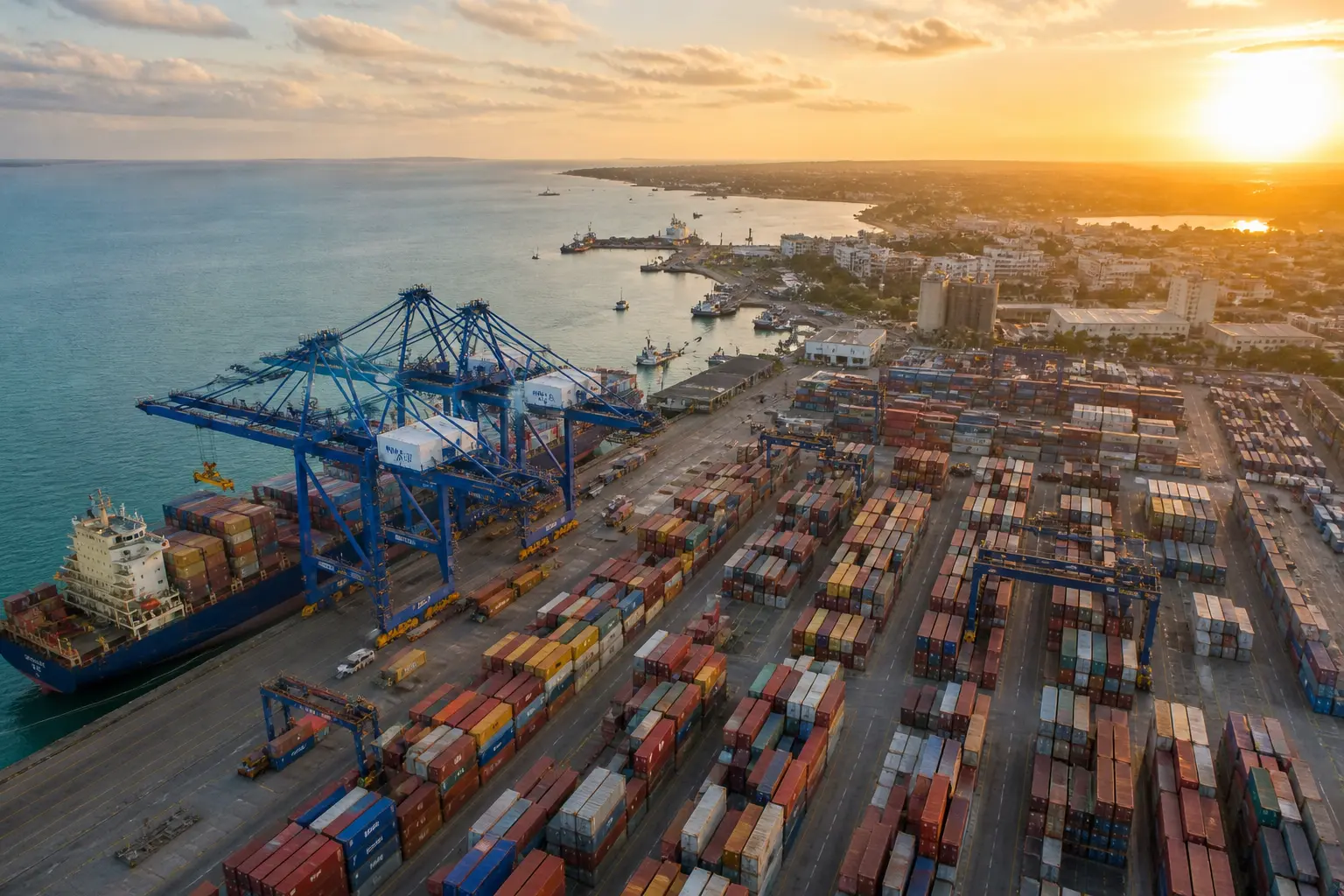
Ship by sea whenever the chargeable weight is above about 4 kg and you can plan 6 to 8 weeks ahead. At 65,000 ksh per CBM, sea freight is cheaper than air for almost every shipment, and the gap widens as the order grows.
Sea freight kenya routes start at a Chinese port, most commonly Shanghai, Guangzhou, Shenzhen, or Ningbo, to Mombasa Port in a shared container (LCL) or a full container (FCL). With Pamoja, almost all SME shipments under 15 CBM go LCL. You pay only for the cubic metres your goods occupy and share the container with other importers.
How cubic metres are calculated
Your sea freight cost is based on the volume of your packed goods. Multiply the length, width, and height of the shipment in metres. A pallet that is 1.2m x 1.0m x 0.8m occupies 0.96 CBM, which costs 62,400 ksh all-in with Pamoja.
LCL vs FCL: which applies to you
LCL (Less than Container Load) is the standard option for most Kenya SME importers. Your goods are consolidated with other shipments heading to Kenya and you pay only for your share of the container. As a rough guide, and this is our own estimate rather than a fixed rule, FCL (Full Container Load) starts to make sense once an order reaches about 12 to 15 CBM. The exact crossover depends on the route and season.
What changed for sea cargo in August 2026?
Kenya Revenue Authority’s Advance Cargo Declaration (ACD) platform went live on 3 August 2026 for containerised cargo to Kenyan ports. Under KRA’s ACD platform, the shipper must obtain an ACD reference code at the port of loading before the cargo is loaded. A missing code can hold your goods at the port. Our Advance Cargo Declaration guide explains the steps, and it is one more reason to plan the sea timeline conservatively.
When to choose sea freight
- Your goods are heavy or bulky, such as tiles, hardware, furniture, or kitchenware
- You are restocking and can plan 6 to 8 weeks ahead
- Your chargeable weight is above about 4 kg, which is where sea becomes cheaper than air
- The goods have a long shelf life and stock-out is not an immediate risk
- You are importing in bulk to reduce cost per unit
- You have already found and verified your Chinese supplier. If not, see our guide on how to find reliable Chinese suppliers
When Is Air Freight from China to Kenya Worth Paying For?
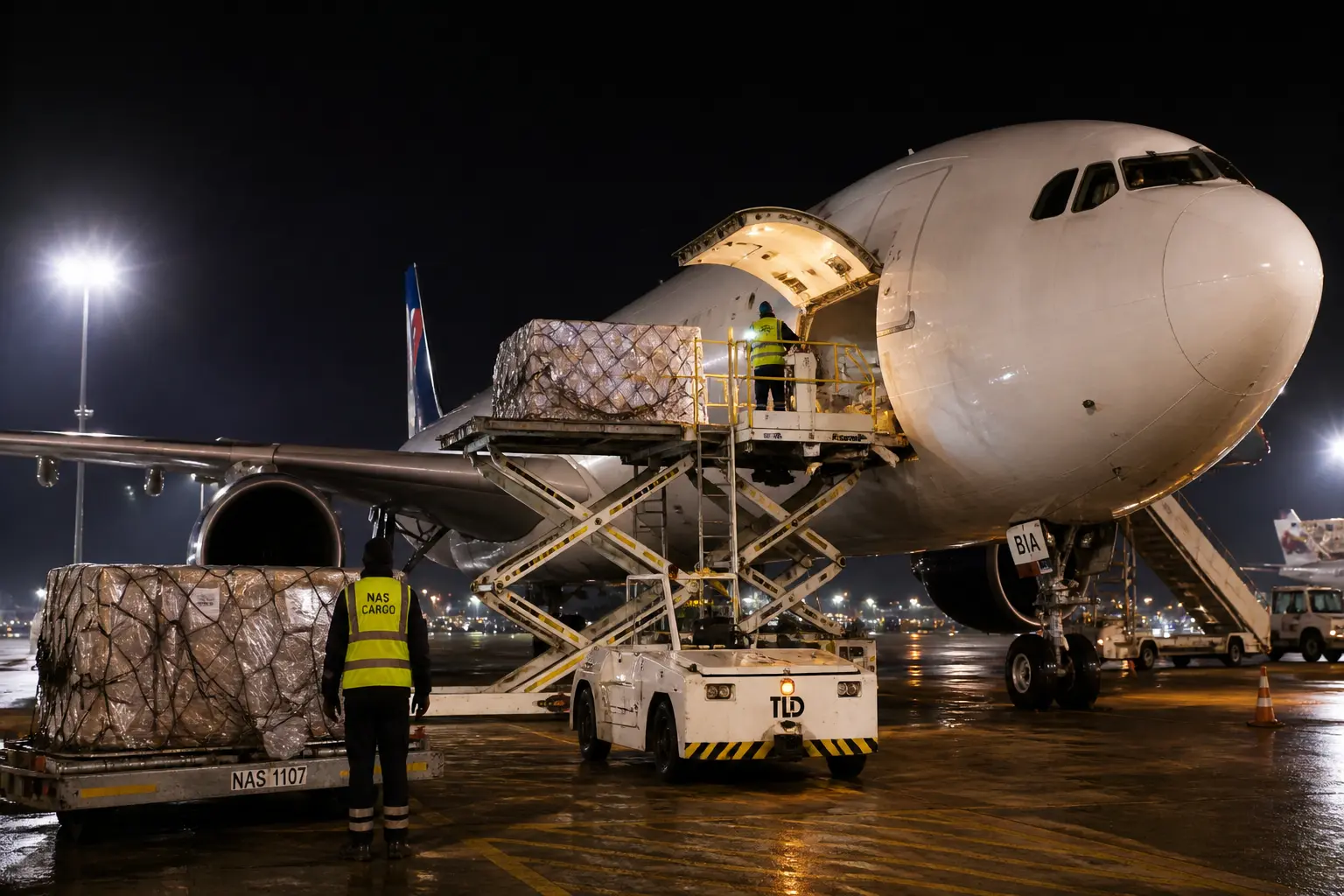
Air freight is worth the premium in two cases: the parcel is small enough that its chargeable weight is under about 3.8 kg, or the delay costs you more than the extra freight. In every other case you are paying for speed, and you should know exactly how much speed costs.
Air freight kenya shipments start at a Chinese airport, typically Shanghai Pudong, Guangzhou Baiyun, or Shenzhen Bao’an, to JKIA in Nairobi. Transit time is 7 to 14 days with Pamoja. Customs clearance happens at JKIA rather than Mombasa.
Volumetric weight: the hidden air freight cost
Air freight is charged on whichever is greater: actual weight or volumetric weight. Pamoja calculates volumetric weight as length (cm) x width (cm) x height (cm) divided by 6,000. A box that is 60cm x 50cm x 40cm has a volumetric weight of 20kg. If the goods inside weigh only 8kg, you are charged for 20kg.
This is one of the most common surprises for first-time importers using air freight. Bulky, lightweight goods like clothing, foam, or plastic containers are penalised heavily. Always calculate volumetric weight before assuming air freight is viable. For a worked freight cost example on clothing orders, see our guide on importing clothing from China to Kenya. For bulky kitchenware, see importing kitchen utensils from China to Kenya.
When to choose air freight
- Your parcel is small and compact, with a chargeable weight under about 3.8 kg
- You need urgent restocking within 2 weeks and the delay costs you more than the extra freight
- You are ordering samples or testing a new product before committing to a sea shipment
- Stock-out is costing you sales right now
- The goods are high value and the cost of tying up capital for 6 to 8 weeks outweighs the freight difference
Which Is Cheaper for Your Shipment, Sea or Air?
For most shipments, sea freight vs air freight China Kenya is not a close call: sea is cheaper unless your chargeable weight is under about 3.8 kg. The reason is the two minimum charges: sea freight has a 0.1 CBM minimum of 6,500 ksh, and air freight at 1,700 ksh per kg reaches 6,500 ksh at 3.8 kg. Above that point, volumetric weight alone makes air cost at least about 283,000 ksh per CBM (166.7 kg x 1,700 ksh), against 65,000 ksh per CBM by sea.
| Shipment | Sea cost (all-in) | Air cost (all-in) | Cheaper |
|---|---|---|---|
| 1 kg parcel, small box | 6,500 ksh (0.1 CBM minimum) | 1,700 ksh | Air |
| 3 kg parcel, 0.015 CBM | 6,500 ksh (0.1 CBM minimum) | 5,100 ksh | Air |
| 3.8 kg chargeable weight | 6,500 ksh | 6,460 ksh | Break-even |
| 4 kg chargeable weight | 6,500 ksh | 6,800 ksh | Sea |
| 0.5 CBM (83.3 kg volumetric) | 32,500 ksh | 141,667 ksh | Sea |
| 1 CBM (166.7 kg volumetric) | 65,000 ksh | 283,333 ksh | Sea |
Air figures use chargeable weight, which is the higher of actual and volumetric weight. A heavy shipment that weighs more than 166.7 kg per CBM costs even more by air.
Enter your own shipment details below to test the sea freight vs air freight china kenya maths on your goods. The calculator uses Pamoja’s all-in rates (65,000 ksh/CBM sea, 1,700 ksh/kg air) to show the exact cost for each method.
Sea vs Air Freight Calculator
Enter your shipment details. Uses Pamoja’s all-in rates to show which method costs less for your specific shipment.
Enter your shipment details above to see the comparison.
What Does the Same Shipment Cost by Sea and by Air?
A 45 kg order of phone accessories costs 15,600 ksh by sea and 76,500 ksh by air, a saving of 60,900 ksh for waiting longer. Here is the sea freight vs air freight China Kenya calculation in practice. Say you are importing 200 units of phone accessories from Guangzhou, packed into 4 boxes, each 50cm x 40cm x 30cm, with a total actual weight of 45kg.
That premium is hard to justify unless you are genuinely about to run out of stock. Now flip the case: a 3 kg parcel of jewellery samples in a 30cm x 25cm x 20cm box has a volumetric weight of 2.5 kg, so you pay for the actual 3 kg and air costs 5,100 ksh. Sea hits its 6,500 ksh minimum, so air is 1,400 ksh cheaper and arrives weeks sooner. Air wins only in that small-parcel zone. Use our shipping calculator to run your own numbers before you commit.
Which Method Works Best for Each Product Type?
Product type decides how sea freight vs air freight China Kenya plays out. For stock orders, sea is the right default for almost every product category, and air is for samples, urgent top-ups, and small parcels. Electric bikes are a good example of a product where the choice is partly decided for you: they ship with an installed lithium battery, and IATA classifies lithium batteries as dangerous goods with their own packaging, marking, and documentation requirements for air transport, which is why our electric bike Kenya import guide recommends sea freight as the practical default.
| Product Type | Stock orders | When air makes sense | Why |
|---|---|---|---|
| Ceramic tiles | Sea | Almost never | Heavy and dense, so air at 1,700 ksh per kg becomes extremely expensive |
| Furniture | Sea | Almost never | Large volumes inflate volumetric weight |
| Construction hardware | Sea | Urgent replacement parts | Heavy goods cost far more by weight at air rates, so sea freight kenya routes win |
| Clothing and textiles | Sea | Samples and small urgent orders | Bulky and light, so volumetric weight drives the air bill |
| Solar panels | Sea | Rarely | Large and heavy. See our how to import solar panels from China to Kenya guide for a worked cost example |
| Phone accessories | Sea | Small urgent parcels | Compact, so air is viable only for parcels near the 3.8 kg zone |
| Laptops and electronics | Sea | Urgent or high-value small batches | The speed can justify the premium. For duty rates by subcategory and a landed cost example, see our guide to importing electronics from China to Kenya |
| Kitchen goods and plastics | Sea | Almost never | Bulky and light, so volumetric weight makes air expensive |
| Jewellery and accessories | Sea for stock | Samples and small parcels | Very small, so a sample parcel can fall under the 3.8 kg break-even |
| Beauty products | Sea for stock | Test orders | Compact and high-margin, so small test parcels can work by air freight kenya routes |
Recommendations for sea freight vs air freight China Kenya assume Pamoja’s published rates and typical SME order sizes. Use the calculator above to confirm for your shipment. This Kenya freight comparison assumes standard goods, not phones.
What Hidden Costs Change the Sea vs Air Decision?
The headline rate is only part of the sea freight vs air freight China Kenya decision. Four costs sit outside the freight rate: insurance, tied-up capital, stock-out losses, and port delays. A Kenya freight comparison on the headline rate alone ignores all four, and each of them can narrow the gap on a specific shipment.
Insurance: optional but often overlooked
Insurance is not included in our all-in rates. Most importers skip cargo insurance and absorb the risk themselves. For low-value bulk goods by sea that is often a reasonable call. For high-value electronics, phones, or jewellery it is not. A single lost or damaged shipment worth 500,000 ksh with no insurance wipes out months of margin. Marine and air cargo insurance is available through Pamoja for clients who want it. Ask us when you book.
Inventory cost on sea freight
Sea freight takes 30 to 45 days in transit. During that time your capital is tied up in goods that are not yet generating revenue. For a 300,000 ksh order, that is roughly four to six weeks of cash waiting in transit. If your business runs on thin working capital, the speed of air freight may justify a higher shipping cost even on goods that would normally go by sea. For the full picture, including the KRA payment that lands at the same time as your freight bill, see our guide on cash flow when importing from China to Kenya.
Stock-out cost
If you run out of a high-selling product, the lost sales during a 30 to 45 day sea cycle can exceed the cost premium of air freight, especially for seasonal products or items you are actively advertising. If you are planning a festive season order, our seasonal import ideas Kenya guide walks through the ordering timeline that avoids this problem.
Port congestion and demurrage
Mombasa Port has been battling a congestion crisis since 2025, according to Nation reporting, and if your sea shipment arrives during a bad period, goods can sit at the port accumulating charges before clearance begins. Demurrage and storage are billed by two different organisations and can apply at the same time, which our guide on demurrage vs storage charges in Kenya breaks down.
Pamoja Imports: One Rate, Everything Included, No Surprises
Both our sea and air rates include import duty, VAT, IDF, RDL, and customs clearance. When you compare sea freight vs air freight China Kenya rates with Pamoja, you are comparing total landed costs, not just freight. Most other agents quote freight only and you discover the full cost later at the port.
- Sea freight: 65,000 ksh/CBM all-in, 30 to 45 days
- Air freight: 1,700 ksh/kg all-in, 7 to 14 days
- Air freight phones: 3,500 ksh/kg all-in
- Minimum order from 30,000 ksh goods value
- Our team gives you a Kenya freight comparison for your specific shipment

Frequently Asked Questions: Sea vs Air Freight China Kenya
For more answers on sea freight vs air freight China Kenya and other import questions, visit our Kenya import FAQ page.
With Pamoja, sea freight from China to Kenya costs 65,000 ksh per CBM all-in. This includes freight, import duty, VAT, IDF, RDL, and customs clearance. Transit time is 30 to 45 days from major Chinese ports to Mombasa.
With Pamoja, air freight from China to Kenya costs 1,700 ksh per kg all-in for standard goods. This includes freight, import duty, VAT, IDF, RDL, and customs clearance. Transit time is 7 to 14 days to JKIA Nairobi. Mobile phones have a higher all-in air rate of 3,500 ksh per kg because of the higher duty and excise that apply to phones.
At Pamoja’s published rates, sea freight is cheaper for almost every shipment. Air freight costs less only when the chargeable weight is under about 3.8 kg, because sea freight has a 0.1 CBM minimum charge of 6,500 ksh. Above that, volumetric weight pushes the air cost to at least about 283,000 ksh per CBM, against 65,000 ksh per CBM by sea.
Sea freight from major Chinese ports to Mombasa takes 30 to 45 days with Pamoja. Air freight takes 7 to 14 days.
With Pamoja, the minimum shipment size for sea freight is 0.1 CBM, which costs 6,500 ksh all-in. Shipments under 1 CBM are consolidated with other importers in an LCL shipment. You pay only for the volume your goods occupy.
For restocking orders where lead time is not urgent, sea freight at 65,000 ksh per CBM all-in is far cheaper, because clothing is bulky and volumetric weight inflates the air bill. Air freight at 1,700 ksh per kg all-in makes sense for small urgent parcels or samples. Use the calculator on this page to compare the exact cost for your shipment.
Not sure which method suits your shipment?
Still weighing sea freight vs air freight China Kenya for your goods? Send us your product, weight, and dimensions on WhatsApp and we will tell you which method is cheaper and why. If you have not found a supplier yet, we can source it for you.
Need Sourcing? I Have a Supplier
Jonatan Sirak sirak.se
Founder of Pamoja Imports, a Kenya-China import agency with an operations team based in Chengdu, China. Based in China since 2018, he studied Mandarin and built direct factory relationships in Chengdu, and now helps Kenyan entrepreneurs source and import products profitably. He splits his time between Nairobi and Chengdu.